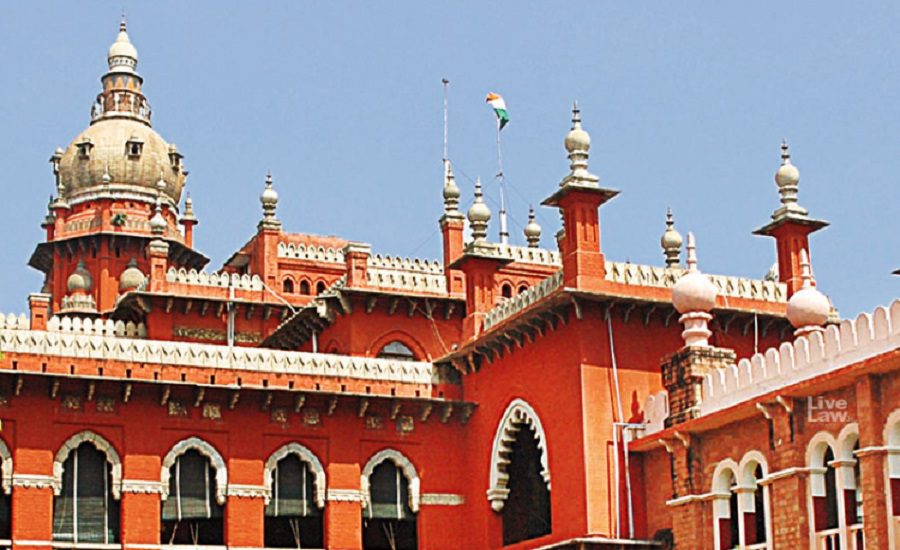
Madras: The Madras High Court on Tuesday urged parties involved in the Thiruparankundram hill lamp lighting dispute to explore mediation, signaling an attempt to find common ground in a decades-old conflict that resurfaces almost every festival season.
Simultaneously, Tamil Nadu police authorities leveled sharp criticism against the original single-judge order by Justice G.R. Swaminathan, alleging that it overstepped judicial bounds and violated his oath of office. This rare charge against a sitting judge has intensified scrutiny of the sensitive case that intertwines religion, public order, historical rights, and constitutional duties of the judiciary.
Background of Thiruparankundram Deepam Dispute
The dispute centers on whether Hindu devotees can light the Karthigai Deepam — an emblematic lamp-lighting ceremony during the festival of lights — atop a stone pillar on Thiruparankundram Hillock in Madurai, Tamil Nadu.
The location is shared by a Hindu temple (Subramaniya Swamy Temple) and a Muslim dargah (Sikandar Badusha Avuliya Dargah), a factor that has made the hilltop a flashpoint for communal sensitivities.
The litigation traces its origins back to the 1860s, with recurrent petitions and orders surfacing roughly every decade, particularly during the Karthigai Deepam festival period.
The latest chapter began with a single-judge order by Justice G.R. Swaminathan allowed lamp lighting at a stone pillar — referred to in the judgment as a Deepathoon — on the basis that it lay in territory claimed by the temple and not the dargah.
Division Bench Suggests Mediation in Thiruparankundram Deepam Dispute
A division bench comprising Justices G. Jayachandran and K.K. Ramakrishnan questioned whether continued litigation was the most effective way to address a conflict that has persisted for over 160 years.
The bench invited counsel for Hindu devotees to respond to a proposal — initially put forward by the Tamil Nadu Waqf Board — to send the dispute to mediation, seeking an agreed resolution instead of protracted litigation.
While mediation is a recognized means of resolving entrenched disputes, counsel for the devotees expressed reservations.
Senior Advocate Guru Krishnakumar, representing a Hindu petitioner, said his client was not immediately willing to agree to mediation, fearing it could further delay resolution without guaranteeing certainty before the upcoming festival season. However, he assured the bench he would consult his client and revert with a decision, leaving the door open for future mediation discussions.
Allegations Against Justice Swaminathan: Exceeding Judicial Powers?
Adding a dramatic twist to the proceedings, Tamil Nadu police and administrative authorities mounted a strong critique of the single-judge order.
Senior Advocate Vikas Singh, representing the district magistrate and police commissioner, claimed that Justice Swaminathan exceeded his powers and acted contrary to his constitutional oath in allowing the lamp lighting directive.
He questioned the very basis of the judgment, particularly the use of the term Deepathoon, arguing it had no historical or legal foundation and was a “figment of imagination.”
Singh contended that there was no evidence to support the notion that the stone pillar was traditionally used for lighting lamps, nor did any official records define it as such.
He warned that if the court’s directive were implemented, it could attract large crowds of devotees — potentially lakhs of people — to a site accessible only through narrow steps that belong to the dargah, thereby creating serious law and order challenges.
In making these submissions, Singh also rhetorically questioned whether Justice Swaminathan’s decision reflected a departure from judicial restraint, even suggesting — in a remark that sparked objections — that if the judge wished to engage in public life, there were other arenas for that.