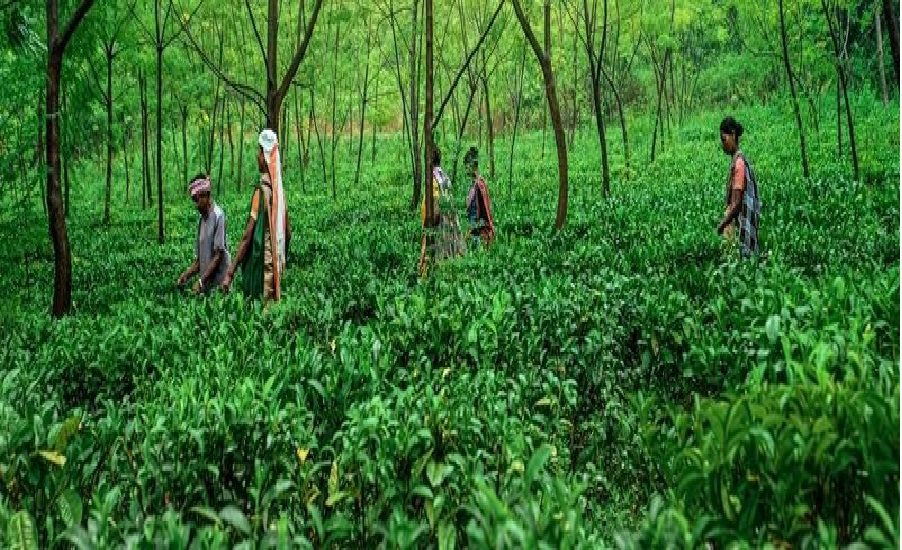
Jashpur: What once seemed impossible in the rugged terrain of Chhattisgarh has now become a remarkable success story. Tea cultivation in Jashpur district, which began as a small experimental project in 2010, has transformed into a growing agricultural and tourism attraction while creating large-scale employment opportunities for tribal women.
The success of tea plantations in Sarudih village is now being seen as a new chapter in Chhattisgarh’s agricultural diversification and rural economic development.
Tea Cultivation Started as a One-Acre Experiment in 2010
The journey of tea cultivation in Jashpur began at Sograh Ashram in 2010 on a trial basis. Former Tea Board of India adviser Dr. ID Singh, who pioneered the initiative, said the project was launched after extensive research on the region’s climate, rainfall, and soil quality. Soil samples from Jashpur were reportedly sent to Siliguri for testing before tea saplings were brought from West Bengal and planted on one acre of land.
According to Dr. Singh, the success of the plantation proved that tea cultivation was viable in Chhattisgarh despite the region never being considered suitable for tea farming during the British era.
Read also: Chhattisgarh Attracts ₹500 Crore Tourism Investment as IHCL Plans Major Hospitality Expansion
CM Vishnu Deo Sai Highlights Agricultural Diversification
Chhattisgarh Chief Minister Vishnu Deo Sai said the state government is encouraging farmers to adopt horticulture and high-value crops beyond traditional agriculture. He stated that Jashpur’s favorable climate and the commitment of local farmers have opened new opportunities in sustainable farming and rural development. The Chief Minister added that tea cultivation in Sarudih reflects the district’s growing potential to emerge as a major horticulture and sustainable agriculture hub in the state.
Tribal Women Driving Tea Production in Jashpur
One of the most significant aspects of the project is the active involvement of tribal women in tea cultivation and production.
Dr. Suresh Kumar Patel, Assistant Professor at Likhan Sai Government College, Tapkara, said the tea industry has become an important source of livelihood in the underdeveloped district.
He noted that:
- Tea cultivation and processing are largely managed by tribal women
- The initiative has strengthened women’s economic participation
- The project has created new employment opportunities in rural areas
The plantations are now being viewed as a strong example of women-led agricultural entrepreneurship in a tribal region.
Tea Tourism Emerging in Chhattisgarh
Apart from farming and employment generation, the tea gardens of Jashpur are also attracting tourists. The scenic plantations in the hilly terrain have become a point of interest for visitors exploring eco-tourism and rural tourism in Chhattisgarh. Officials believe tea tourism can further strengthen the local economy by generating additional income for farmers and small businesses.
Chhattisgarh Building a New Identity in Tea Production
Tea cultivation in India traditionally developed in Assam, Darjeeling, and parts of South India. However, the success of Jashpur’s tea plantations is now helping Chhattisgarh emerge as a new tea-producing region. Experts say the project demonstrates how innovative agricultural practices and government support can create sustainable economic opportunities in tribal and remote areas.