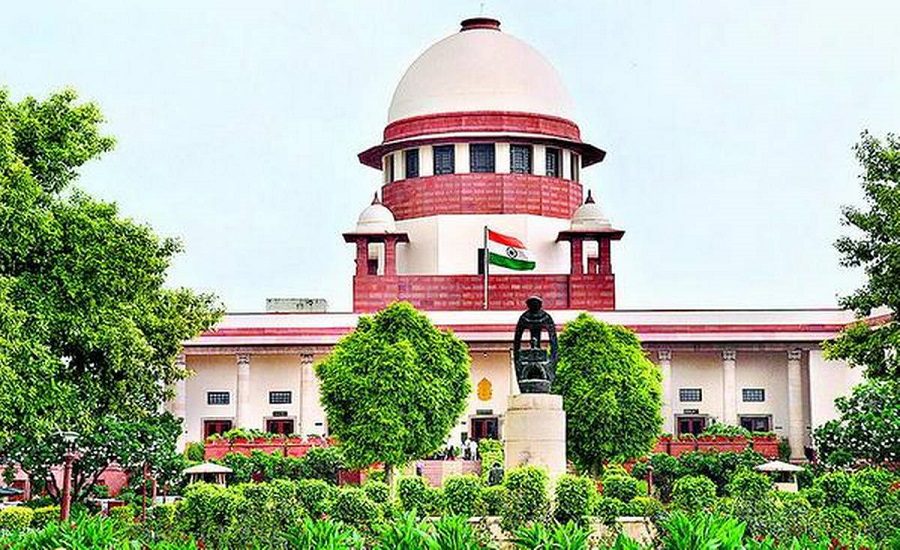
New Delhi: The Supreme Court of India has directed all State governments, Union Territories and High Courts to provide separate bar rooms, washrooms and other basic facilities for women lawyers in district, sub-divisional and taluka courts. The Supreme Court’s order makes it clear that these facilities must be provided wherever women advocates practise, regardless of their numbers.
The Court also directed authorities to arrange the necessary funds and ensure that the work is completed as a priority.
Details of Supreme Court Women Lawyer Basic Facilities Ruling
A three-judge bench comprising Chief Justice of India Surya Kant, Justice Joymalya Bagchi and Justice V. Mohana issued the directions while hearing a petition filed by women advocates.
The petition highlighted the lack of separate bar rooms, proper washrooms and other essential facilities for women lawyers in court complexes across India.
The Court stressed that State governments and High Courts have a responsibility to ensure that women lawyers can work in a safe, comfortable and dignified environment.
Key Highlights of Supreme Court Women Lawyer Basic Facilities Ruling
The Supreme Court has issued several important directions to improve basic facilities for women advocates.
1. Separate Bar Rooms For Women Lawyers
The Court directed that a separate and exclusive bar room must be provided for women lawyers wherever they practise in district, sub-divisional and taluka courts.
The size and facilities of these rooms should be appropriate to the number of women advocates using them. A small number of women lawyers cannot be used as a reason to deny them a dedicated space.
2. Proper Washrooms And Basic Amenities
The Court also stressed the need for proper washrooms and other essential facilities inside court complexes.
These facilities are important because lawyers often spend long hours in court attending hearings, meeting clients and preparing cases.
3. States Must Allocate Necessary Funds
The Supreme Court directed State governments to provide the money required to create these facilities if the funds are not already available.
The Court made it clear that the authorities must take the necessary steps even if additional funds or land are needed.
4. High Court Committees Must Monitor The Work
The building and infrastructure committees of High Courts have been directed to treat the issue as a priority.
They must ensure that the required facilities are created in district and taluka courts under their respective jurisdictions.
Attorney General To Coordinate With States And Union Territories
The Supreme Court has asked the Advocate Generals and standing counsel representing States and Union Territories to submit progress reports to Attorney General R. Venkataramani.
The Attorney General will act as the central coordinating authority and prepare a combined report for the Court.
The Court also allowed the petitioners and other parties involved in the case to submit suggestions for improving facilities. Suggestions concerning a particular State may be shared with its Advocate General for further action.
Many Courts Still Lack Basic Facilities
During the hearing, lawyers brought attention to gaps in the facilities available at several court complexes.
Senior Advocate Jayna Kothari referred to reports submitted by States and High Courts that showed a lack of women’s washrooms in many district courts.
She also pointed out that Haryana had not conducted an inspection following the Court’s earlier directions. Punjab had reportedly stated that only nine out of 67 court complexes had washrooms for women.
Senior Advocate Dr Monika Gusain also highlighted the need to check whether the facilities reported in official documents were actually available on the ground.
The Court suggested that volunteers could help verify the situation instead of relying only on written reports.
Supreme Court Links Basic Facilities With Women’s Dignity
The Supreme Court has previously observed that basic facilities for women advocates are connected with the fundamental right to life and dignity under Article 21 of the Indian Constitution.
Women lawyers may spend much of their working day inside court premises. The absence of clean washrooms and suitable working spaces can affect their privacy, safety, comfort and ability to practise law.
The Court has also stated in earlier hearings that access to washrooms is a basic human right. A State’s financial difficulties cannot be used as an excuse for failing to provide essential sanitation facilities.
Read also: CJI Surya Kant Remarks Row: SCBA Files Contempt Petition Against Wagle, Raut
FAQs
The Supreme Court directed States, Union Territories and High Courts to provide separate bar rooms, washrooms and other basic facilities for women advocates wherever they practise in district, sub-divisional and taluka courts.
State governments and High Courts are responsible for ensuring these facilities. State governments must allocate the necessary funds, while High Court infrastructure committees must prioritise and monitor the work.
The Supreme Court has listed the case for December 2, 2026, when it is expected to review progress and may issue further directions.