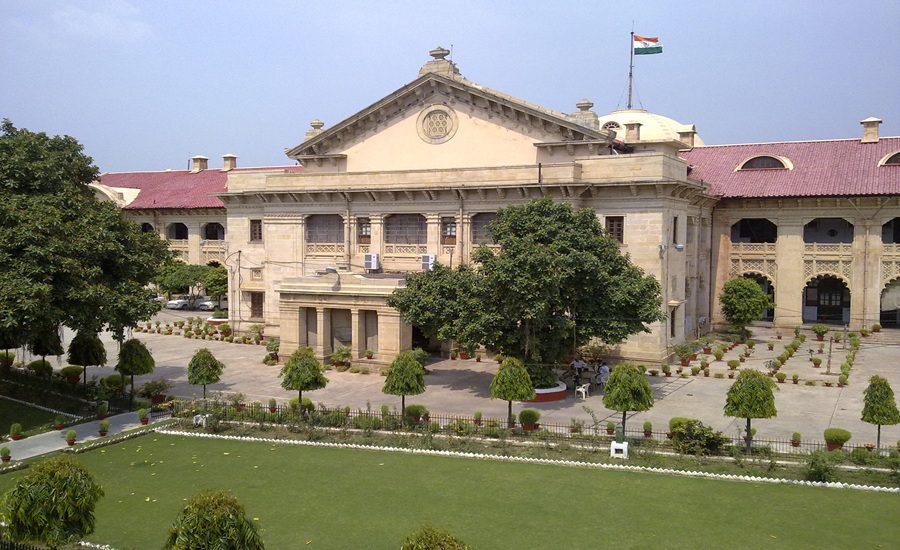
Prayagraj: The Oudh bar association women reservation issue received a major boost after the Allahabad High Court directed that 30% of posts in the Oudh Bar Association’s Governing and Executive Council must be reserved for women. The court also introduced a detailed rotation system for senior positions, including the President’s post from 2028 onwards. The decision aims to ensure meaningful participation of women lawyers in bar association leadership and follows the Supreme Court’s directions on women’s representation in bar bodies across India.
Why Did The Allahabad High Court Pass Oudh Bar Association Women Reservation Order
The order was passed by a bench of Justice Rajan Roy and Justice Manjive Shukla while hearing two Public Interest Litigations (PILs) filed by advocates seeking implementation of women’s reservation in the Oudh Bar Association, Lucknow.
Read also: Allahabad High Court Rules Govt Servant Cannot Challenge Salary Denial After Voluntary Retirement
The petitioners argued that the Supreme Court had already directed Bar Associations across the country to ensure 30% representation for women lawyers. However, they claimed that adequate representation was still not available in key leadership positions within the Oudh Bar Association.
What Was The Oudh Bar Association’s Earlier Proposal
The Oudh Bar Association had earlier decided to reserve:
- One Treasurer post for women.
- Three of six Junior Executive posts for women.
- Three of six Senior Executive posts for women.
However, the High Court found that this arrangement did not fully reflect the spirit and objective of the Supreme Court’s directions on women’s representation.
Oudh Bar Association Women Reservation: What Did The Court Say
The High Court observed that the Supreme Court’s directions are binding on all Bar Associations.
The court noted that the Governing and Executive Council consists of 22 office bearers. Therefore, at least seven positions should be reserved for women to ensure effective implementation of the 30% reservation requirement.
Oudh Bar Association Women Reservation: High Court’s Reservation And Rotation Schedule
Junior Executive Posts
Two out of six Junior Executive posts will remain reserved for women from the 2026 elections onwards.
Senior Executive Posts
Two out of six Senior Executive posts will be reserved for women from 2026 onwards.
Joint Secretary Posts
One of the three Joint Secretary positions will be reserved for women from 2026.
Treasurer Post
The Treasurer post will be reserved for women in 2026 and then again in 2029, 2032, and every third year thereafter.
General Secretary Post
The General Secretary position will be reserved for women in 2027, followed by 2030, 2033, and subsequent rotation years.
Vice President Posts
One Vice President position for lawyers with less than 10 years of practice will be reserved for women in 2028, 2031, and 2034. One of the Vice President posts requiring 10 years of practice will be reserved for women in 2027, 2030, and 2033.
Senior Vice President Post
The Senior Vice President position will be reserved for women in 2026, 2029, and 2032.
President Post
The most significant direction is that the President’s post will be reserved for women beginning in 2028. The reservation will continue in 2031, 2034, and every third year thereafter through a rotation system.
What Happens If No Woman Candidate Is Available
The court also addressed situations where a reserved position cannot be filled due to the absence of a woman candidate. In such cases, a woman candidate may be nominated by the Senior Judge of the Allahabad High Court at Lucknow, following the Supreme Court’s directions.
Oudh Bar Association Women Reservation: New Transparency Rules For Bar Elections
Apart from reservation, the High Court introduced important transparency measures. Candidates contesting Oudh Bar Association elections must now disclose details of any FIR or criminal case filed against them. They must also explain whether the matter is pending, resulted in acquittal, or led to conviction. The court warned that hiding or misrepresenting such information could lead to cancellation of candidature or election.