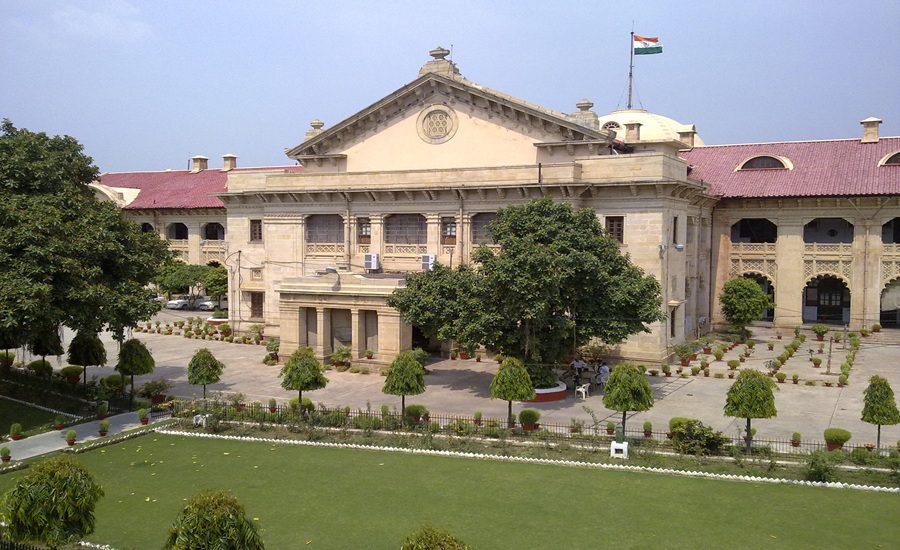
Prayagraj: Government servant salary denial was at the centre of a significant Allahabad High Court ruling. The Court held that a government employee who accepted voluntary retirement after his unauthorised absence was regularised through leave without pay cannot later challenge the denial of salary for that same period. The judgment highlights that a person cannot accept the benefit of an order while simultaneously challenging the part that does not suit him.
Details of Voluntary Retirement Ruling Case
The petitioner, Vijay Singh, joined the Uttar Pradesh Irrigation Department in 1989 and later worked as a Seenchpal. After a departmental merger in 2014, he was posted to Shikohabad. He claimed that due to health problems he could not join the new posting and requested an alternative assignment.
Read also: Big Relief for Government Employee’s Son as Supreme Court Clarifies Haryana Appointment Rules
When no alternative posting was provided, he applied for voluntary retirement under Rule 56(c) of the U.P. Fundamental Rules, which allows eligible government employees to retire voluntarily after meeting the required age and service conditions.
Why Was Salary Denied
On 29 January 2016, the Executive Engineer regularised the petitioner’s long period of unauthorised absence by treating it as leave without pay. A separate order on the same day approved his voluntary retirement.
Although the petitioner accepted retirement, he later challenged the decision denying him salary for the leave period. His claim was rejected by the U.P. State Public Services Tribunal, after which he approached the Allahabad High Court.
Voluntary Retirement Ruling: What Did the Petitioner Argue
The petitioner argued that the U.P. Fundamental Rules do not specifically allow leave without pay under the cited provisions.
He claimed that if the authorities believed he had remained absent illegally, they should have started disciplinary proceedings instead of denying his salary while regularising his absence.
What Did the Allahabad High Court Say
The Bench of Justice Alok Mathur and Justice Amitabh Kumar Rai rejected the petition. The Court explained that although the authority referred to Fundamental Rule 73, the order was actually supported by Fundamental Rule 85, which allows extraordinary leave to be granted retrospectively to regularise unauthorised absence.
The judges said that without regularising the absence, the employee’s service would have been interrupted, affecting his qualifying service and making voluntary retirement impossible.
Court Applies Doctrine of “Approbate and Reprobate”
The High Court observed that the petitioner had already accepted the benefit of voluntary retirement, which became possible only because his absence was regularised. Therefore, he could not later challenge the denial of salary arising from the same arrangement.
The Court held that a person cannot both accept the benefits of a transaction and later reject the parts that are unfavourable. This legal principle is known as the doctrine of approbate and reprobate.
Read also: Gujarat High Court Rules Government Employees Cannot Claim Right to Buy Official Quarters