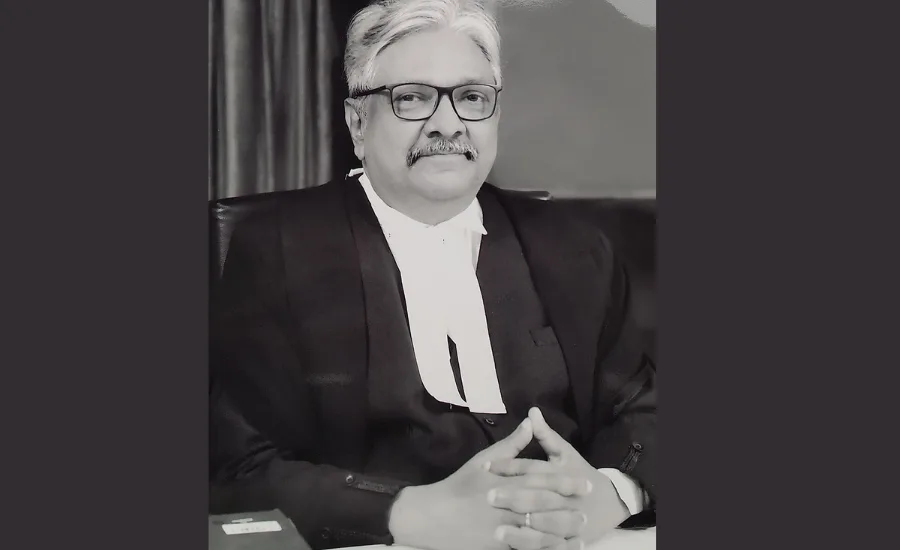
New Delhi: Former Supreme Court judge Justice K.M. Joseph has urged the Central Government not to keep Collegium recommendations pending after they have been reiterated by the Supreme Court Collegium. He said such recommendations should be acted upon unless there is a strong, relevant, and legally valid reason to reject them.
Speaking at a lecture organized by the Kerala High Court Bar Association, Justice Joseph stressed that timely judicial appointments are essential for maintaining judicial independence and improving the efficiency of India’s justice system.
What Are Collegium Recommendations
The Collegium system is the process through which senior judges recommend appointments and transfers of judges to the Supreme Court and High Courts.
Read also: Acid Attack Survivors May Get Railway Fare Benefits For Medical Travel, Supreme Court Told
Justice Joseph noted that under the principles established by the Second Judges Case and Third Judges Case, a recommendation reiterated by the Collegium becomes binding on the government.
According to him, delays in approving such recommendations can affect judicial functioning and create vacancies in courts.
Pending Collegium Recommendations: Justice KM Joseph Calls for Harmony Between Judiciary and Executive
Justice Joseph appealed for better cooperation between the judiciary and the government. He said judicial appointments should not become a point of conflict because the ultimate goal is to appoint the most qualified and independent judges to serve the nation.
He emphasized that an independent judiciary is a cornerstone of democracy and must remain free from external influence.
Pending Collegium Recommendations: What Qualities Should a Judge Have
Justice Joseph said the best judges are not selected solely on the basis of legal knowledge.
He highlighted the importance of integrity, independence, courage, fairness, and commitment to constitutional values.
Referring to observations made by former Chief Justice M.N. Venkatachaliah, he said judges must be capable of questioning authority whenever required and protecting citizens’ rights without fear or favour.
Pending Collegium Recommendations: Growing Supreme Court Backlog Raises Concerns
Justice Joseph also raised concerns about the rising number of pending cases in the Supreme Court. He noted that approximately 93,000 cases are currently awaiting disposal.
According to him, merely increasing the number of judges may not be enough to reduce the backlog if the inflow of cases continues at the current pace. He stressed the need for systemic reforms and efficient case management practices.
Why Is Justice KM Joseph Demanding a Permanent Constitution Bench
One of the major points raised by Justice Joseph was the need for a permanent Constitution Bench in the Supreme Court.
He pointed out that many important constitutional matters remain pending for years, delaying legal clarity on critical issues.
Several Constitution Bench matters have been awaiting decisions for long periods, with some cases pending for more than a decade.
Justice Joseph argued that constitutional questions should ideally be resolved within one year because they often affect numerous other cases across the country.
Anti-Defection Cases Still Await Resolution
Justice Joseph referred to constitutional questions related to anti-defection laws that were referred to a Constitution Bench years ago but remain undecided.
He said delays in such cases create uncertainty in governance and legal interpretation.
A permanent Constitution Bench, he believes, would help ensure quicker decisions on issues involving constitutional law.
Comparison Between Indian and US Supreme Courts
Justice Joseph also compared the functioning of the Indian Supreme Court with that of the United States Supreme Court.
He noted that all nine judges of the US Supreme Court sit together, while judges in India function through multiple benches.
According to him, a permanent Constitution Bench could improve consistency and help address important constitutional questions more efficiently.
Expert Analysis: Why Justice KM Joseph’s Remarks Matter
Legal experts believe the concerns raised by Justice KM Joseph are significant because judicial vacancies and delayed constitutional decisions directly affect access to justice.
Timely implementation of Collegium recommendations can help reduce vacancies in High Courts and the Supreme Court.
A permanent Constitution Bench could also speed up decisions on constitutional disputes, election laws, anti-defection cases, and other issues that have nationwide implications.
His remarks add fresh momentum to the ongoing debate over judicial reforms, judicial independence, and the future of the Collegium system in India.
Read also: Article 222 and Collegium System: Government Details How High Court Judges Are Transferred