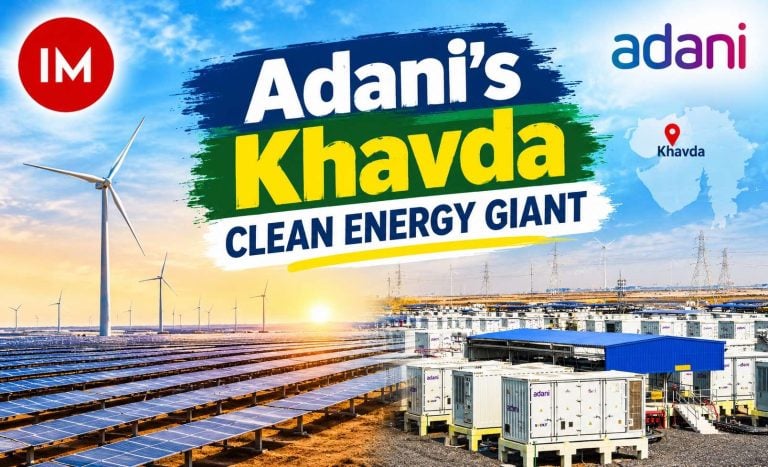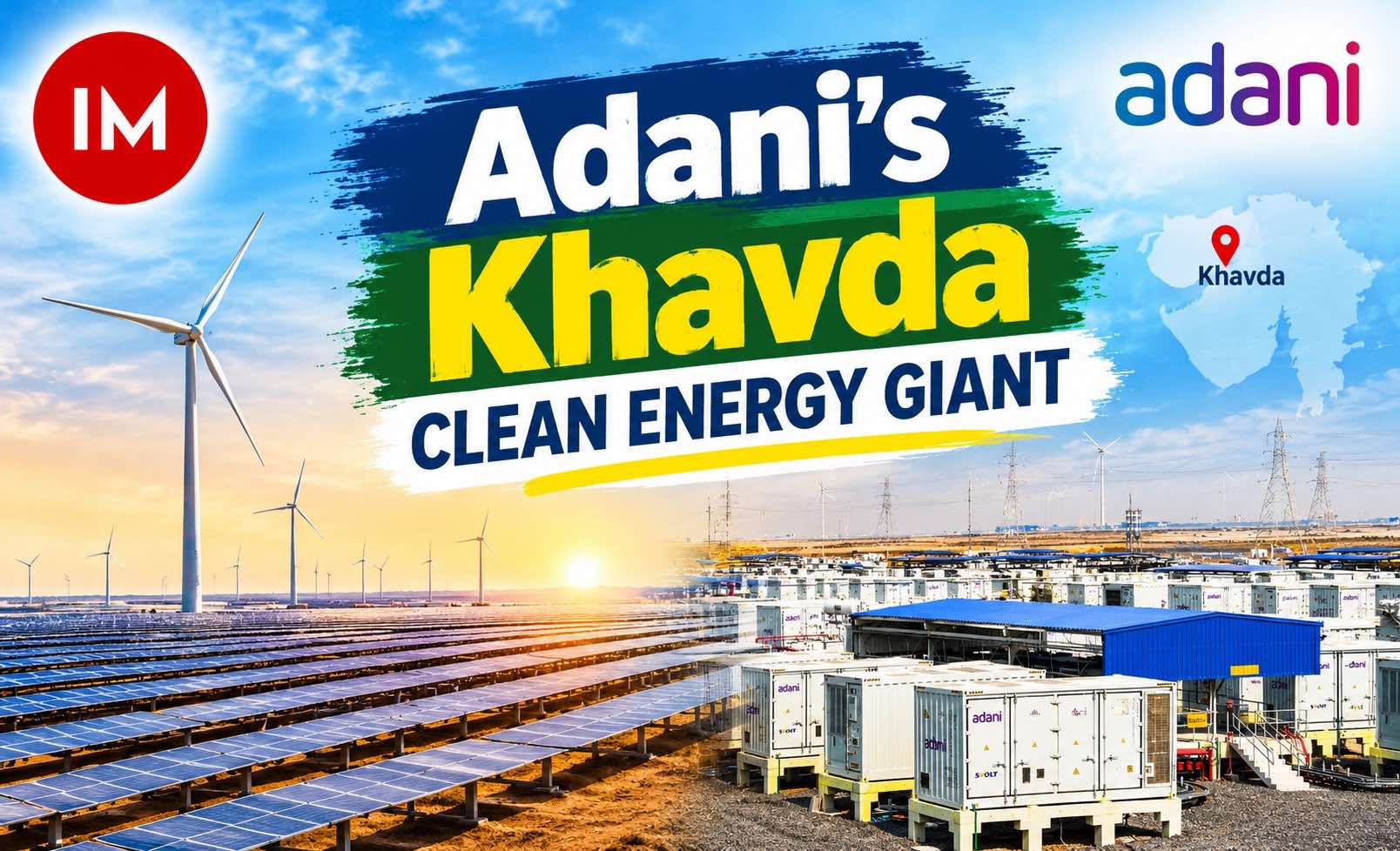
Kutch/New Delhi: In the remote, arid landscape of Khavda in Gujarat’s Kutch district, an ambitious energy project is taking shape on a scale that is difficult to comprehend without seeing it firsthand. Stretching across approximately 538 square kilometres – around five times the size of Paris and nearly as large as Mumbai – the Khavda Renewable Energy Project is being developed by Adani Green Energy Limited (AGEL) with a planned renewable energy capacity of 30 gigawatts (GW) by 2029.
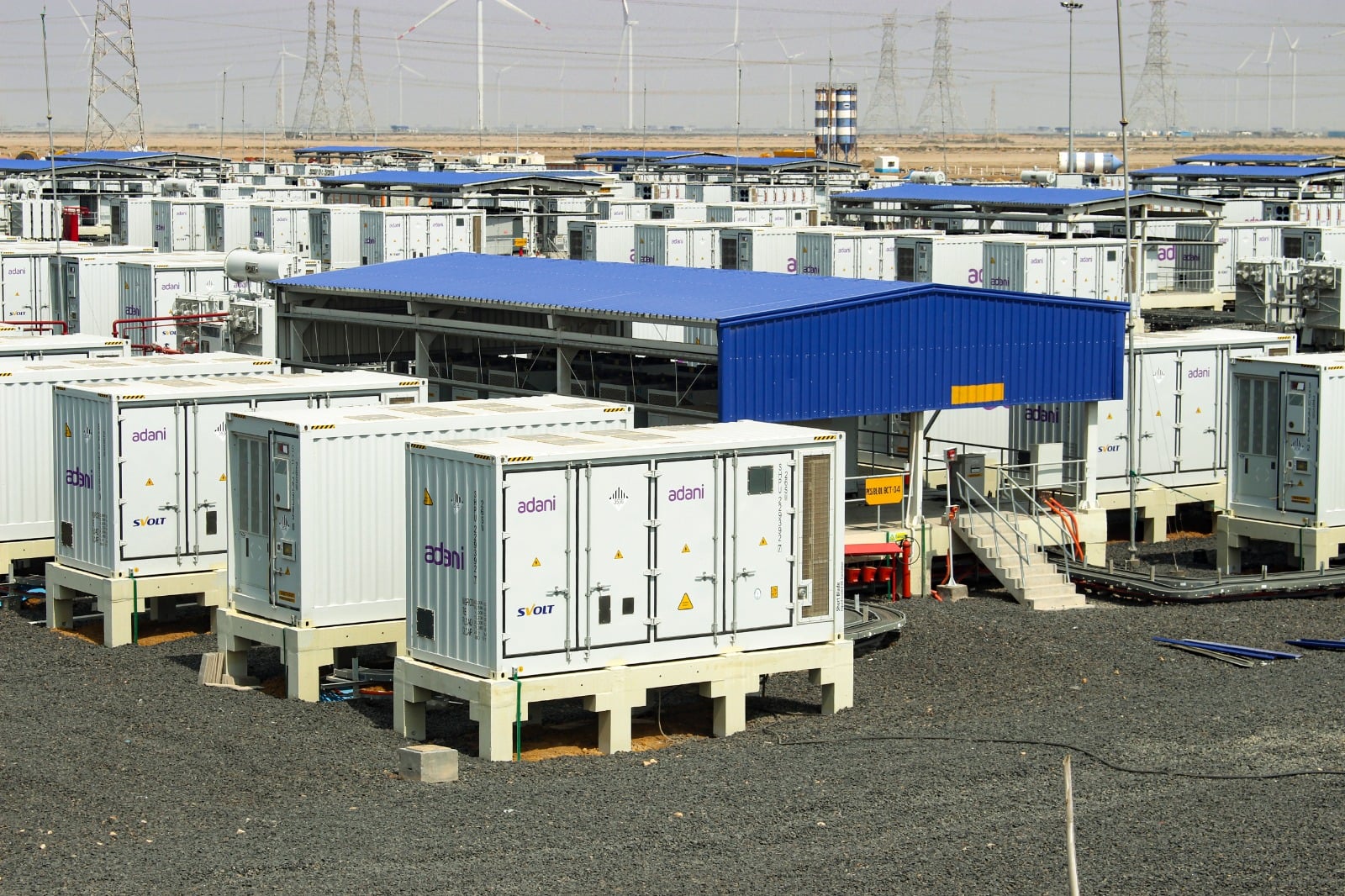
The project is already moving beyond the planning stage. More than 11 GW of solar and wind capacity has been commissioned and is operational, supported by approximately 6.6 gigawatt-hours (GWh) of battery energy storage. Once fully developed, the project is expected to combine large-scale solar generation, wind power and energy storage to deliver clean, affordable and reliable electricity.
Khavda represents more than an expansion of renewable energy capacity. Its development involves building roads, transmission networks, drainage systems, digital connectivity, water infrastructure, worker facilities and an extensive operational ecosystem in a remote region characterised by high salinity, difficult terrain and challenging climatic conditions.
The project offers a glimpse of how India’s clean-energy ambitions are being translated into large-scale infrastructure, combining engineering, domestic manufacturing, digital technology, employment generation and resource conservation.
Khavda: From a Remote Landscape to a Renewable Energy Hub
Before development began, the Khavda region presented significant geographical and engineering challenges. Its landscape is characterised by barren stretches, marshland, high soil salinity, water scarcity and difficult climatic conditions. Establishing an energy project of this magnitude required extensive preparation before construction could begin.
According to the project information, Adani Green Energy undertook several years of preparatory studies, including geotechnical, seismic, resource, environmental and social assessments.
Construction at the site began in April 2023. Within approximately 12 months, the project operationalised its first 2 GW of solar capacity, demonstrating the pace at which large-scale renewable infrastructure was being established in the region.
Today, more than 11 GW of solar and wind capacity is operational, complemented by 6.6 GWh of battery storage. The development roadmap envisages reaching 30 GW of renewable energy capacity by 2029, alongside plans to expand battery energy storage capacity to 50 GWh over the next five years.
Read Also: Adani Green Energy’s H1 EBITDA Rises 41% to ₹7,957 Crore; BESS Capacity Reaches 6.63 GWh
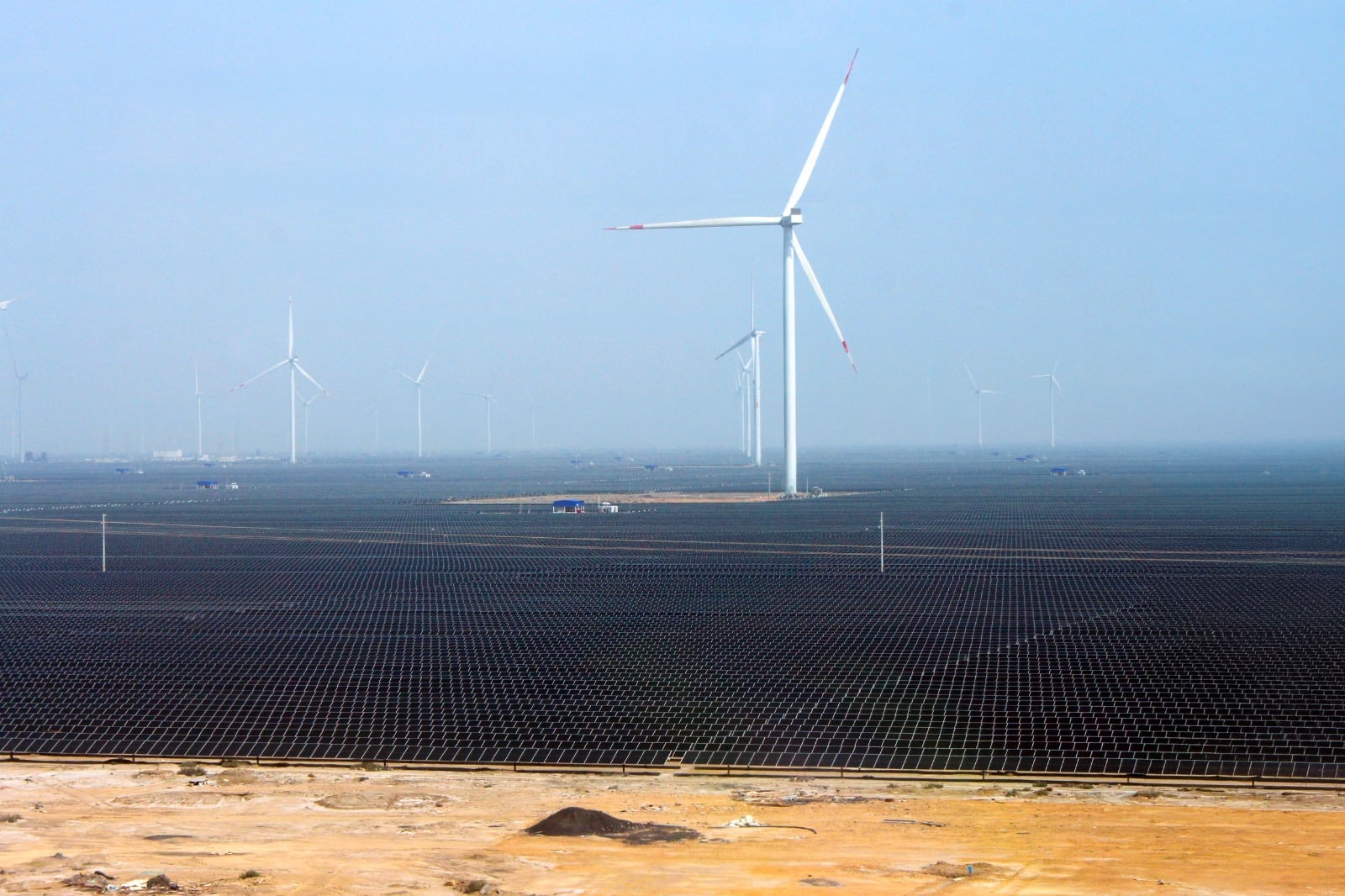
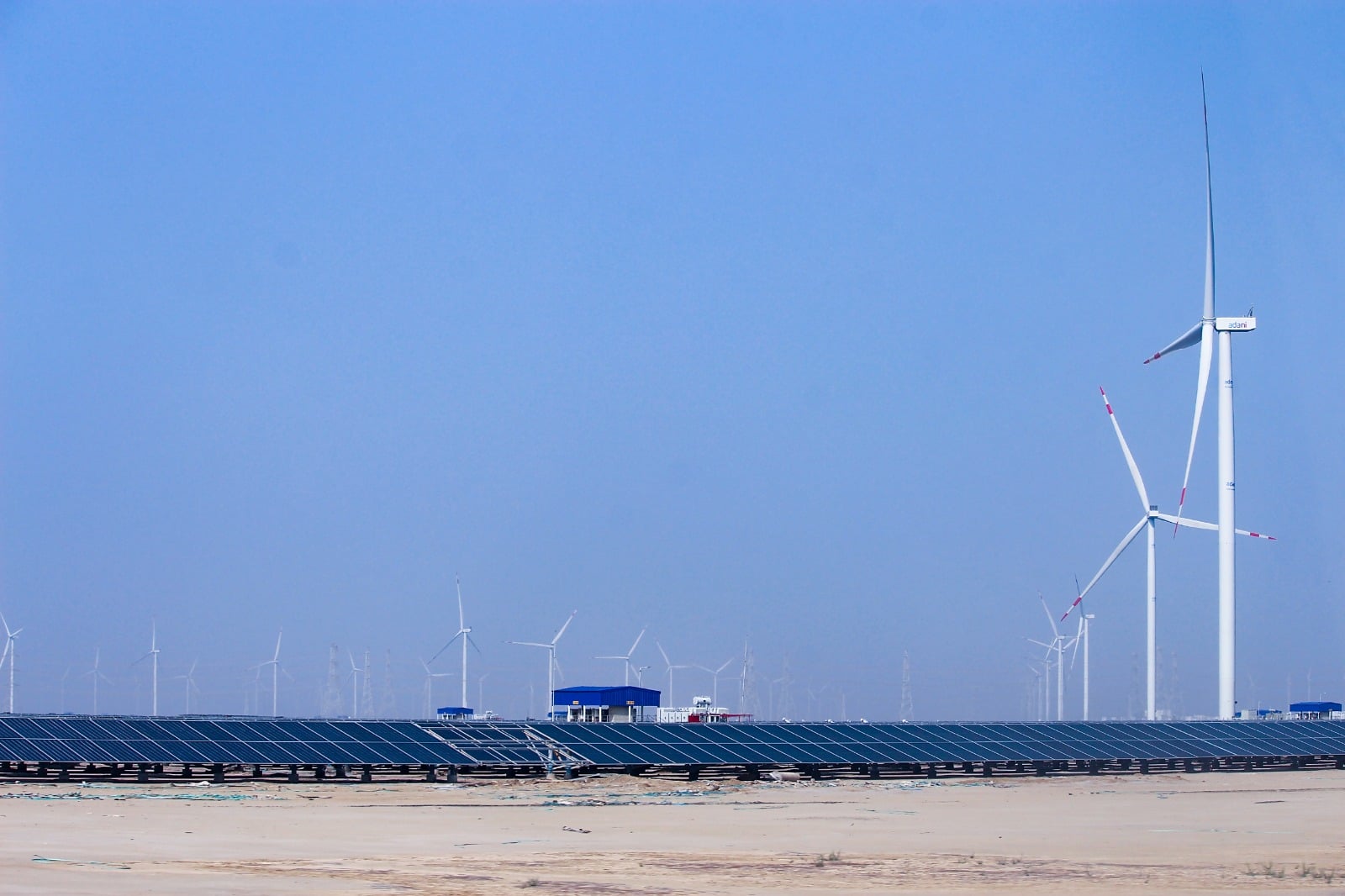
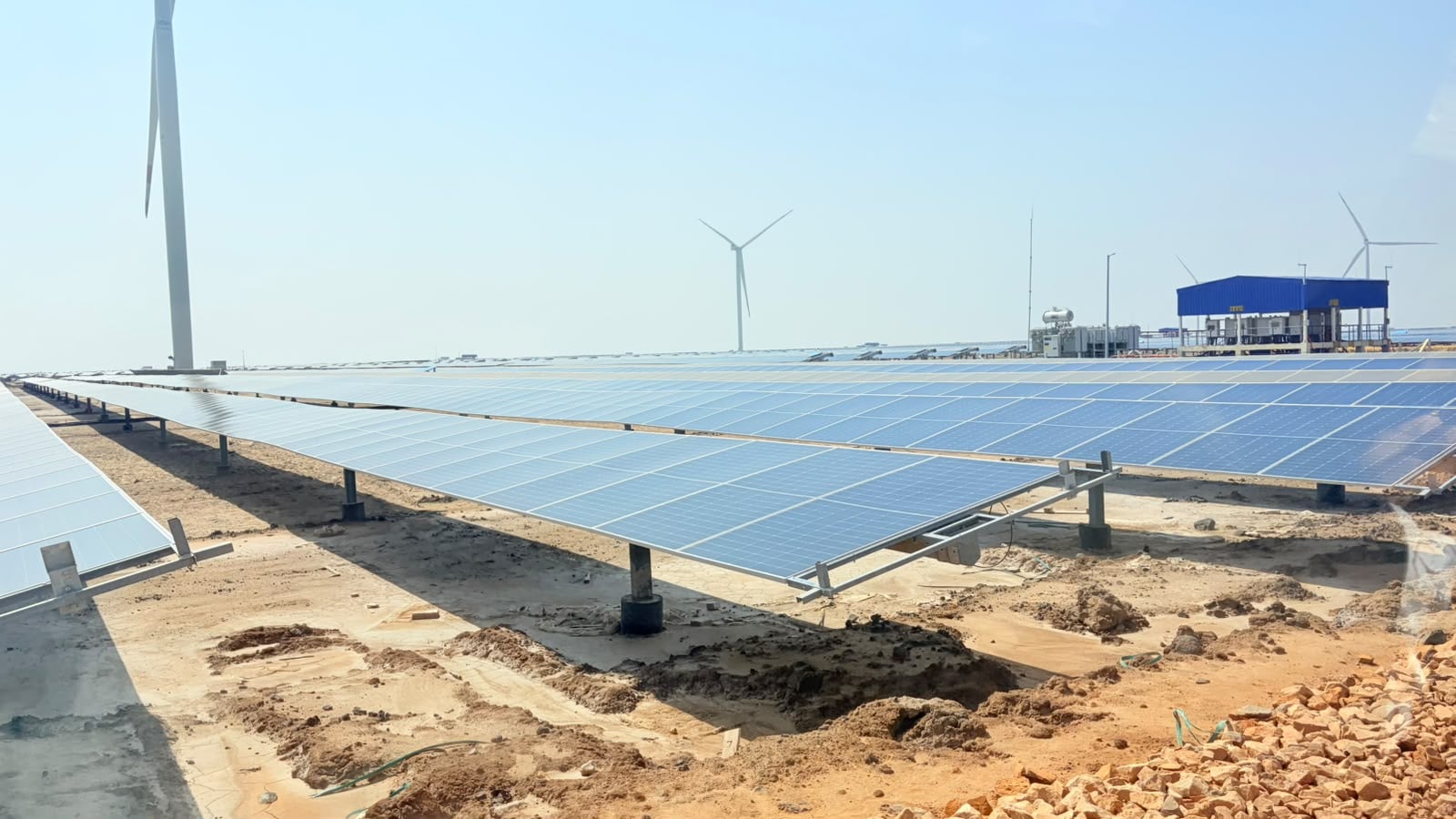
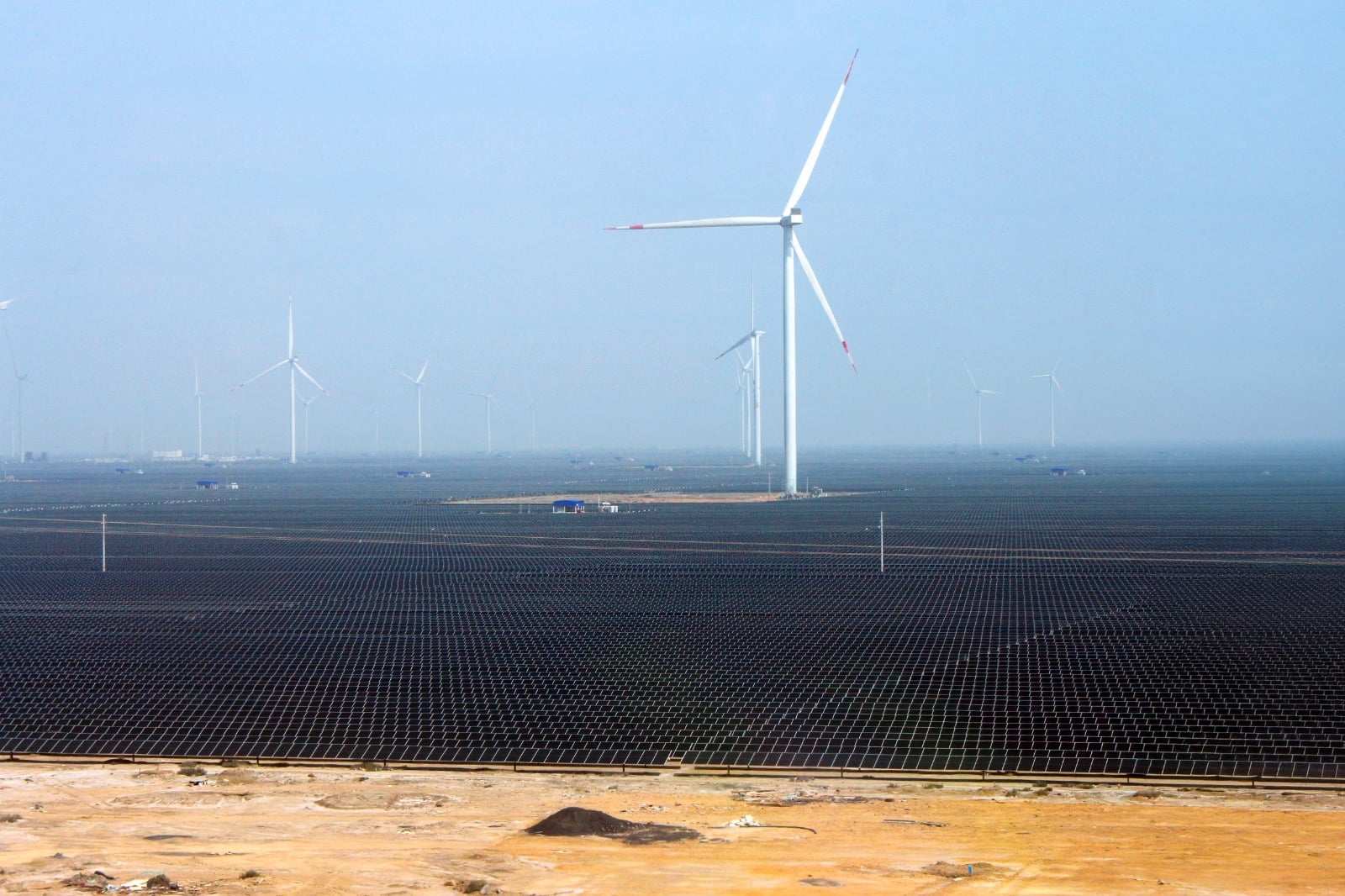
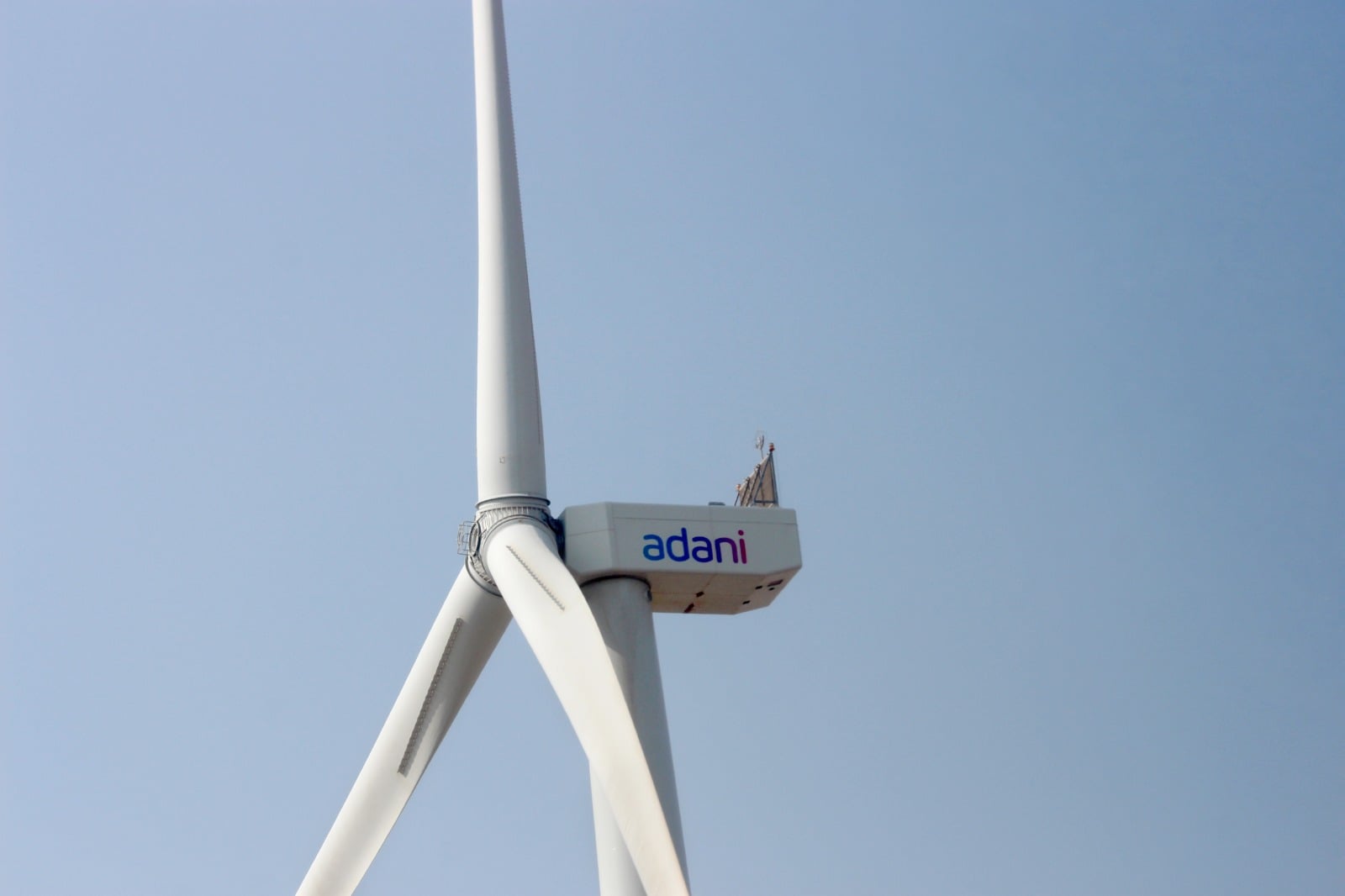
The scale of the undertaking becomes clearer when viewed across the entire site. Solar arrays stretch towards the horizon, while massive wind turbines rise above the landscape. At full development, the project is expected to comprise more than 60 million solar panels and approximately 770 wind turbines.
The planned combination of solar, wind and storage infrastructure is intended to make Khavda a major integrated renewable energy hub.

The Infrastructure Behind 30 GW of Renewable Energy
One of the most significant aspects of the Khavda project is the infrastructure required to support its energy-generating capacity.
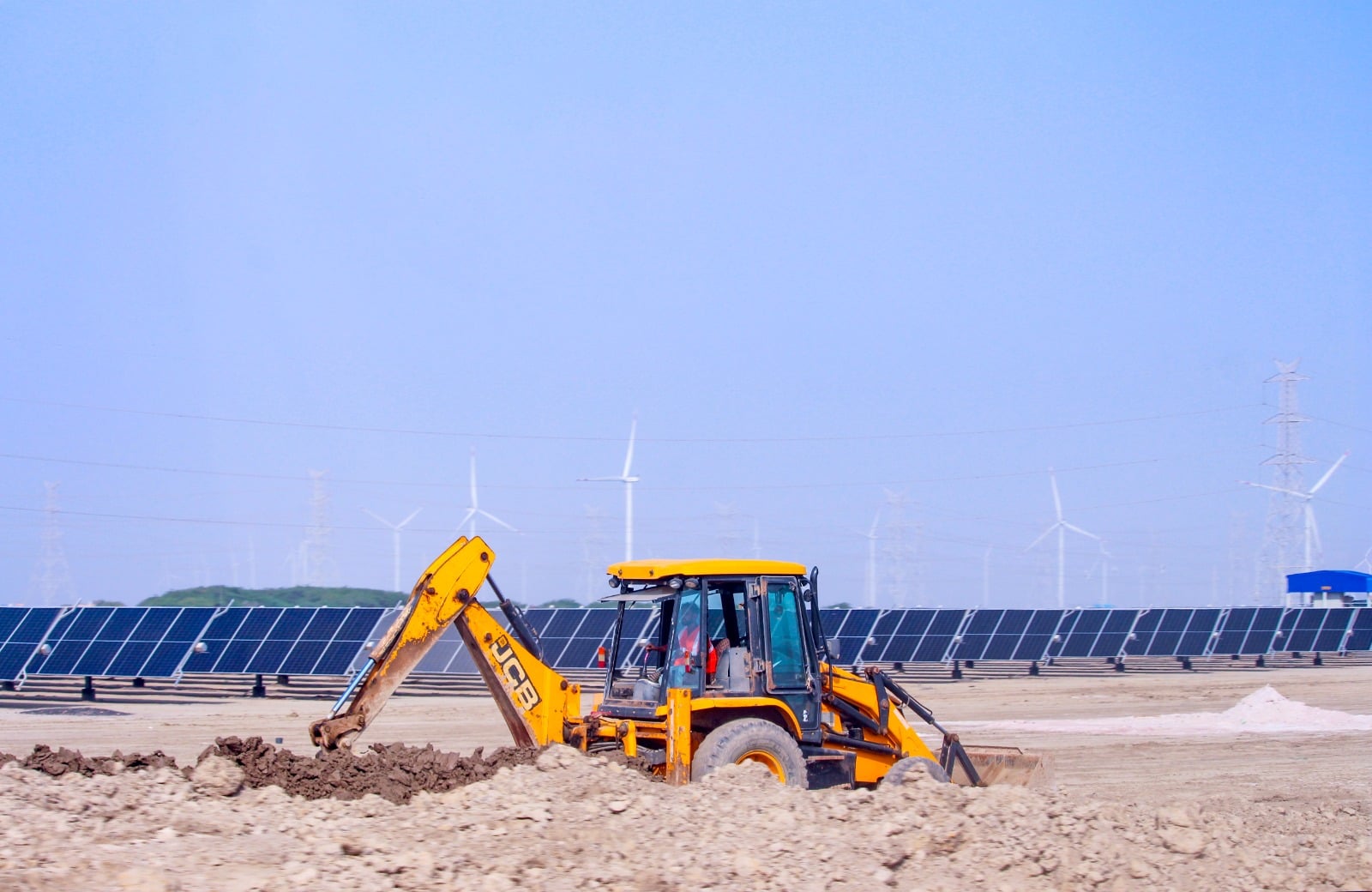
Building a renewable energy facility across hundreds of square kilometres in a remote location involves considerably more than installing solar modules and wind turbines. The site requires extensive internal transportation networks, drainage, communications, power evacuation systems, water facilities and services for thousands of workers.
The supporting infrastructure includes more than 1,050 kilometres of roads, over 300 kilometres of drainage systems and extensive optical fibre connectivity. Project information cites more than 200 kilometres of optical fibre in one account and over 300 kilometres in another, indicating different reported figures that would need confirmation for a single definitive total.
The development also includes cellular towers, pooling substations, transmission infrastructure and associated facilities to ensure that electricity generated across the site can be monitored, collected and transmitted.
Water infrastructure is another essential component. Desalination and reverse osmosis (RO) facilities support operations in a region where water availability is a major concern.
The project has also required the development of accommodation and township facilities, medical services, dining halls, banking facilities, shopping areas and leisure amenities for the workforce.
This extensive network illustrates a key feature of the Khavda development: establishing renewable energy generation at this scale also requires building an entire supporting ecosystem around it.
Advanced Engineering for Difficult Terrain and Climate
Khavda’s geographical conditions have required specialised engineering solutions to address soil instability, high salinity, dust accumulation and water scarcity.
The project uses underground stone columns for wind-turbine foundations to address soil liquefaction challenges. Corrosion-resistant coatings are also being employed to help equipment withstand the region’s harsh environmental conditions.
These engineering measures are particularly important for infrastructure expected to operate over long periods in a demanding environment.
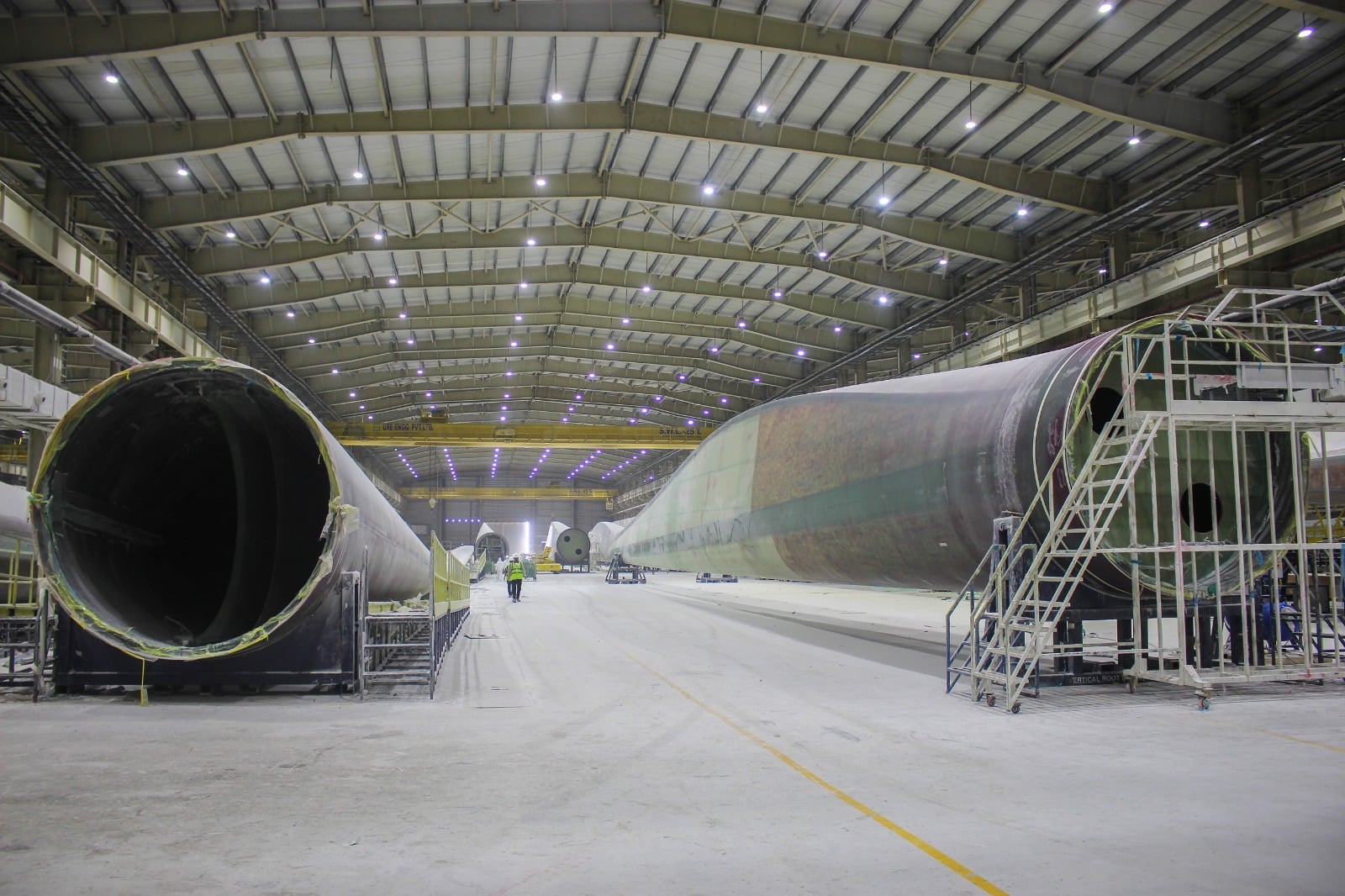
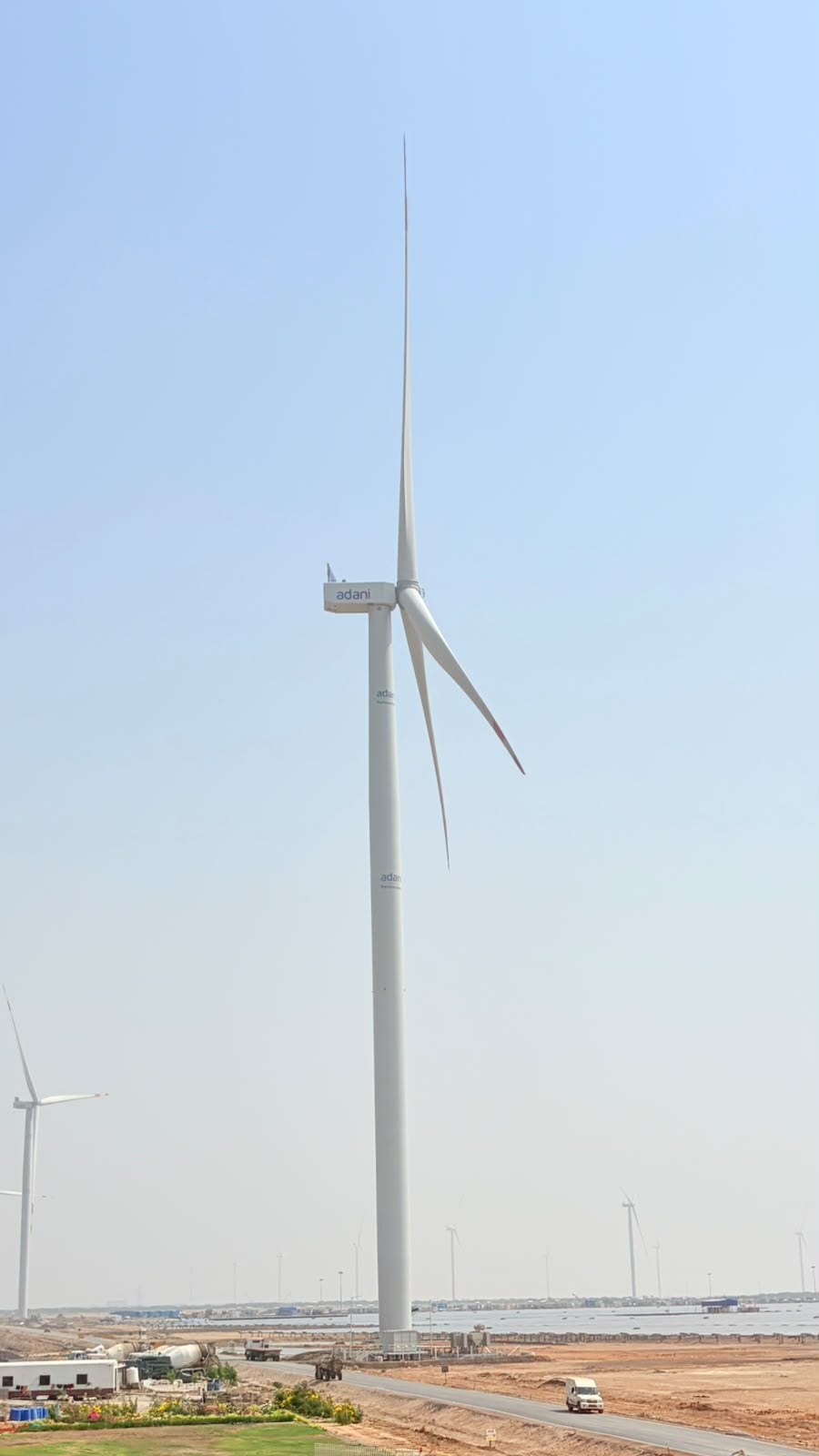
The wind turbines installed at Khavda are rated at 5.2 megawatts (MW) each and have been designed specifically for the region’s wind conditions. The project information describes them as among the most powerful onshore wind turbines globally.
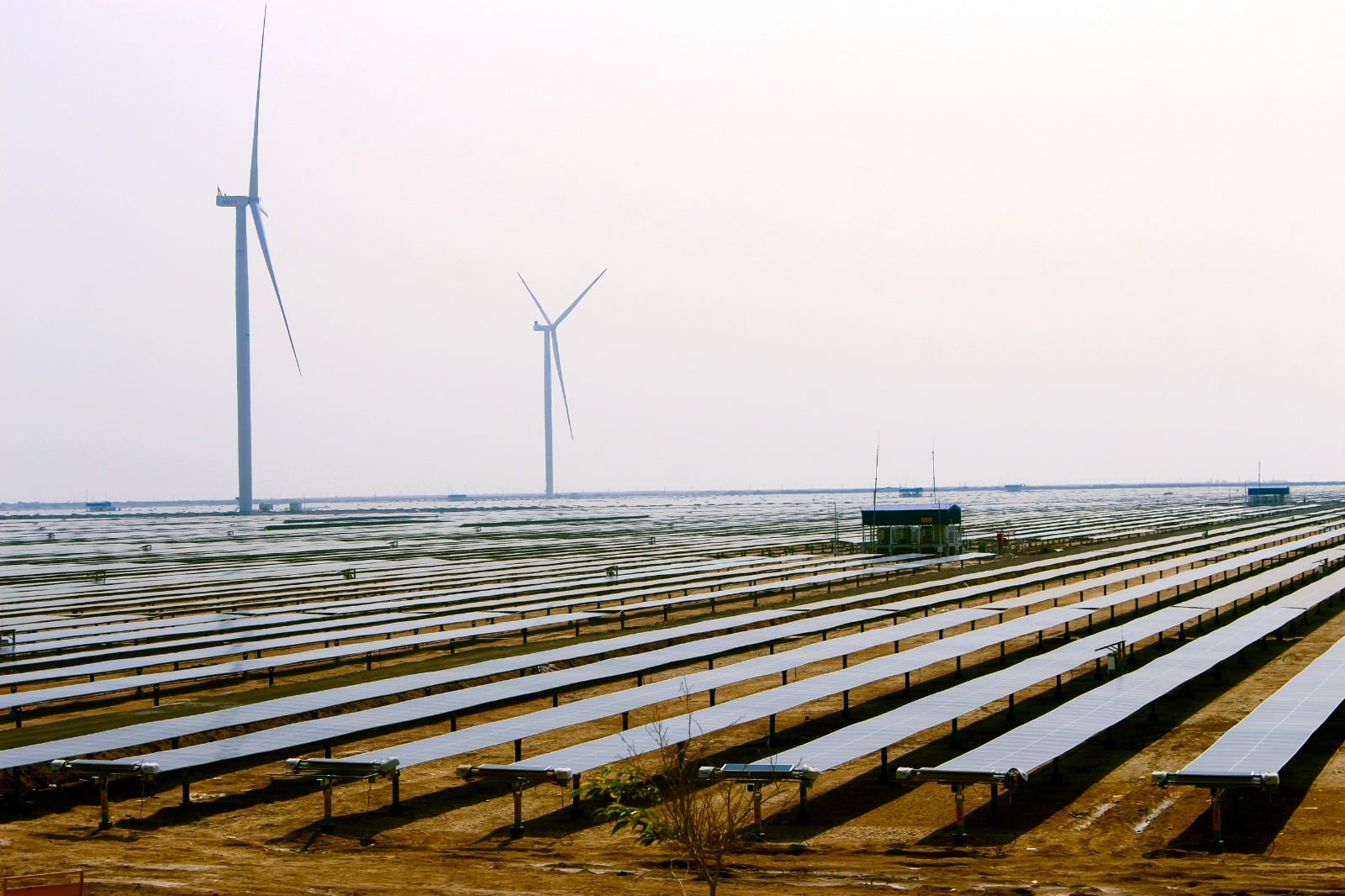
Solar generation also incorporates advanced technology. The facility uses bifacial solar modules, which can capture sunlight from both sides of a panel, along with horizontal single-axis trackers that follow the sun’s movement to improve energy capture throughout the day.
Robotic installation systems and waterless robotic cleaning technologies further support the operation and maintenance of the solar infrastructure.
These solutions demonstrate how renewable energy projects must adapt to local environmental conditions rather than rely on a uniform approach to construction and operation.
At Khavda, the challenge is not simply to install a large number of solar panels and wind turbines. It is to ensure that the infrastructure can be deployed, maintained and operated efficiently in an environment where conventional construction and maintenance practices may face significant constraints.
Water Conservation in an Arid Region
Water conservation is an important element of the Khavda project because the facility is located in the arid Kutch region, where water resources are limited.
Conventional solar-panel cleaning can require substantial quantities of water to remove dust that accumulates on module surfaces. At Khavda, waterless robotic cleaning systems are being used to remove dust without consuming water for this task.
According to project estimates, the approach is expected to save more than 1,700 million litres of water once the entire project is developed.
The use of waterless cleaning technology is particularly relevant in a region where dust accumulation can affect solar-panel performance, but water scarcity makes frequent conventional washing difficult.
The project’s approach highlights an important dimension of renewable energy development: sustainability depends not only on the electricity generated but also on the resources consumed in producing it.
By combining solar technology with water-efficient maintenance systems, Khavda aims to address both energy generation and resource conservation.
Digital Technology at the Centre of Operations
Khavda’s scale also makes digital monitoring and asset management essential.
The project incorporates aerial imagery analytics, geo-tagging solutions, digital-twin technology, robotic module installation and other digital systems to support construction and operations.
Its Energy Network Operation Centre uses a cloud-based, automated platform for real-time project monitoring and digital asset mapping.
These systems can help operators monitor infrastructure across the expansive site, maintain visibility over equipment and coordinate operations across multiple facilities.
Digital asset mapping is particularly relevant for a project spread across 538 square kilometres, where thousands of installations and supporting assets must be tracked and managed.
The use of digital twins and aerial imagery analytics also reflects a broader shift in renewable energy development: digital intelligence is becoming an integral part of energy infrastructure rather than serving merely as an additional technological layer.
At Khavda, the combination of physical infrastructure and digital systems is intended to support the management of a large, geographically dispersed energy network.
Indian Manufacturing and the Renewable Energy Supply Chain
The Khavda project also highlights the role of domestic manufacturing in India’s clean-energy expansion.
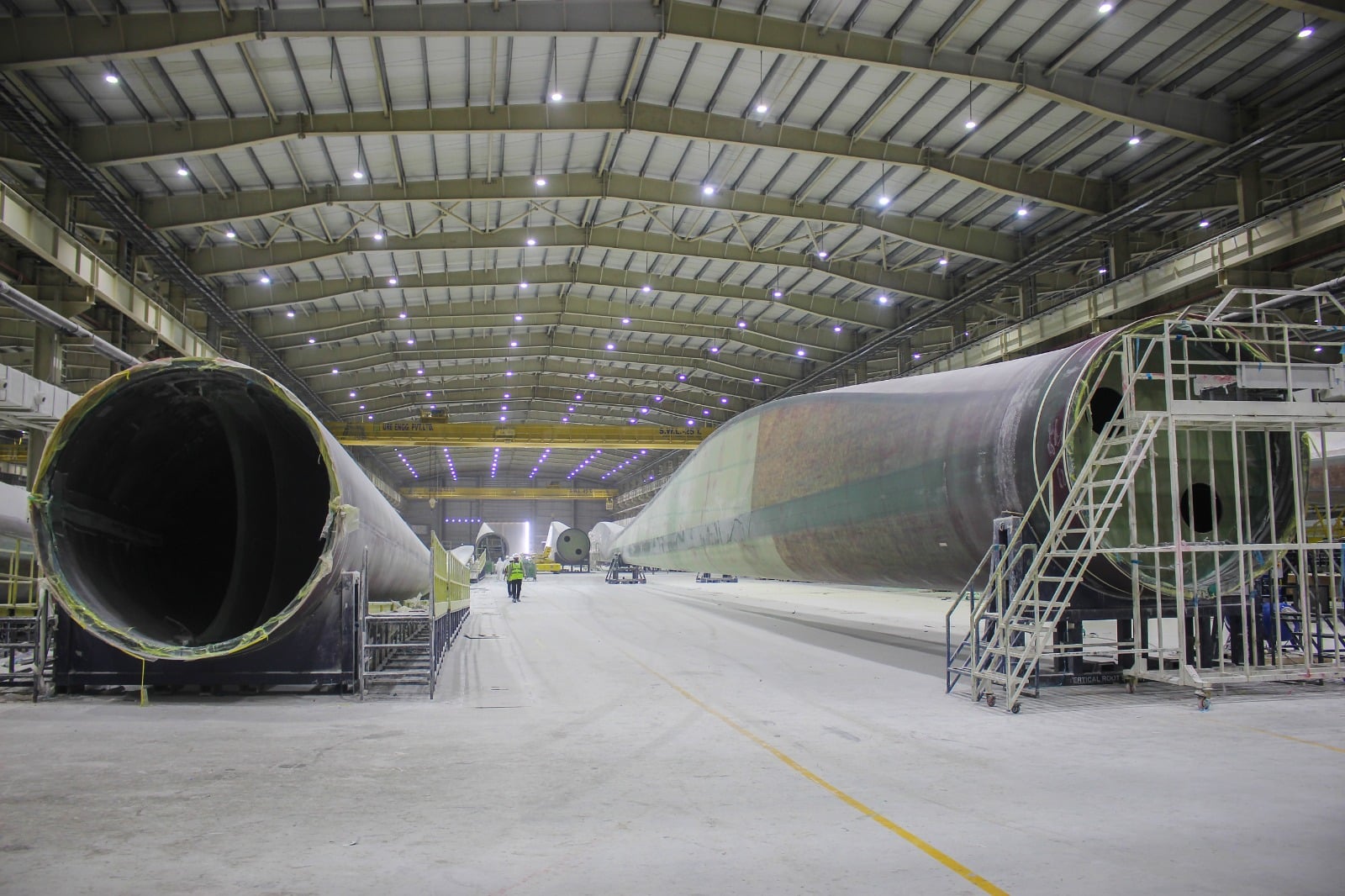
The 5.2 MW wind turbines operating at the site are manufactured by Adani New Industries at Mundra, Gujarat. They have been designed specifically to harness the wind conditions at Khavda.
This connects manufacturing with deployment, transportation, construction, transmission and operations within an increasingly integrated renewable energy supply chain.
The ability to manufacture and deploy large wind turbines domestically is relevant to the development of renewable energy infrastructure at scale. It demonstrates how industrial capabilities can support the expansion of clean-energy generation while creating opportunities across related sectors.
Khavda’s development therefore involves more than the installation of imported or domestically manufactured equipment. It brings together engineering, logistics, manufacturing and infrastructure development to establish a large renewable energy facility in a challenging location.
The project also illustrates how India’s clean-energy ambitions can create demand for specialised equipment and technical expertise, linking renewable energy deployment with the broader industrial ecosystem.
A Renewable Energy Park With Its Own Postal Identity
The growth of Khavda’s supporting ecosystem is also reflected in the development of services for its workforce.
A large township and associated facilities have emerged around the project, including medical services, dining halls, banking, shopping and leisure amenities.
The Khavda Renewable Energy Park has also received a dedicated PIN code, 370246, along with an India Post office, according to the project information.
The postal infrastructure serves a workforce of more than 15,000 people and is intended to facilitate access to services such as e-commerce deliveries, banking, insurance, logistics and digital verification.
The development of a dedicated postal identity illustrates how a remote project site can gradually acquire the facilities needed to support a substantial workforce.
For a development of Khavda’s size, these services are not peripheral considerations. Accommodation, healthcare, banking, communications and everyday amenities are essential to sustaining construction and operations over several years.
The emergence of this ecosystem also reflects the scale of human activity associated with the project, which extends well beyond electricity generation alone.
Expected to Generate 87.4 Billion Units of Clean Electricity
The potential contribution of Khavda becomes clearer when its expected electricity generation is considered.
Once fully developed, the project is expected to generate approximately 87.4 billion units of clean electricity annually. According to project estimates, this would be sufficient to power more than 17 million homes each year.
The projected annual output has also been compared with the electricity requirements of entire countries, including Belgium, Chile and Switzerland, illustrating the scale of the proposed generation capacity.
These figures represent projected outcomes for the completed project, rather than its current generation. The actual electricity produced will depend on the final installed capacity, operating conditions, resource availability and other factors.
Nevertheless, the estimates indicate the potential contribution of a single integrated renewable energy development to India’s growing electricity needs.
As electricity demand rises with economic activity, urbanisation and industrial development, projects combining solar, wind and battery storage can form part of efforts to expand electricity supply while reducing reliance on fossil fuels.
Khavda’s planned generation capacity and storage infrastructure are intended to contribute to the availability of clean, affordable and reliable power.
Climate Impact: Projected Reduction in Carbon Emissions
Khavda’s expected environmental benefits extend beyond electricity generation.
According to project estimates, the fully developed renewable energy park could avoid approximately 63.6 million tonnes of carbon dioxide emissions annually.
The project information compares this projected reduction with the emissions associated with approximately 13.8 million cars being taken off the road. It also equates the impact to the carbon sequestration potential of around three billion trees.
These comparisons are illustrative estimates intended to communicate the scale of the potential emissions benefit. Actual avoided emissions depend on the electricity sources displaced by renewable generation and the assumptions used in the calculations.
The project’s expected contribution to decarbonisation is linked to its ability to supply large quantities of electricity from renewable sources.
As solar and wind capacity expands, the integration of battery storage can also help manage differences between the timing of renewable generation and electricity demand.
Khavda’s combination of renewable generation and planned storage expansion therefore forms part of a broader effort to develop infrastructure capable of supporting India’s transition towards a lower-carbon electricity system.
More Than 15,200 Green Jobs Expected
Employment is another important dimension of the project’s anticipated impact.
At full development, Khavda is expected to create more than 15,200 green jobs, according to project estimates.
The employment associated with a renewable energy park of this scale extends across several activities, including engineering, construction, equipment installation, logistics, infrastructure development, operations and maintenance.
The project also requires personnel to support transportation, communications, healthcare, accommodation and other services for the workforce.
These activities illustrate how renewable energy infrastructure can generate economic opportunities beyond the direct production of electricity.
The creation of specialised technical roles may also contribute to demand for skills in clean-energy technologies, digital monitoring, equipment maintenance and large-scale infrastructure management.
The employment figure is a projected outcome for the project and should not be interpreted as a verified count of jobs already created. The final employment impact will depend on the project’s development and operational requirements.
Even so, Khavda demonstrates the potential for renewable energy investments to support a wider economic ecosystem involving workers, technical specialists, manufacturers, contractors and service providers.
Supporting India’s Clean-Energy Ambitions
Khavda is being developed against the backdrop of India’s wider renewable energy and climate commitments.
The country has set a target of achieving 500 GW of non-fossil fuel-based energy capacity by 2030. It has also articulated an ambition to meet 50% of its energy requirements from non-fossil fuel sources, pursue energy independence by 2047 and achieve net-zero emissions by 2070.
These national goals require significant expansion of clean-energy capacity, along with investments in transmission, storage, grid infrastructure and supporting technologies.
Adani Green Energy is developing the Khavda project as part of its commitment to reach 50 GW of renewable energy capacity by 2030. The 30 GW planned capacity at Khavda would represent a substantial component of that ambition.
The project’s current operational capacity of more than 11 GW, together with 6.6 GWh of battery storage, shows that development is already underway rather than remaining a long-term proposal.
However, the contribution of any single project to national energy targets must be considered alongside the broader electricity system, including grid integration, storage deployment, transmission capacity and the continued development of other renewable energy facilities.
Khavda’s significance lies in demonstrating how large-scale renewable energy capacity can be developed in one location while bringing together the physical and technological infrastructure needed to support it.
Mundra Port: Another Example of Infrastructure Development in Kutch
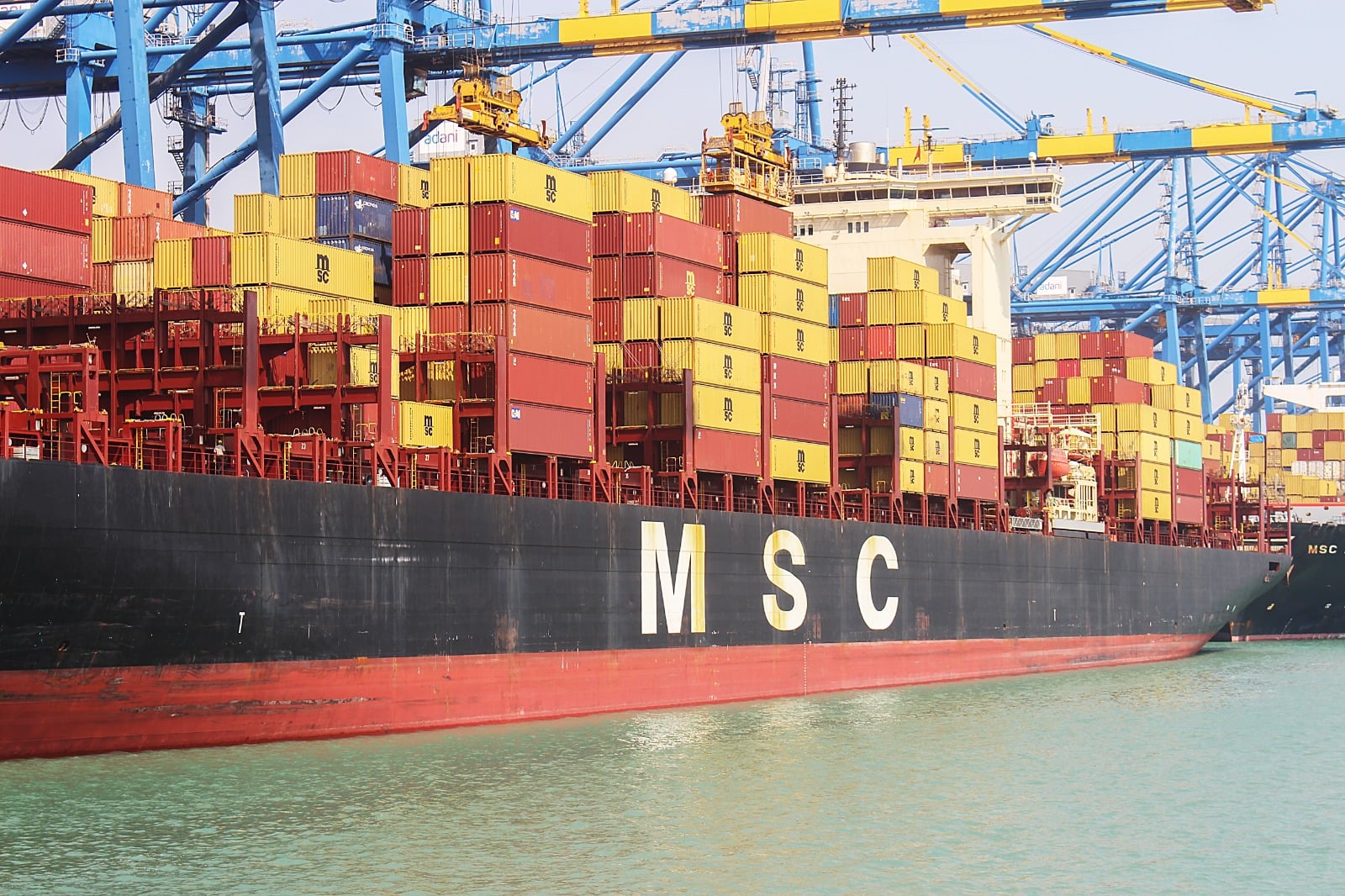
The broader story of infrastructure development in Kutch also includes Mundra Port, which has grown from a greenfield port project into a major commercial port ecosystem.
Mundra has been officially recognised as one of India’s first four Mega Ports and is described in the supplied project information as the only privately operated port to receive this distinction.
The port has also been recognised for the speed of its customs clearance processes, with an average cargo release time of 32 hours and 27 minutes. It became the first port in India to handle more than 200 million metric tonnes of cargo in a single financial year, recording 200.7 million metric tonnes.
Its operations span multiple cargo categories, including containers, crude oil, coal, automobiles and agricultural products.
The port’s development has also been accompanied by environmental initiatives. According to the supplied information, more than 5,631 hectares have been brought under ecological restoration, conservation and plantation, while over 1.99 crore trees have been planted, conserved and nurtured.
Mundra is also home to a major private-sector mangrove conservation initiative.
Although the port and the Khavda renewable energy park serve different purposes, both illustrate the scale of infrastructure development taking place in the Kutch region. Together, they highlight the role of transportation, logistics, manufacturing and energy infrastructure in supporting industrial activity and economic growth.
Their environmental initiatives also bring attention to the importance of incorporating conservation and resource management into large infrastructure projects.
From Gigawatts to Homes, Water and Livelihoods
The Khavda project is often described through its planned capacity of 30 GW, but its potential impact encompasses several interconnected outcomes.
According to project estimates, the completed development is expected to:
- Generate approximately 87.4 billion units of clean electricity annually.
- Supply enough electricity to power more than 17 million homes each year.
- Avoid approximately 63.6 million tonnes of carbon dioxide emissions annually.
- Save more than 1,700 million litres of water through waterless robotic solar-panel cleaning.
- Create more than 15,200 green jobs.
These are projected benefits for the fully developed project, not a statement that every outcome has already been achieved.
Taken together, they illustrate how a large renewable energy development can potentially contribute to electricity supply, emissions reduction, water conservation and employment.
The figures also highlight why the assessment of renewable energy infrastructure increasingly extends beyond installed capacity. Its wider significance depends on how effectively it supplies electricity, manages resources, integrates with the grid and supports economic activity.
Khavda and India’s Ability to Execute at Scale
The Khavda Renewable Energy Project is a major undertaking in terms of both its planned capacity and the complexity of its development.
Establishing 30 GW of renewable energy infrastructure across 538 square kilometres requires more than solar panels and wind turbines. It involves engineering solutions for difficult terrain, extensive transmission and transportation networks, water-management systems, digital monitoring, domestic manufacturing and facilities for a large workforce.
With more than 11 GW of solar and wind capacity already operational and approximately 6.6 GWh of battery storage in place, the project is progressing towards its target of 30 GW by 2029.
Its projected benefits—including 87.4 billion units of annual clean electricity, the potential to power more than 17 million homes, substantial emissions reductions, water savings and green employment—indicate the scale of its intended contribution.
For India, the significance of Khavda lies not simply in the size of its renewable energy capacity but in the infrastructure and coordination required to deliver it. The project brings together energy generation, technology, engineering, manufacturing, logistics and resource conservation in one of the country’s most challenging environments.
Khavda is still moving towards its planned final capacity, but the operational infrastructure already established offers a tangible example of how India’s clean-energy transition is being built on the ground.