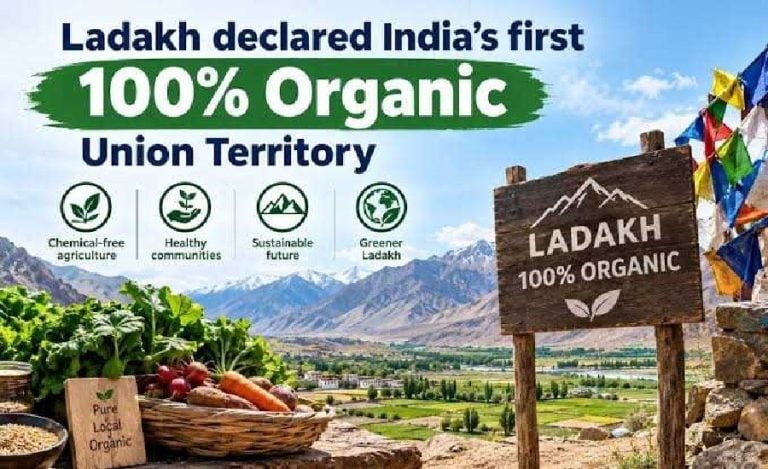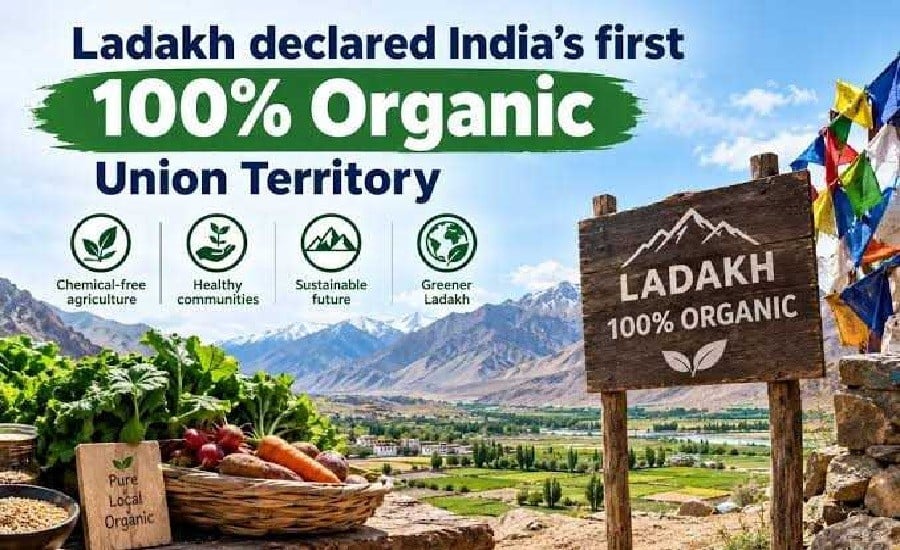
Ladakh: Ladakh has achieved a major milestone in sustainable agriculture, with Lieutenant Governor Vinai Kumar Saxena declaring it India’s first 100 per cent organic Union Territory. The announcement, made on October 25, 2026, recognises the dedication of local farmers and the sustained efforts of the administration to promote chemical-free agricultural practices across the high-altitude Himalayan region.
The declaration marks an important development for a Union Territory where agriculture operates under challenging climatic and geographical conditions. By building on traditional farming methods and adopting policies that discourage chemical inputs, Ladakh aims to establish itself as a model for environmentally responsible agriculture.
The administration believes the transition will help protect the region’s fragile Himalayan ecosystem, improve soil and water health, preserve traditional agricultural knowledge and create better livelihood opportunities for farmers.
LG Vinai Kumar Saxena Calls Achievement a Proud Moment for Ladakh
Congratulating farmers, agricultural stakeholders and officials involved in the transition, Lieutenant Governor Vinai Kumar Saxena described the achievement as a moment of pride not only for Ladakh but for the entire country.
“This is a moment of immense pride for Ladakh and the entire nation. Our farmers have demonstrated that environmentally responsible agriculture can flourish even in the most challenging geographical conditions,” he said.
The Lieutenant Governor emphasised that the declaration represented more than the achievement of an administrative target.
“Becoming a fully organic Union Territory is not merely a milestone; it is a commitment to protecting our fragile Himalayan ecosystem, preserving our traditional farming practices and ensuring better livelihoods for our farmers,” he added.
His remarks highlighted the importance of balancing agricultural development with environmental protection in a region particularly sensitive to ecological changes.
July 2026 Ban on Chemical Fertilisers Strengthened Organic Farming Drive
A major policy intervention supporting Ladakh’s organic transition came in July 2026, when the Lieutenant Governor ordered a complete prohibition on chemical and synthetic fertilisers used for agricultural purposes across the Union Territory.
The restrictions covered the procurement, distribution, sale, marketing and use of such fertilisers.
The decision was aimed at safeguarding Ladakh’s organic status and protecting the agricultural sector from practices that could undermine the region’s transition to chemical-free cultivation.
By restricting chemical fertiliser use, the administration sought to strengthen soil conservation, protect water resources and support the long-term sustainability of farming activities.
The prohibition also formed part of a wider effort to preserve organic certification and build confidence in agricultural produce marketed as organically grown in Ladakh.
Organic Fertilisers Distributed Before 2026 Sowing Season
Alongside restrictions on chemical fertilisers, the Ladakh administration introduced measures to ensure farmers had access to alternative agricultural inputs.
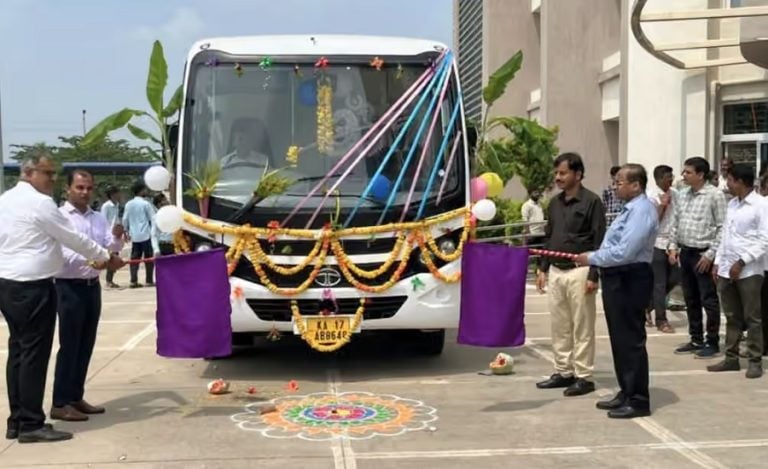
In March 2026, consignments of organic fertilisers were flagged off for distribution to farmers across villages in the Union Territory.
The initiative was intended to ensure timely availability of organic inputs before the sowing season and help farmers continue agricultural operations without relying on synthetic fertilisers.
Providing suitable alternatives was an important part of the transition, particularly because Ladakh’s short growing season and demanding climatic conditions leave farmers with limited opportunities to recover from disruptions in agricultural activity.
The administration’s approach combined policy restrictions with practical support for farmers adapting to organic cultivation.
Why Organic Farming Matters for Ladakh’s Fragile Himalayan Ecosystem
Ladakh’s high-altitude environment presents distinctive challenges for agriculture, including a short cultivation season, limited water availability and sensitive soil conditions.
The region’s farming communities have traditionally relied on locally adapted cultivation practices suited to these geographical conditions.
Promoting organic agriculture is intended to build on this experience while reducing dependence on chemical inputs.
The transition is expected to contribute to healthier soil, better protection of water resources and the preservation of agricultural practices developed over generations.
For Ladakh, the importance of organic farming extends beyond crop production. It is also linked to protecting the natural resources on which rural communities and future generations depend.
The administration is positioning the Union Territory’s experience as an example of how traditional knowledge and modern agricultural support can work together to advance sustainable high-altitude farming.
Apricots, Sea Buckthorn, Buckwheat and Barley Could Benefit
Ladakh’s organic status is also expected to create new economic opportunities for farmers cultivating crops suited to the region’s distinctive climate.
Among the agricultural products with potential to benefit are apricots, sea buckthorn, buckwheat, barley and locally grown vegetables.
These products are closely associated with Ladakh’s agricultural identity and could gain greater market recognition through organic branding and certification.
The administration sees opportunities to improve the value of locally produced crops by strengthening post-harvest management, processing, packaging and marketing.
For example, value addition can help farmers move beyond selling raw agricultural produce and access markets for processed or branded products.
However, the extent of the economic benefits will depend on effective certification systems, reliable market connections, processing facilities and the prices farmers are able to obtain.
Focus on Organic Certification, Branding and Market Access
The Lieutenant Governor has stressed that Ladakh’s organic status must produce measurable benefits for the farming community.
While the declaration provides an opportunity to promote Ladakh’s agricultural products, farmers will need stronger support systems to take advantage of growing consumer interest in organic food.
Organic certification, product traceability, branding, value addition and improved market linkages are among the areas identified for further development.
These measures could help Ladakh’s farmers reach consumers looking for authentic and organically produced agricultural products.
The administration also aims to strengthen organic value chains so that farmers receive a greater share of the value generated by their produce.
“Our goal is to ensure that the organic status of Ladakh brings real value to our farmers through better market access, improved price realisation and sustainable livelihoods,” Mr Saxena said.
He further emphasised the need to combine traditional agricultural wisdom with scientific support while strengthening organic value chains and protecting natural resources.
Ladakh’s Organic Mission Aligns With National Natural Farming Goals
The development also supports the broader national emphasis on natural farming, environmental conservation and sustainable agricultural practices.
Prime Minister Narendra Modi has advocated greater attention to natural farming, soil health and climate-resilient agriculture.
Ladakh’s initiative reflects these priorities through efforts to reduce chemical inputs, safeguard natural resources and promote farming systems suited to local environmental conditions.
The Union Territory’s approach also demonstrates the importance of adapting agricultural policies to regional geography rather than relying on a single model for every part of the country.
LG Urges Other States and UTs to Draw Inspiration
Following the declaration, Lieutenant Governor Saxena expressed hope that Ladakh’s achievement would encourage other States and Union Territories to explore sustainable agricultural practices appropriate to their own conditions.
“Let Ladakh’s achievement inspire other States and Union Territories to adopt sustainable agriculture in accordance with their own geographical conditions and farming traditions,” he said.
For Ladakh, the next phase will involve ensuring that its declared organic status is supported by effective certification, continued farmer assistance and stronger commercial opportunities.
The administration’s challenge will be to translate the environmental milestone into improved farm incomes, resilient agricultural practices and long-term protection of the Himalayan ecosystem.