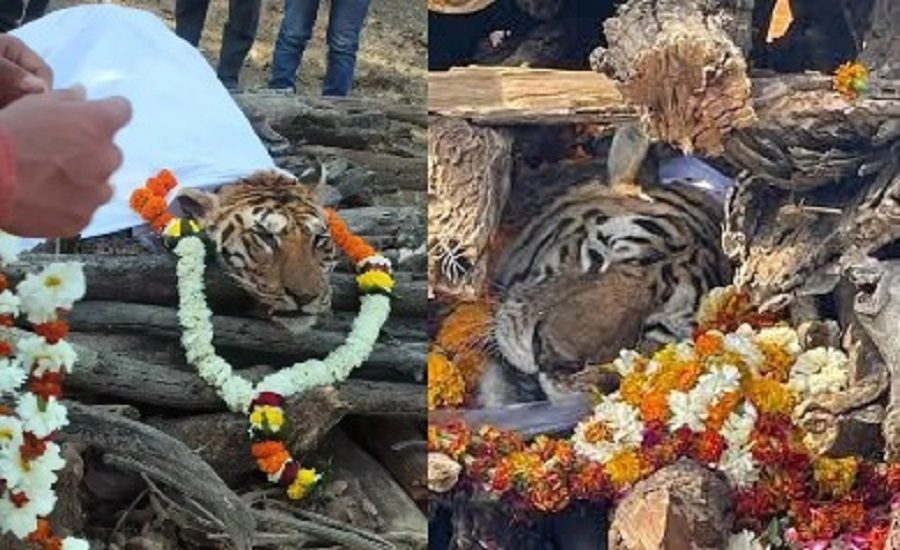
Wildlife lovers and forest officials are mourning the loss of ‘Langdi’, one of the most courageous and iconic tigresses of Pench Tiger Reserve in Madhya Pradesh.
Born with a defect in one of her front paws, Langdi defied the harsh realities of life in the wild and went on to become a symbol of resilience and survival. After ruling the forests of Pench for nearly 18 years, the legendary tigress recently passed away, leaving behind a remarkable legacy that continues through her offspring.
The Story of a Tigress Who Challenged Nature
In the wilderness, physical weakness often means certain death. The jungle follows a harsh rule — only the strongest survive.
Yet Langdi, affectionately named by forest watchers and wildlife enthusiasts because of her limp, challenged this rule. Despite a deformity in one of her front paws, she survived, hunted, and thrived in the dense forests of Pench.
Her life became an extraordinary example of courage, determination, and the will to live, proving that even in the unforgiving world of wildlife, resilience can overcome physical limitations.
Read also: India Records 10th Successful Cheetah Litter as Jwala Gives Birth to Five Cubs
Official Identity: PN 20 (T20)
According to forest records, Langdi was officially identified as PN 20 (T20) and is believed to have been born around 2008.
Interestingly, she was the real sister of India’s most famous tigress, Collarwali, who gained global recognition for setting records by giving birth to the highest number of cubs in the wild.
While Collarwali became famous for her prolific motherhood, Langdi carved her own place in Pench through grit and survival against the odds.
A Remarkable 18-Year Life in the Wild
The average lifespan of a tiger in the wild is 12 to 14 years. Surviving longer than that is rare due to territorial fights, injuries, and difficulties in hunting as age advances.
Langdi, however, exceeded these odds by living for nearly 18 years, making her one of the longest-living wild tigresses in the region.
During her lifetime, she gave birth to 10 cubs, many of whom now dominate territories across Pench and surrounding forests, helping strengthen the tiger population in the region.
Struggles of Old Age
In recent months, Langdi had begun showing signs of old age. Her pace slowed, and hunting became increasingly difficult.
Forest officials observed that she often survived on prey left behind by other predators, a common adaptation among aging big cats.
She was last spotted on March 6, after which forest authorities later discovered her body in the Karmajhiri Range of the reserve.
Forest Officials Perform Last Rites
Following wildlife conservation protocols, officials from the Pench Forest Department conducted the final rites of the tigress with due procedures.
For many forest guards and wildlife enthusiasts who had watched her life unfold over the years, it was an emotional farewell to one of Pench’s most resilient inhabitants.
Social Media Pays Tribute
The news of Langdi’s passing quickly spread across social media, prompting emotional tributes from wildlife activists and photographers.
Animal activist Kaivalya Kashyap shared images of the tigress’s funeral on Instagram, writing that the fearless tigress had crossed the “Rainbow Bridge.”
Wildlife photographer Monu Dubey also shared one of her final videos, noting that even in old age, Langdi continued to walk with dignity through her jungle.
The Forest That Inspired “The Jungle Book”
Pench National Park, spread across the Seoni and Chhindwara districts of Madhya Pradesh, is one of India’s most famous wildlife habitats.
The park is named after the Pench River, which flows through the forest landscape.
The forests of Pench also famously inspired Rudyard Kipling’s classic book The Jungle Book, published in 1894. Characters like Mowgli, Akela, Raksha, Baloo, and Sher Khan were inspired by the wildlife and landscapes of this region.
Since the 1970s, tourists and wildlife enthusiasts from across the world have visited Pench hoping to experience the same wilderness that inspired Kipling’s legendary tale.
A Legacy That Will Live On
Though Langdi is gone, her legacy remains alive through her cubs and the stories shared by forest officials, photographers, and wildlife lovers.
Her life stands as a powerful reminder that determination and resilience can overcome even the harshest challenges of nature.
For Pench Tiger Reserve, Langdi will forever remain a symbol of courage — a tigress who proved that a physical limitation could never define the spirit of a true survivor.
Read also: Nearly 6,000 Big Cats in MP: Govt Seeks WII’s Help to Assess Forest Carrying Capacityff