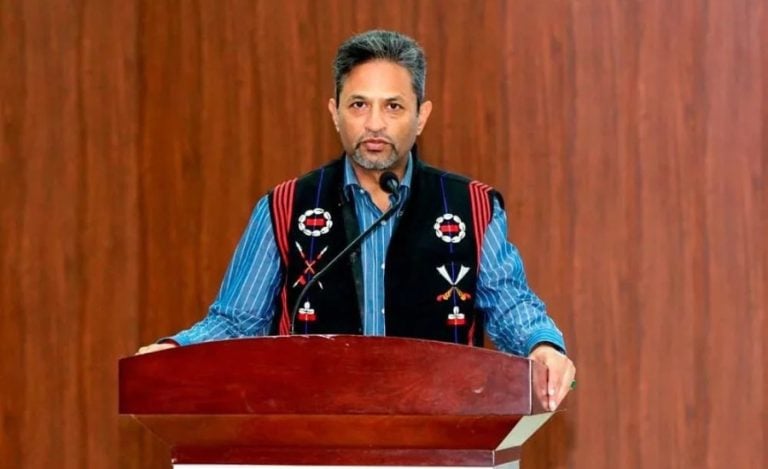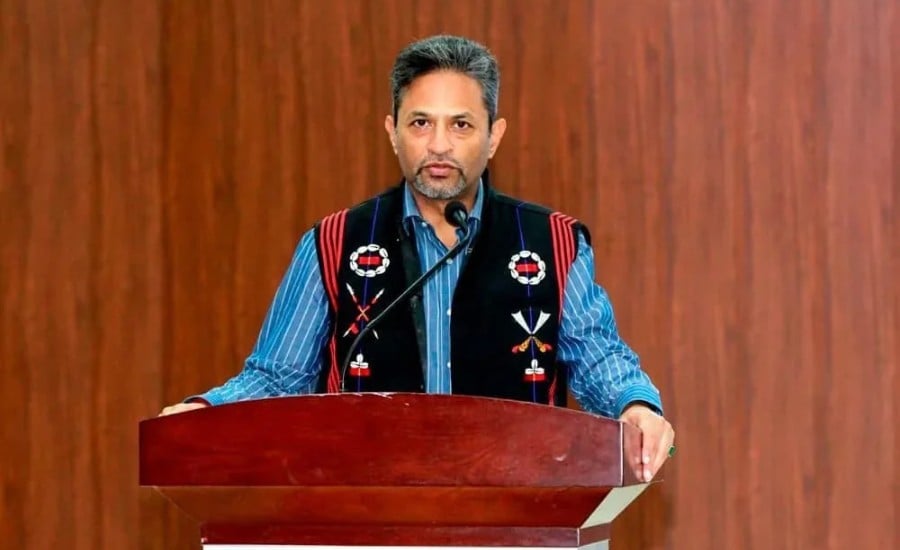
Lumami: Nagaland Director General of Police (DGP) Rupin Sharma, a 1992-batch IPS officer of the Nagaland cadre, has called for greater accountability and transparency in government institutions, expressing concern over a tendency among junior officials to pass files to senior officers instead of taking decisions within their authority.
Addressing the culmination programme of Vigilance Awareness Week 2026 at Nagaland University’s Lumami headquarters on Monday, Sharma said that reluctance among officials to accept responsibility often results in excessive centralisation of administrative authority.
He stressed that effective governance requires officers at every level to exercise their responsibilities, make decisions and remain accountable for their actions.
DGP Flags Culture of Passing Responsibility to Senior Officers
Sharma observed that when junior officers avoid taking decisions, even routine administrative matters move upwards, increasing the workload of senior officials and slowing down institutional functioning.
Read Also: Nagaland DGP Rupin Sharma Calls for Balance Between Customary and Formal Justice
He emphasised that accountability must begin at the top and extend throughout the administrative hierarchy.
“When the fountainhead of authority starts taking responsibility, that responsibility starts trickling down to the bottom,” he said.
The DGP also urged officials to distinguish between bona fide decisions taken in good faith and mala fide actions involving deliberate wrongdoing. He maintained that genuine decisions should not automatically be treated with suspicion unless there is evidence of improper intent.
Vigilance Should Focus on Solving Problems, Not Just Finding Fault
Sharma said vigilance should function as a mechanism for identifying irregularities and addressing institutional weaknesses rather than becoming an exercise limited to fault-finding.
“I think vigilance is the stepping stone for solving a problem,” he said.
He cautioned that overlooking irregularities and unhealthy practices could allow them to develop into more serious institutional problems.
Highlighting the need for continuous monitoring, he said vigilance and security required sustained attention.
“Vigilance and security is a 24/7 project where you cannot let your guard down for even a second,” he added.
Transparency and Access to Accurate Information Essential for Governance
Emphasising transparency, Sharma said public institutions must ensure that information is accessible and based on verified facts.
He argued that people should be able to form opinions using accurate information rather than relying on secrecy or incomplete accounts.
“What is sacrosanct and most important in transparency is the facts. If the facts are correct and presented properly, there will be more unanimity of opinion,” he said.
He also highlighted the importance of creating an environment in which citizens can question decisions and express disagreement without fear.
According to Sharma, universities, classrooms, villages and public platforms should provide space for open discussion and constructive dissent.
Police Recruitment Reform Highlights Importance of Equal Opportunity
Citing changes in Nagaland Police recruitment, Sharma highlighted how transparent selection processes can improve institutional standards and public confidence.
He said the department’s recent open recruitment exercise, supported by the state government and the Chief Minister, had helped ensure equal opportunities for candidates and reduce criticism surrounding the selection process.
Sharing figures on the educational profile of the force, he said:
- Earlier educational profile: In 2023, approximately 84% of personnel at the head constable rank and below had not completed matriculation.
- Share of the force: Personnel at these ranks accounted for nearly 80–85% of the total police force.
- Recent recruitment: Around 82% of personnel selected through the latest open recruitment exercise had completed Class 10 or a higher level of education.
- Community representation: Allocation of recruitment seats on a tribal basis helped provide opportunities to capable candidates from different communities.
The DGP said the recruitment exercise demonstrated the importance of combining fairness in selection with opportunities for representation across communities.
DGP Advocates Rule of Law Over Show of Force
Sharma also spoke about the need to strengthen professionalism in policing, observing that the primary responsibility of police personnel was to uphold the law rather than rely on the display of force.
Comparing policing practices in different states, he said that legal knowledge and an understanding of police powers could command greater public respect than the deployment of large numbers of armed personnel.
Referring to security arrangements at polling stations in Nagaland, he observed that the state often deployed substantial numbers of armed personnel and expressed hope that a more educated police force would increasingly rely on the authority of law.
He also encouraged students and young people to question authority, participate in discussions and express their views without fearing failure or disagreement.
Nagaland University Observes Vigilance Awareness Week 2026
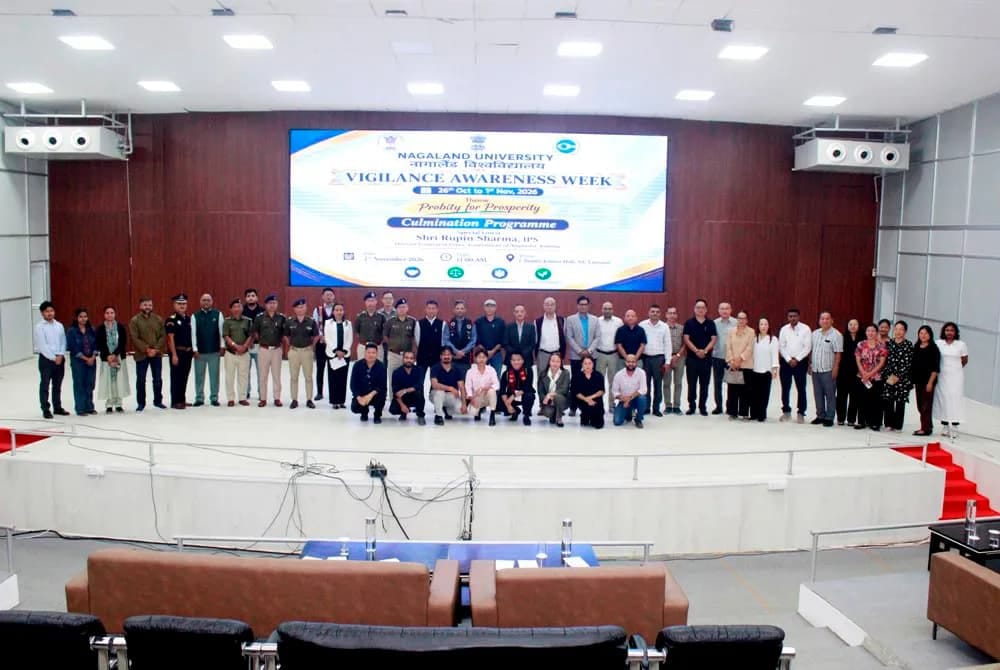
Nagaland University observed Vigilance Awareness Week from October 26 to November 1 under the theme “Probity for Prosperity”. The week-long programme aimed to promote integrity, ethical conduct, transparency and accountability in public and organisational life.
The culmination programme was held on November 2 at I. Ihoshe Kinimi Hall, Lumami, with DGP Rupin Sharma attending as the special guest.
Activities organised during the observance included:
- Poster competition: Held on October 26, with participation from different university departments.
- Essay competition: Conducted on October 28 on the topic “Probity in Public Life: Strengthening Democratic Governance in India”, attracting 53 research scholars and undergraduate and postgraduate students from the university’s Lumami, Kohima and Medziphema campuses.
- Staff capacity-building programme: Organised on October 30 under the aegis of the Central Vigilance Commission.
The staff training sessions covered public procurement and the Government e-Marketplace (GeM), information technology, cybersecurity hygiene, conduct rules and conflict of interest.
The university also announced the winners of the poster and essay competitions during the concluding programme.
Sharma’s address underscored the importance of making vigilance a continuous institutional practice, supported by responsible decision-making, transparent procedures and accountability at every level of governance.
Read Also: Nagaland Faces 17.5% Youth Unemployment; Chief Secretary Calls for Education Reforms