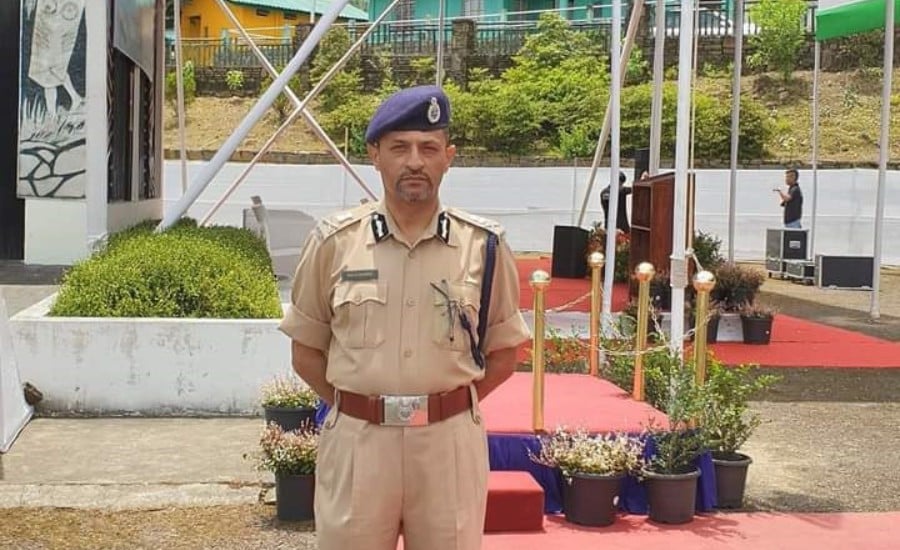
Dimapur: Nagaland DGP Rupin Sharma, a 1992-batch IPS officer of the Nagaland cadre, has drawn attention to the relationship between community solidarity, customary institutions and the formal justice system in the Northeast, cautioning that collective responses to allegations of wrongdoing can sometimes turn individual disputes into wider community conflicts.
In an opinion article published on September 26, Sharma examined what he described as the tendency of communities to “stand with their own”. He noted that such solidarity has historical roots in the Northeast, where village councils, chiefs, clan elders and other customary institutions traditionally played important roles in maintaining social order and resolving disputes.
DGP Calls for Distinction Between Solidarity and Shielding
Sharma argued that problems can arise when an allegation against an individual is reframed as an attack on an entire community.
According to his analysis, mobilisation around an accused person can put pressure on complainants or witnesses, complicate investigations and broaden disputes that could otherwise be addressed through established legal processes.
Read Also: Nagaland Police to Launch Single-Window Portal for Online Complaints Within 12 Days
At the same time, Sharma acknowledged that community solidarity has an important role in mutual support, resilience and cultural continuity. His argument, as presented in the article, was not against community institutions but against automatically shielding individuals accused of wrongdoing.
Lamhai Namdi Dispute Cited as an Example
Against the backdrop of continuing tensions linked to the Naga-Kuki conflict in Manipur, Sharma also discussed how community identity and customary authority can intersect with disputes elsewhere in the Northeast.
He referred to Lamhai Namdi in Nagaland while discussing disputes involving village boundaries and land rights. The issue has a documented administrative history: the Nagaland government constituted a Cabinet Sub-Committee in 2019 to examine the establishment of the settlement and boundary questions involving the then Peren and Dimapur districts. Following the creation of Chümoukedima district in 2021, the dispute came to involve Peren and Chümoukedima.
The Lamhai Namdi area has previously witnessed law-and-order concerns. Nagaland government records show that prohibitory measures were imposed in the area following tensions and violence, while efforts have also been made through government and community-level discussions to address the dispute.
Sharma Seeks Stronger Justice-System Access
Sharma traced the role of customary institutions in the Northeast to periods when formal state institutions had limited reach in many hill areas. Such institutions historically dealt with matters including land, marriage, inheritance, property and other disputes.
He argued that these historical arrangements continue to influence how communities respond when one of their members is arrested or accused of an offence. However, he stressed that under a constitutional system based on individual criminal responsibility, determination of guilt or innocence should concern the conduct of the individual rather than their community identity.
Among the measures outlined by Sharma were improving access to the formal justice system, clarifying the respective roles of customary and formal institutions, protecting witnesses and complainants from community pressure, and creating channels for dialogue between communities before disputes escalate.
He also called for avoiding collective punishment and suggested greater civic and legal education through schools, churches and student organisations.
Read Also: Nagaland DGP Rupin Sharma Says 6% of Population Affected by Drug Abuse, Calls for Collective Action