New Delhi: India is making significant progress towards launching its first human deep-sea mission by 2028, with plans to reach depths of up to 6,000 metres beneath the ocean surface.
Union Minister of State for Science and Technology Dr Jitendra Singh announced the development during the Indo-Pacific Regional Dialogue (IPRD) 2026. The mission, known as Samudrayaan, aims to strengthen India’s deep-ocean exploration capabilities and open new opportunities in marine research and the Blue Economy.
Details of India Human Deep Sea Mission
Speaking at the Indo-Pacific Regional Dialogue 2026, Dr Jitendra Singh said India is working towards sending its first human deep-sea mission to a depth of 6,000 metres by 2028.
Read also: Samudrayaan Mission Explained: How This 500-Metre Dive Strengthens India’s Deep-Ocean Capabilities
The minister highlighted India’s growing capabilities in ocean research and exploration. He explained that the government is bringing together different scientific fields and institutions to achieve major technological goals.
According to the minister, ocean sciences, space technology, nuclear science, geology, electronics and robotics are increasingly working together to improve India’s deep-sea exploration capabilities.
Samudrayaan Mission And Matsya 6000 Submersible
India’s ambitious deep-sea exploration programme includes the Samudrayaan Mission, which is part of the government’s Deep Ocean Mission launched in 2021.
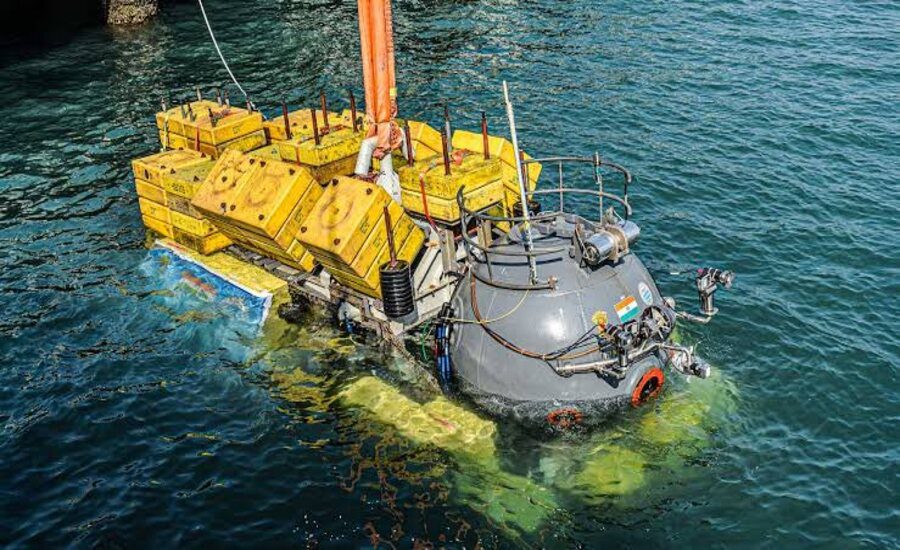
Under this programme, India is developing an advanced human-occupied submersible called MATSYA 6000. It is designed to carry three aquanauts to depths of up to 6,000 metres below sea level.
The submersible will help scientists directly observe and study unexplored parts of the deep ocean.
It is also being developed with advanced scientific instruments, navigation systems and safety equipment to support underwater research.
The vehicle is designed for an operational period of 12 hours and can support its occupants for up to 96 hours in emergency situations.
NIOT StrengthensIndia Human Deep Sea Mission Exploration Capabilities
Dr Jitendra Singh also highlighted the contribution of the National Institute of Ocean Technology (NIOT), Chennai, to India’s deep-sea exploration programme.
The institute has developed the capability to conduct trials at depths of 5,000 to 6,000 metres in the Central Indian Ocean Basin.
The minister also mentioned the Ocean Mineral Explorer, which helps scientists explore hydrothermal sulphide deposits on the ocean floor.
Several such deposits have already been identified, creating new opportunities for studying valuable deep-sea mineral resources.
What is the Importance of India Human Deep Sea Mission
India’s Deep Ocean Mission is not limited to sending humans underwater. It also focuses on exploring ocean resources, developing underwater technologies and studying marine biodiversity. The mission includes several important areas:
- Deep-Sea Mining: Developing technologies to explore and collect valuable minerals from the ocean floor.
- Human Submersible: Building advanced vehicles for human exploration of deep-sea regions.
- Ocean Climate Research: Improving the understanding and forecasting of ocean-related climate changes.
- Marine Biodiversity: Studying and conserving deep-sea plants, animals and microorganisms.
- Ocean Energy: Exploring opportunities to generate energy and freshwater from ocean resources.
- Ocean Exploration: Identifying mineral deposits and improving scientific knowledge of the deep ocean.
These initiatives are expected to strengthen India’s Blue Economy and create new opportunities in marine science and technology.
India Focuses On International Cooperation And Indigenous Technology
The minister said India is aiming to become globally competitive in ocean research through indigenous technology, international cooperation and scientific partnerships.
He also highlighted the importance of sharing research facilities, scientific knowledge and data between countries.
According to Dr Jitendra Singh, oceans do not follow national boundaries. Therefore, international cooperation is important for addressing challenges such as marine pollution and rising ocean temperatures.
He proposed the principle of “One Ocean, Shared Knowledge and Equitable Prosperity” as an important approach to strengthening cooperation across the Indo-Pacific region.
India Human Deep Sea Mission Linked To Viksit Bharat 2047
The government sees deep-ocean resources as an important opportunity for India’s long-term economic development.
Dr Jitendra Singh said that deep-sea resources could become a major source of economic value and support the national vision of Viksit Bharat 2047.
India is also working to connect its ocean research capabilities with space technology and other scientific programmes.
The minister highlighted the country’s ambition to advance human exploration both in space and in the deep ocean.
If successful, the Samudrayaan Mission will mark an important milestone in India’s scientific and technological development, strengthening its position in global deep-sea research.
Read also: ISRO Deep Sea Mission 2027: From Matsya 6000 to Human Ocean Exploration—India’s Next Giant Leap