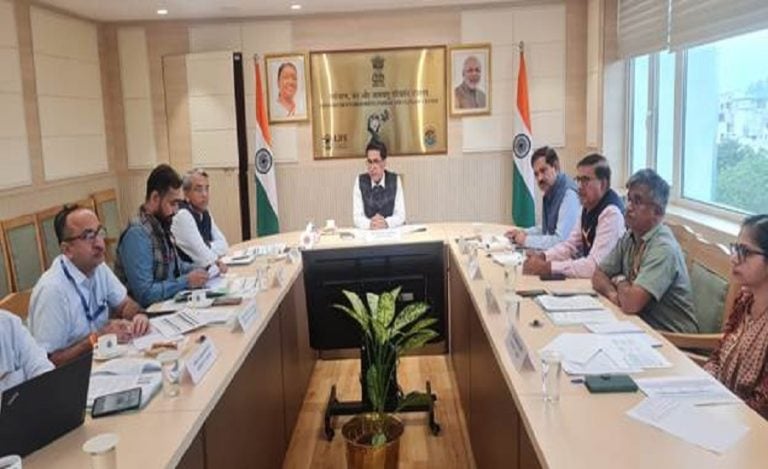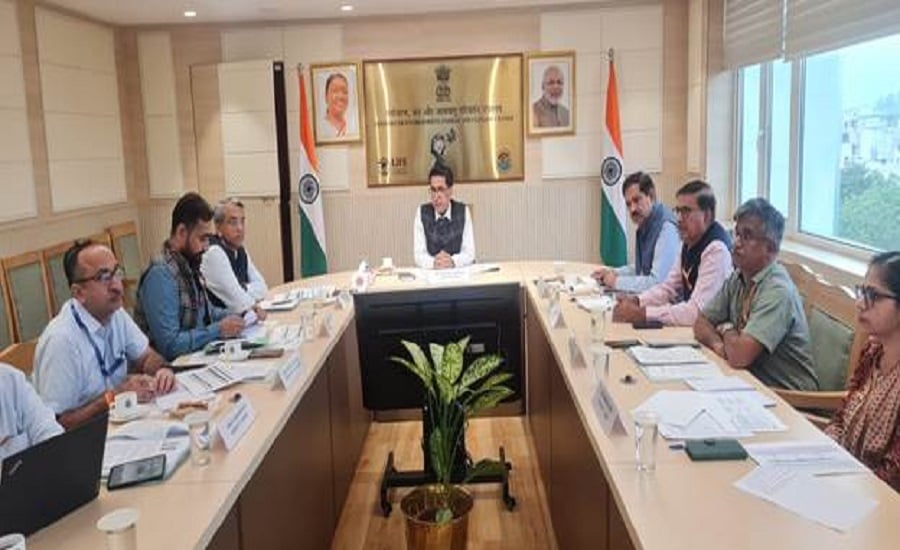
Delhi: Narendra Bhooshan, a 1992-batch IAS officer of the Uttar Pradesh cadre and Secretary of the Ministry of Environment, Forest and Climate Change (MoEFCC), on Friday reviewed the Uttar Pradesh government’s action plan to address air pollution in Delhi-NCR and assess preparedness for the winter season.
During the meeting, the Uttar Pradesh government presented 11 key initiatives undertaken so far, along with planned measures to achieve comprehensive implementation of air quality improvement interventions. These initiatives target major sources of pollution, including road dust, construction and demolition (C&D) activities, open burning of biomass, vehicular emissions, traffic congestion, industrial pollution and paddy stubble burning. The plan also includes measures to expand green cover.
The state government, in coordination with various agencies and urban local bodies, has already implemented several measures and reported considerable progress in addressing these pollution sources.
UP Government Presents 11 Key Initiatives to Control Air Pollution
During the review, Bhooshan assessed the progress of several interventions aimed at improving air quality across Uttar Pradesh’s National Capital Region (NCR).
The measures include road redevelopment, traffic decongestion at pollution hotspots, deployment of electric buses and expansion of electric vehicle (EV) charging infrastructure.
The review also covered the establishment of solid waste processing facilities to handle 100% of the waste generated, remediation of legacy waste dump sites, and the development of C&D waste processing facilities and secondary collection centres.
In addition, the Secretary reviewed monitoring and enforcement measures to ensure compliance with air pollution control requirements at construction sites and industrial units.
PARIVARTAN Scheme to Accelerate Replacement of Old Trucks and Buses
Focusing on vehicular pollution, Bhooshan urged the Uttar Pradesh government to actively engage with truck and bus associations to accelerate the adoption of benefits under the PARIVARTAN scheme for replacing old vehicles.
He also suggested that the Transport Department adopt a proactive and facilitative approach to issuing no-objection certificates (NOCs) for shifting old vehicles out of the NCR.
To strengthen enforcement against polluting vehicles, the Secretary called for the faster installation of Automatic Number Plate Recognition (ANPR) cameras at all fuel stations. The move is aimed at implementing the ‘No PUCC, No Fuel’ policy, under which vehicles without a valid Pollution Under Control Certificate (PUCC) are not permitted to obtain fuel.
The measures are intended to improve compliance with vehicle pollution norms and curb emissions from older vehicles operating in the region.
C&D Waste Management and Dust Control Measures Reviewed
Bhooshan reviewed whether the available construction and demolition waste processing facilities were adequate in proportion to the volume of C&D waste generated.
He suggested that Integrated Command and Control Centres (ICCCs), which are already operational in several cities, could be used to strengthen monitoring and enforcement activities.
These centres can integrate remote monitoring of construction sites, tracking of vehicles transporting C&D and solid waste, mechanical road sweeping, and traffic decongestion measures. They can also help monitor the functioning of mechanical road sweepers and improve coordination among the agencies responsible for pollution control.
The Secretary further suggested using the Dust portal developed by the Uttar Pradesh Pollution Control Board (UPPCB) to monitor construction sites and strengthen compliance with dust control measures.
Namo Vans Suggested to Expand Green Cover in Urban Areas
The Uttar Pradesh government informed the meeting that it had already achieved its greening targets.
Bhooshan suggested that urban local bodies be encouraged to develop Namo Vans under the Nagar Van Yojana of the Ministry of Environment, Forest and Climate Change.
The initiative is aimed at promoting green spaces and increasing tree cover in urban areas, contributing to environmental improvement and supporting efforts to address air pollution.
Industries Asked to Meet Revised Air Pollution Control Norms
The Secretary also reviewed the preparedness of industrial units to install Air Pollution Control Devices (APCDs) to comply with revised emission norms prescribed by the Commission for Air Quality Management (CAQM) for specific categories of industries.
He suggested that the Uttar Pradesh Pollution Control Board and the state’s Industry Department hold meetings with industrial units and industry associations to closely monitor implementation.
The departments were also advised to identify and resolve bottlenecks that could delay compliance with the revised emission standards.
The focus on industrial emission control forms part of the broader strategy to reduce pollution from multiple sources across Delhi-NCR, particularly ahead of the winter season.
Senior Officials from Central and State Agencies Attend Meeting
The review meeting was attended by senior officials from the Union Ministries of Agriculture and Farmers Welfare, Power, and Road Transport and Highways.
Representatives from the CAQM, Central Pollution Control Board (CPCB), NCR Planning Board and various departments of the Uttar Pradesh government also participated.
Officials from the Uttar Pradesh Pollution Control Board, along with district collectors and municipal commissioners from Ghaziabad, Meerut, Noida, Greater Noida, Bulandshahr, Hapur, Baghpat, Muzaffarnagar and Shamli, attended the meeting.
The review underscored the need for coordinated action by state departments, urban local bodies, pollution control authorities and other agencies to strengthen enforcement, improve infrastructure and accelerate measures to tackle air pollution across Delhi-NCR.