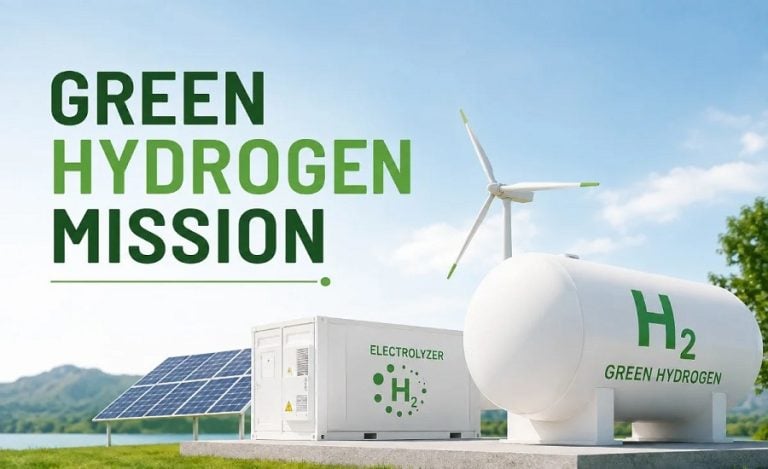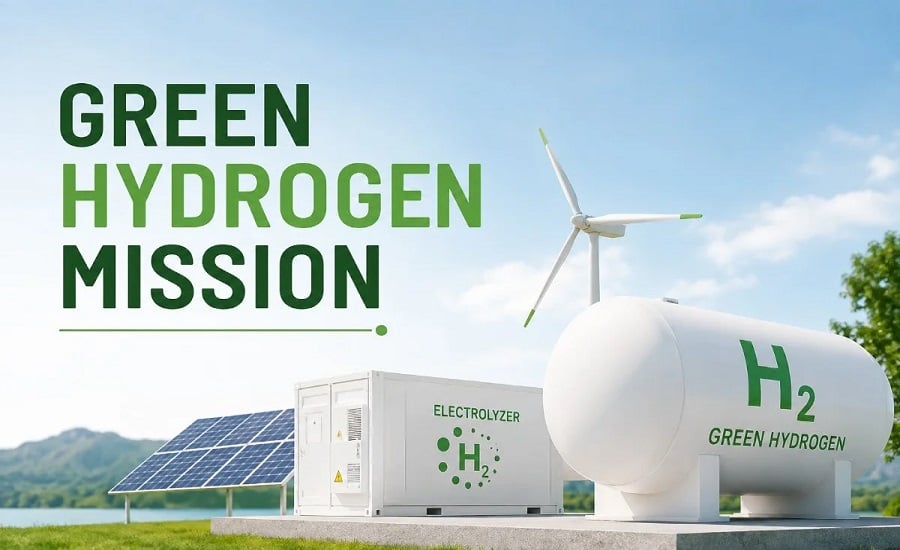
New Delhi: Green hydrogen is emerging as an important pillar of India’s clean energy transition, offering a low-emission alternative to fossil fuels across industries, transportation and other energy-intensive sectors. Produced by splitting water through electrolysis using renewable electricity, green hydrogen can help reduce carbon emissions in sectors such as fertiliser manufacturing, petroleum refining, iron and steel production, heavy-duty road transport and shipping.
To accelerate its adoption, the Government of India launched the National Green Hydrogen Mission (NGHM), which supports domestic manufacturing, green hydrogen production, assured demand, infrastructure development and credible certification. From green ammonia procurement initiatives to hydrogen-powered transportation projects, several developments indicate the country’s growing focus on building a domestic green hydrogen ecosystem.
The initiative also aligns with India’s broader climate commitments, including its target of achieving net-zero emissions by 2070 and strengthening long-term energy security.
Why Is Green Hydrogen Important for India’s Clean Energy Transition?
Hydrogen is an energy carrier that can store and deliver energy for different applications. In fuel cells, hydrogen reacts with oxygen to generate electricity, producing water and heat as by-products.
Although hydrogen is not available in large quantities in its pure form in nature, it can be extracted from compounds such as water and natural gas. Its environmental impact depends largely on the method used for production.
Conventional hydrogen production methods rely heavily on fossil fuels and generate carbon emissions. In contrast, green hydrogen is produced using renewable electricity, particularly solar and wind power, to split water into hydrogen and oxygen.
India’s abundant solar and wind energy resources provide an opportunity to expand domestic green hydrogen production. Greater adoption could reduce dependence on imported fossil fuels, minimise exposure to international energy price fluctuations and strengthen the country’s energy security.
Green hydrogen is particularly important for hard-to-abate sectors, where direct electrification is difficult or less practical because of high-temperature heat requirements, chemical processes or limited technological alternatives.
These sectors include:
- Fertiliser manufacturing
- Petroleum refining
- Iron and steel production
- Heavy-duty road transport
- Rail transportation
- Shipping and maritime operations
Green hydrogen can replace fossil-based hydrogen already used in fertiliser plants and refineries. It can also support low-emission steelmaking, cleaner transportation and energy storage.
Read also: India Leads Global Green Hydrogen Market with 5.55 Lakh MTPA Offtake Commitments Till October 2026
What Makes Hydrogen Green? India’s Green Hydrogen Standard
Hydrogen does not release carbon dioxide at the point of use, but its overall environmental impact depends on how it is produced.
In August 2023, the Ministry of New and Renewable Energy (MNRE) notified India’s Green Hydrogen Standard to establish a formal definition and emissions benchmark.
Under this standard, hydrogen qualifies as green if its emissions do not exceed 2 kg of carbon dioxide equivalent (CO₂e) per kg of hydrogen, calculated on a well-to-gate basis and measured as a 12-month average.
This standard provides a common benchmark for green hydrogen production and helps ensure transparency and credibility in the sector.
For India, the expansion of green hydrogen can create opportunities in manufacturing, investment, employment and exports. Developing domestic capabilities across the value chain can strengthen supply chains, promote industrial innovation and support the country’s objective of self-reliance.

How Is Green Hydrogen Produced?
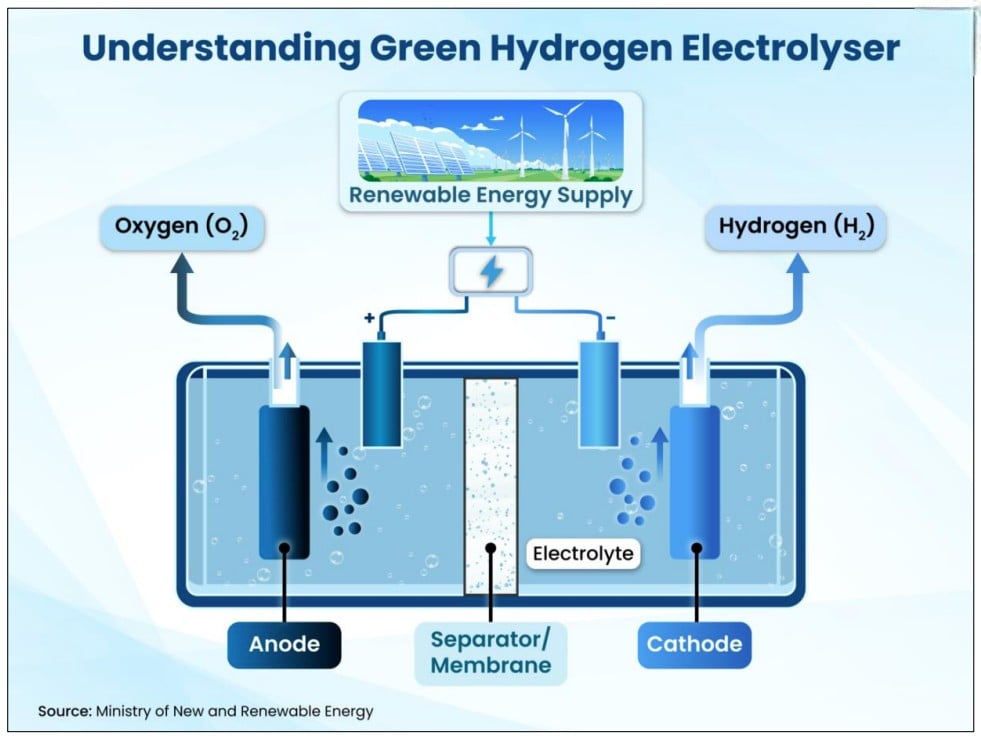
Green hydrogen is primarily produced through a process known as water electrolysis. In this process, renewable electricity is used to split water (H₂O) into hydrogen (H₂) and oxygen (O₂).
The chemical reaction is:
2H₂O → 2H₂ + O₂
The main equipment used in this process is called an electrolyser. It consists of two electrodes:
- Cathode: The electrode where hydrogen is produced.
- Anode: The electrode where oxygen is produced.
Both electrodes operate within an electrolyte, which enables ions to move through the cell. A diaphragm separates the gases while allowing the movement of ions.
When renewable electricity passes through the electrolyser, water molecules are split, producing hydrogen at the cathode and oxygen at the anode. The two gases are collected separately for further processing and use.
The hydrogen is subsequently dried, purified and compressed before being supplied for industrial, transportation and other applications.
Water Requirements for Green Hydrogen Production
Water quality is an important factor in electrolysis. Water must be purified before entering the electrolyser because impurities can damage the equipment and reduce its operational life.
According to MNRE, approximately nine litres of demineralised water are required to produce one kilogram of hydrogen.
After production, hydrogen is dried and purified before compression. India’s Green Hydrogen Standard takes emissions from these production-related processes into account.
Major Applications of Green Hydrogen Across Industries
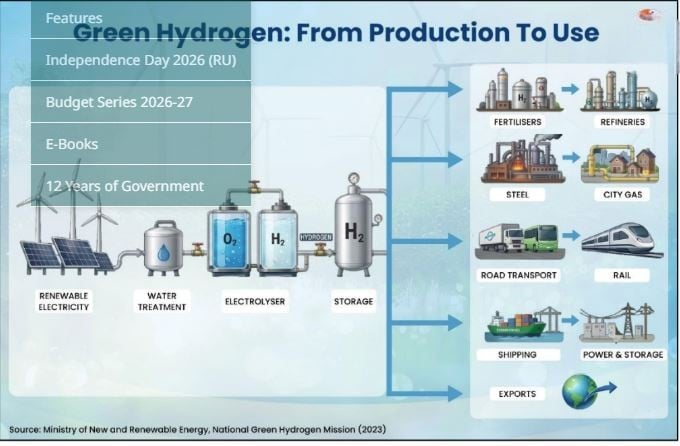
Green hydrogen has the potential to transform several industries by replacing fossil-based fuels and feedstocks. Its major applications include the following:
1. Fertiliser Manufacturing
Ammonia is produced using hydrogen and nitrogen and serves as a key raw material for nitrogen-based fertilisers, including urea.
Currently, most hydrogen used in ammonia production comes from natural gas. Green hydrogen can replace this fossil-based supply, enabling the production of green ammonia with significantly lower associated emissions.
This can help reduce the carbon footprint of India’s fertiliser industry.
2. Petroleum Refining
Petroleum refineries use hydrogen for several important processes, including removing sulphur from petrol and diesel to make fuels cleaner-burning.
Hydrogen is also used to upgrade heavy oil into lighter petroleum products such as diesel, aviation turbine fuel and naphtha.
Since conventional refinery hydrogen is largely produced using fossil fuels, replacing it with green hydrogen can help reduce emissions from refining operations.
3. Steel Manufacturing
Conventional steel production relies heavily on coal to remove oxygen from iron ore, a process that generates carbon dioxide emissions.
Green hydrogen can serve as an alternative reducing agent in direct reduced iron (DRI) production.
In this process, hydrogen removes oxygen from iron ore, producing water vapour instead of carbon dioxide during the reduction stage. This creates opportunities for lower-emission steel manufacturing.
4. City Gas Networks
Green hydrogen can be blended with natural gas in limited proportions, subject to safety regulations, infrastructure compatibility and applicable technical standards.
The blended gas can then be supplied through existing distribution networks to households, businesses and industries.
This approach can help reduce natural gas consumption and associated emissions while utilising existing infrastructure.
5. Road and Rail Transportation
Hydrogen fuel-cell vehicles convert hydrogen into electricity on board, which powers electric motors. Water vapour is the only direct emission from the fuel-cell process.
This technology can be particularly useful for buses, trucks and trains that require longer operating ranges and faster refuelling.
India’s First Hydrogen-Powered Train
India inaugurated its first indigenous hydrogen-powered train on July 17, 2026, on the Jind-Sonipat section.
The major features include:
- A 10-car hydrogen-powered trainset.
- Passenger-carrying capacity of approximately 2,600 people.
- A hydrogen storage facility at Jind with a capacity of nearly 3,000 kg.
- Water vapour and heat as direct operational by-products.
The development represents an important step towards introducing hydrogen-based technology into India’s railway transportation system.
6. Shipping and Maritime Transport
Green hydrogen can be converted into derivatives such as green ammonia and green methanol, which can be used as alternative marine fuels.
These fuels have the potential to replace conventional shipping fuels, particularly for long-distance maritime transportation.
However, their wider adoption will depend on engine compatibility, safety requirements, port infrastructure and the development of reliable supply chains.
7. Green Hydrogen Exports
India’s renewable energy resources provide opportunities to produce green hydrogen and its derivatives for international markets.
Green ammonia and green methanol can serve as export products for countries seeking low-emission industrial and transportation fuels.
Developing export capabilities can strengthen India’s position in the emerging global clean energy market.
National Green Hydrogen Mission: India’s ₹19,744 Crore Strategy
The Government of India has adopted an integrated approach to accelerate green hydrogen adoption across industries and sectors.
The Union Cabinet approved the National Green Hydrogen Mission in January 2023 with a total financial outlay of ₹19,744 crore.
The Ministry of New and Renewable Energy is implementing the mission with the objective of making India a global hub for green hydrogen and its derivatives.
The mission has set a target of developing at least 5 million metric tonnes (MMT) of annual green hydrogen production capacity by 2030. With export demand, the potential production capacity could reach 10 MMT annually.
Its major focus areas include:
- Promoting domestic electrolyser manufacturing.
- Increasing green hydrogen production capacity.
- Developing domestic and international demand.
- Supporting pilot projects in hard-to-abate sectors.
- Establishing hydrogen hubs and infrastructure.
- Strengthening research and development.
- Developing certification and safety standards.
- Encouraging international cooperation.
SIGHT Programme: Supporting Green Hydrogen Production and Manufacturing
The Strategic Interventions for Green Hydrogen Transition (SIGHT) Programme is a key component of the National Green Hydrogen Mission.
It has an allocation of ₹17,490 crore up to 2029-30 and provides financial incentives for two major activities:
- Domestic manufacturing of electrolysers.
- Production of green hydrogen.
The programme aims to strengthen India’s manufacturing ecosystem, reduce dependence on imported equipment and encourage large-scale green hydrogen production.
Key Progress Under the SIGHT Programme
According to the mission’s reported progress:
- Incentives have been awarded to 15 companies for establishing 3,000 MW per annum of electrolyser manufacturing capacity.
- Approximately 8,000 tonnes per annum of green hydrogen production capacity had been commissioned by February 2026.
- Incentives have been awarded for 8,62,000 tonnes per annum of green hydrogen production capacity.
- By October 2026, Indian companies had signed green hydrogen offtake commitments exceeding 5.5 lakh metric tonnes per annum (MTPA).
These developments indicate growing interest from domestic manufacturers and industrial consumers in establishing a green hydrogen market.
Green Hydrogen Pilot Projects in Steel, Mobility and Shipping
The National Green Hydrogen Mission supports pilot projects to test the use of green hydrogen in industries where reducing emissions is particularly challenging.
These projects aim to identify technological, regulatory and infrastructure requirements before commercial-scale deployment.
The mission has allocated financial support for pilot projects in different sectors:
- Low-carbon steel: ₹455 crore up to 2029-30.
- Green hydrogen mobility: ₹496 crore.
- Shipping: ₹115 crore up to 2025-26.
Key Progress in Pilot Projects
The major developments include:
- Five pilot projects have been sanctioned in the steel sector, with ₹84 crore allocated for testing 100% hydrogen injection.
- Twelve mobility projects will deploy 70 hydrogen-powered vehicles, including 27 buses and 43 trucks.
- The mobility projects cover fuel-cell electric vehicles (FCEVs) and hydrogen internal combustion engine (H₂-ICE) vehicles.
- A total of 16 hydrogen refuelling stations are planned across 21 routes.
- Financial assistance of ₹41.58 crore has been released for the mobility projects.
- V.O. Chidambaranar Port Authority has awarded a pilot project for green methanol bunkering and refuelling facilities.
The port project involves an investment of ₹38.12 crore, including an MNRE grant of ₹35 crore.
Green Hydrogen Hubs and Hydrogen Valley Innovation Clusters
Hydrogen transportation and storage can be challenging because of its physical properties and infrastructure requirements.
To address these challenges, the National Green Hydrogen Mission promotes the development of dedicated green hydrogen hubs and Hydrogen Valley Innovation Clusters (HVICs).
These clusters bring hydrogen production facilities, industrial consumers, storage systems and supporting infrastructure together in one location.
This approach can improve project viability, reduce transportation requirements and create economies of scale.
The mission has an allocation of ₹400 crore up to 2025-26 for hydrogen hubs and related projects.
Recognised Green Hydrogen Hubs
MNRE has recognised the following three ports as green hydrogen hubs:
- Deendayal Port, Kandla, Gujarat.
- V.O. Chidambaranar Port, Tuticorin, Tamil Nadu.
- Paradip Port, Odisha.
An indigenously developed 1 MW green hydrogen plant was commissioned at Kandla Port in July 2025.
Additionally, four Hydrogen Valley Innovation Clusters have been awarded in:
- Jodhpur
- Odisha
- Pune
- Kerala
These initiatives aim to create integrated hydrogen ecosystems and attract investment in production, storage and utilisation infrastructure.
Government Policies and Incentives to Promote Green Hydrogen
The government has introduced several policy measures to make green hydrogen production more affordable and commercially viable.
MNRE coordinates with Central and State government departments to facilitate renewable energy availability, infrastructure development, project approvals and financial support.
Major policy measures include the following:
1. Waiver of Interstate Transmission Charges
Green hydrogen and green ammonia plants commissioned by December 31, 2030, are eligible for exemption from Inter-State Transmission System (ISTS) charges for 25 years.
The exemption reduces the cost of transporting renewable electricity across state boundaries and can improve the economics of green hydrogen projects.
2. Green Energy Corridor Scheme
The Green Energy Corridor Scheme supports the development of transmission lines and substations required to integrate renewable electricity into the national grid.
A national transmission plan also aims to strengthen connectivity between renewable energy generation centres and consumption centres.
3. Special Economic Zone Benefits
Eligible units installing and operating renewable energy equipment exclusively for captive consumption have been extended duty benefits under Section 26 of the Special Economic Zones Act, 2005.
This can reduce the cost of establishing renewable energy facilities within SEZs for their own electricity requirements.
4. Environmental Clearance Exemption
Standalone plants producing green hydrogen or green ammonia through water electrolysis using renewable energy have been exempted from prior Environmental Clearance under the Environment Impact Assessment Notification, 2006, subject to applicable conditions.
This measure can simplify the approval process for eligible projects.
5. ALMM and RLMM Exemptions
Eligible renewable energy plants located within Special Economic Zones (SEZs) or Export Oriented Units (EOUs) are exempt from Approved List of Models and Manufacturers (ALMM) and Revised List of Models and Manufacturers (RLMM) requirements when supplying electricity exclusively to green hydrogen production facilities or their derivatives.
This provides eligible projects with greater flexibility in sourcing renewable energy equipment.
6. Open Access and Renewable Energy Banking
The Green Hydrogen and Green Ammonia Policy provides for:
- Open Access within 15 days, subject to applicable provisions.
- Banking of surplus renewable electricity for up to 30 days, subject to relevant regulations.
Open Access allows producers to procure renewable electricity from sources other than their local distribution companies.
Banking enables producers to receive credit for surplus renewable electricity and utilise it later in accordance with applicable regulations.
These measures aim to improve renewable power availability and reduce operational costs for green hydrogen manufacturers.
Hydrogen Storage, Safety and Certification Standards
Hydrogen is the lightest element and is highly flammable. Therefore, its production, storage, transportation and handling require strict safety procedures, appropriate infrastructure and reliable leak-detection systems.
India is developing regulations and standards to ensure safe hydrogen operations and align domestic practices with international requirements.
Key Progress in Standards and Certification
- India’s Green Hydrogen Standard has established an emissions ceiling of 2 kg CO₂ equivalent per kg of hydrogen on a well-to-gate basis, averaged over 12 months.
- Standards for green ammonia and green methanol have been notified to establish emissions thresholds and eligibility conditions.
- Scheme guidelines have been issued to support testing facilities, infrastructure and institutional development.
- MNRE launched the Green Hydrogen Certification Scheme of India in April 2025.
- The Bureau of Energy Efficiency (BEE) accredits agencies responsible for monitoring, verification and certification.
- A dedicated portal became operational in June 2026 to support transparent certification and compliance.
Credible certification is expected to improve transparency, strengthen consumer confidence and help Indian green hydrogen producers compete in international markets.
Research and Development: ₹400 Crore Support for Innovation
Research and development (R&D) is an important part of the National Green Hydrogen Mission.
The government is supporting innovation to make green hydrogen production more affordable, efficient, safe and reliable.
The Strategic Hydrogen Innovation Partnership (SHIP) provides a public-private framework for research and development, supported by dedicated funding from the government and industry.
The major developments include:
- R&D scheme guidelines were notified in March 2024.
- A total allocation of ₹400 crore has been provided for research and development.
- As of June 2026, an initial R&D roadmap worth ₹113 crore was supporting approved projects.
The projects cover hydrogen production, storage and safety technologies, with the objective of developing indigenous solutions and reducing technology costs.
Green Hydrogen Skill Development and Employment Opportunities
The National Green Hydrogen Mission also focuses on building a skilled workforce to support the expanding hydrogen industry.
The mission aims to generate more than 6 lakh jobs across the green hydrogen value chain by 2030.
According to the reported progress:
- 8,149 candidates have been trained.
- 7,248 candidates have received certification.
- Training activities have covered 14 States and Union Territories.
The training programmes cover several areas, including renewable electricity generation for electrolysers, electrolysis, hydrogen storage, transportation, safety standards and industrial applications in steel, mobility and refining.
Additionally, ₹100 crore has been allocated to support start-ups working on green hydrogen technologies.
The first nine start-ups have been approved for support, with total funding of ₹22 crore.
These initiatives aim to encourage entrepreneurship, develop technical expertise and create employment opportunities across the emerging hydrogen ecosystem.

International Cooperation to Strengthen India’s Green Hydrogen Sector
India is actively developing international partnerships to promote green hydrogen technology, attract investments, establish export markets and align certification standards.
MNRE, directly or through the National Institute of Solar Energy, has signed Memorandums of Understanding (MoUs), Letters of Intent and Joint Declarations of Intent with several countries.
The partner countries include:
- Australia
- Finland
- France
- Germany
- Saudi Arabia
- United Arab Emirates
- Uzbekistan
India has also signed an MoU with the Netherlands on renewable energy cooperation.
Under the India-US Strategic Clean Energy Partnership, an India-US Hydrogen Task Force has been established.
Green hydrogen is also a focus area under the India-US New and Emerging Renewable Energy Technology Action Platform (RETAP).
These partnerships are intended to facilitate technology exchange, research collaboration, investment and the development of international green hydrogen supply chains.
State-Level Green Hydrogen Policies in India
Several Indian states are introducing dedicated policies and integrating green hydrogen into their existing industrial and renewable energy frameworks.
According to the reported policy progress:
Six states have notified dedicated green hydrogen policies:
- Gujarat
- Andhra Pradesh
- Maharashtra
- Uttar Pradesh
- Rajasthan
- West Bengal
Four states are working on draft dedicated policies:
- Haryana
- Punjab
- Bihar
- Kerala
Additionally, seven states have integrated hydrogen into their existing industrial and renewable energy policy frameworks. These include Himachal Pradesh, Madhya Pradesh, Odisha, Telangana and Chhattisgarh, among others.
State-level initiatives are expected to support project development, attract investment and strengthen regional green hydrogen manufacturing capabilities.
Bharat Renewable Energy Summit and Expo 2026: Focus on Green Hydrogen
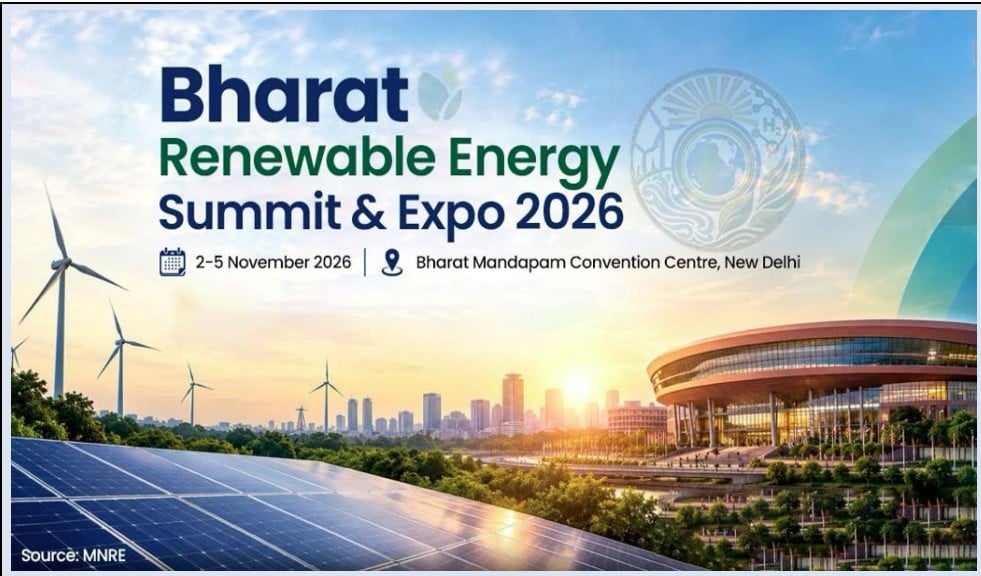
The Bharat Renewable Energy Summit and Expo (Bharat RE) 2026 is being held from November 2 to 5, 2026, at Bharat Mandapam, New Delhi, under the theme ‘Invest. Innovate. Inspire.’
The four-day event brings together participants from more than 130 countries, including over 40 ministers, policymakers, investors, financial institutions and industry leaders.
Nine countries and regional partners are participating as Country Partners:
- Australia
- Denmark
- European Union
- France
- Germany
- Netherlands
- Norway
- Sweden
- United Kingdom
Additionally, 13 Indian States and Union Territories are showcasing their renewable energy potential, investment opportunities and clean manufacturing capabilities.
The summit focuses on several key areas, including:
- Solar and wind energy.
- Green hydrogen.
- Energy storage.
- Grid integration.
- Domestic manufacturing.
- Digitalisation and artificial intelligence applications in the energy sector.
The event features ministerial discussions, CEO roundtables, investor engagements and an exhibition with more than 400 exhibitors.
It is being organised alongside the 9th International Solar Alliance Assembly and the 4th International Conference on Green Hydrogen, providing a platform for international cooperation, technology partnerships and clean energy investment.
The Road Ahead: India’s Green Hydrogen Targets for 2030
The National Green Hydrogen Mission represents an important step towards developing a cleaner, more self-reliant and globally competitive energy economy.
By 2030, India aims to achieve at least 5 million metric tonnes of annual green hydrogen production capacity, with the potential to reach 10 MMT annually if export demand increases.
The mission is expected to deliver several economic and environmental benefits:
- Investment: Mobilisation of more than ₹8 lakh crore in investments.
- Employment: Creation of over 6 lakh jobs across the green hydrogen value chain.
- Fossil Fuel Imports: Reduction in cumulative fossil fuel imports by approximately ₹1 lakh crore by 2030.
- Carbon Emissions: Potential avoidance of nearly 50 million metric tonnes of carbon dioxide emissions annually through the targeted production and use of green hydrogen.
- Energy Security: Reduced dependence on imported fossil fuels and greater utilisation of domestic renewable energy resources.
- Industrial Development: Expansion of domestic manufacturing, technology development and export opportunities.
Through these initiatives, the government aims to accelerate industrial decarbonisation, strengthen domestic supply chains and position India as a major global producer and exporter of green hydrogen and its derivatives.
The mission also supports India’s broader vision of Viksit Bharat by 2047 and its commitment to achieving net-zero emissions by 2070.
Read also: From Green Hydrogen to 24 GW Renewables, Bihar Maps a ₹1.88 Lakh Crore Energy Future