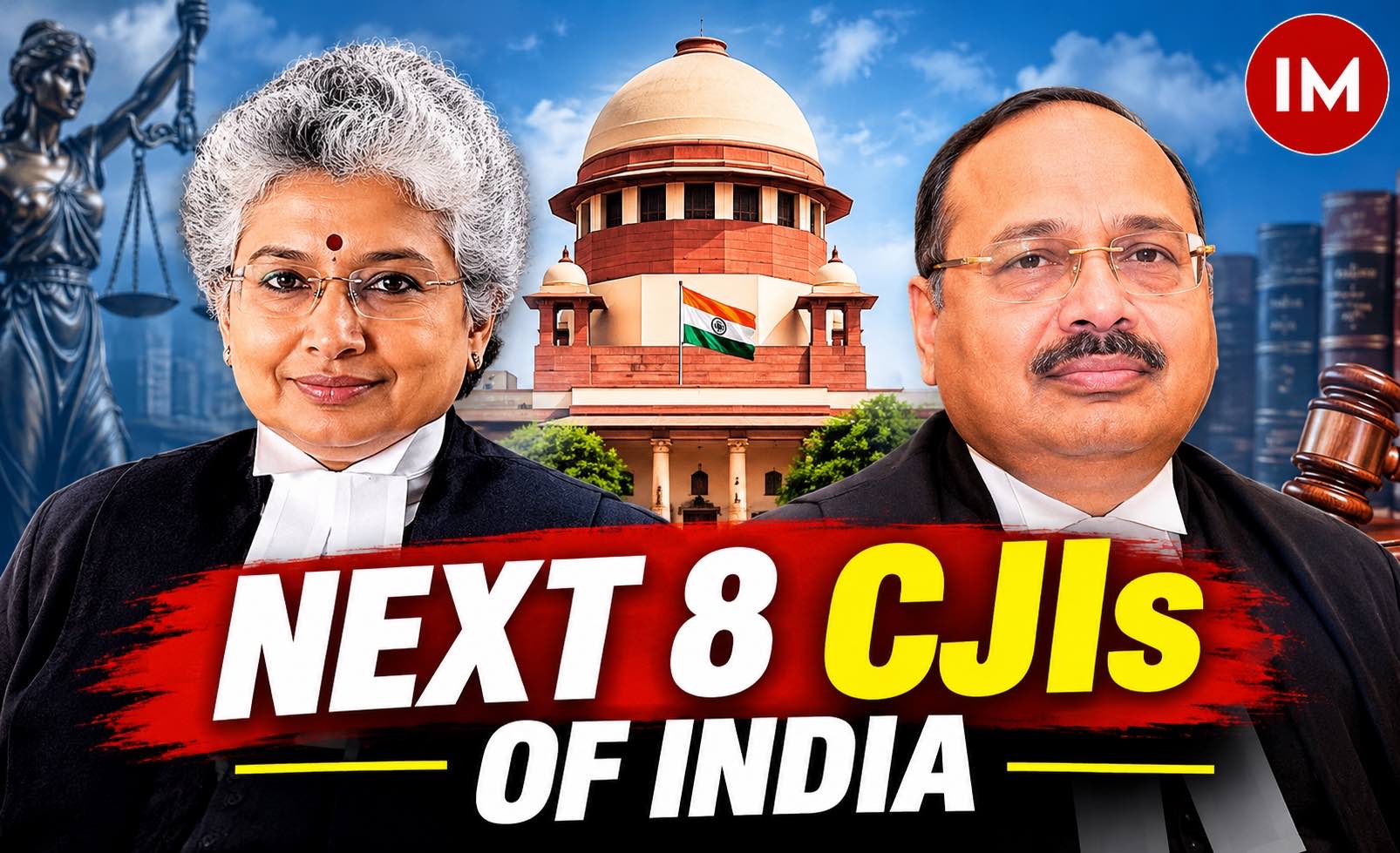
New Delhi: The Chief Justice of India (CJI) is not merely the senior-most judge of the Supreme Court. As the head of the country’s highest judicial institution, the CJI plays a crucial role in deciding how the Court functions, which judges hear particular cases, and how important matters are allocated to benches.
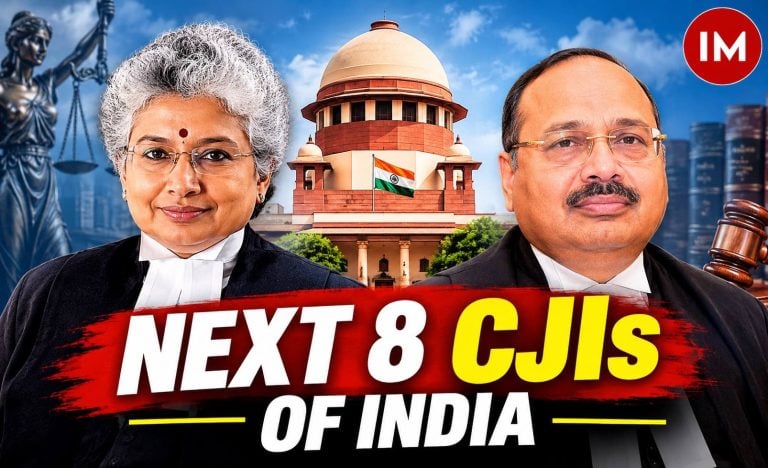
Under the convention of seniority, the outgoing CJI generally recommends the next senior-most Supreme Court judge as their successor. If this convention continues to be followed, a succession line of eight judges is expected to take the office of Chief Justice of India between 2025 and 2033.
The list includes judges who have delivered or participated in some of the country’s most consequential constitutional and political judgments. Their records feature decisions on Article 370, reservations, electoral rolls, citizenship, demonetisation, the powers of constitutional authorities, and the rights of individuals and communities. It also points to a historic milestone: Justice B.V. Nagarathna is in line to become the first woman Chief Justice of India, although her expected tenure would be only 36 days.
The following profile follows the succession timeline and career details in the supplied source. The dates and expected tenures are projections based on the seniority convention, not a guarantee of future appointments.
How the CJI Is Appointed: The Seniority Convention
The Chief Justice of India is formally appointed by the President of India. By convention, the outgoing CJI recommends the senior-most Supreme Court judge considered fit to hold the office. This practice has generally ensured continuity in the leadership of the judiciary.
The CJI’s responsibilities extend well beyond hearing cases. As the Master of the Roster, the CJI constitutes benches, allocates cases and oversees the administrative functioning of the Supreme Court. The office is often described as the first among equals because the CJI is the head of the institution but remains one of its judges.
Also Read: Supreme Court Takes Strong Action Against Bihar Judge Over Re 1 Fine On Rohtas SP Roshan Kumar
If the established seniority convention continues, the following eight judges are in line to occupy the office.
1. Justice Surya Kant: November 2025 to February 2027
53rd Chief Justice of India
Justice Surya Kant took oath as the 53rd Chief Justice of India on November 24, 2025, succeeding Justice B.R. Gavai. His tenure is expected to last until February 9, 2027, when he will retire.
Justice Kant has been a Supreme Court judge since May 2019. Before his elevation, he served at the Punjab and Haryana High Court, where he was appointed a judge in January 2004. He subsequently became Chief Justice of the Himachal Pradesh High Court.
His judicial career has brought him into several politically and constitutionally significant cases.
Two of his most consequential judicial interventions are:
The abrogation of Article 370: Justice Kant was part of the five-judge Constitution Bench that upheld the Union government’s 2019 decision to abrogate Article 370, which had granted special constitutional status to Jammu and Kashmir. The judgment also addressed the constitutional and administrative changes that followed the decision.
Section 6A of the Citizenship Act: He was part of the Constitution Bench that upheld the constitutional validity of Section 6A of the Citizenship Act, 1955. The provision relates to the citizenship status of certain people who entered Assam from specified territories before and after March 25, 1971.
Another significant case was the Aligarh Muslim University minority-status matter. Justice Kant was part of the Bench that upheld the principle that an institution’s minority character cannot be determined solely by whether it was established through legislation. He dissented on aspects of the judgment.
He was also on the Division Bench that granted bail to former Delhi Chief Minister Arvind Kejriwal in the CBI’s liquor-policy corruption case. Justice Kant authored a separate opinion holding that the CBI had followed due procedure in arresting Kejriwal while he was in the custody of the Enforcement Directorate.
In another high-profile matter, he was on the Bench that restricted YouTuber Ranveer Allahbadia from uploading media content following the India’s Got Latent controversy. The restriction was subsequently relaxed.
Justice Kant has also been part of the five-judge Bench that heard the Presidential Reference concerning the powers of Governors and the President in relation to state Bills. He heard the challenge to the Special Intensive Revision of electoral rolls in Bihar, in which the Bench directed that Aadhaar be accepted as a document for the exercise.
He is also part of the Bench hearing the review of the 2021 Vijay Madanlal Choudhary judgment, which upheld the Enforcement Directorate’s broad investigative powers and stringent bail conditions under the Prevention of Money Laundering Act.
According to data cited in the supplied source from Manupatra, Justice Kant had authored 291 judgments at the Supreme Court by the time of its publication.
2. Justice Vikram Nath: February 2027 to September 2027
54th Chief Justice of India
Stray dogs case India: Thankful to stray dogs for making me known to entire civil society Supreme Court judge Vikram Nath
Justice Vikram Nath is expected to succeed Justice Surya Kant in February 2027. His tenure as CJI will be relatively short, lasting around seven months before his retirement on September 23, 2027.
He has served as a Supreme Court judge since August 2021. He was among the nine judges elevated to the Supreme Court during the tenure of former CJI N.V. Ramana. The group included three judges who are in line to become future Chief Justices.
Before his elevation, Justice Nath served as a judge of the Allahabad High Court from September 2004 to September 2019. He was subsequently appointed Chief Justice of the Gujarat High Court.
Two important constitutional matters associated with Justice Nath are:
Sub-classification within Scheduled Castes and Scheduled Tribes: Justice Nath was part of the Constitution Bench that upheld the power of state governments to sub-classify Scheduled Castes and Scheduled Tribes for the purpose of providing reservations. The ruling recognised that states can identify relatively disadvantaged groups within these communities to ensure that reservation benefits reach those who need them most, subject to constitutional safeguards.
Bhopal Gas Tragedy compensation: In 2023, Justice Nath was part of the five-judge Bench that rejected the Union government’s plea seeking additional compensation from Union Carbide’s successor entities for victims of the 1984 Bhopal Gas Tragedy. The Bench declined to reopen the settlement reached in 1989.
Justice Nath also joined Justice Surya Kant on the Bench hearing the Presidential Reference concerning the constitutional powers of the Governor and the President.
According to the supplied source, Justice Nath had authored 260 judgments at the Supreme Court by the time of publication.
3. Justice B.V. Nagarathna: September to October 2027
First Woman Chief Justice of India in line
One of the most historic developments in this succession timeline will be the elevation of Justice B.V. Nagarathna as India’s first woman Chief Justice.
She is expected to take over after Justice Vikram Nath retires in September 2027. However, her tenure will be exceptionally short. She is due to retire on October 30, 2027, meaning she could serve as CJI for just 36 days.
Justice Nagarathna was elevated to the Supreme Court in August 2021 alongside Justice Vikram Nath. Before that, she served as a judge of the Karnataka High Court from February 2008 to August 2021.
Her judicial career is particularly notable for several important dissenting opinions on constitutional and federal questions.
Two of her most significant contributions are:
Demonetisation judgment: Justice Nagarathna was the sole dissenter in the Supreme Court’s Constitution Bench judgment upholding the Union government’s 2016 demonetisation decision. While the majority upheld the government’s action, she held that the process adopted was legally flawed because the recommendation for demonetisation should have originated from the Reserve Bank of India’s Central Board. She also expressed the view that such a major policy decision should have been taken through legislation passed by Parliament.
Industrial alcohol and states’ powers: In State of Uttar Pradesh v. Lalta Prasad Vaish, a nine-judge Constitution Bench considered whether states could regulate industrial alcohol. Justice Nagarathna authored a dissenting opinion, taking a different view from the majority on the distinction between industrial alcohol and intoxicating liquor and the extent of state and Union legislative powers.
She also authored a dissent in the Mineral Area Development Authority v. Steel Authority of India matter, where the Court examined the nature of royalty under the Mines and Minerals (Development and Regulation) Act, 1957, and the states’ power to tax mineral rights.
Another notable moment came in August 2025 when Justice Nagarathna reportedly dissented from the Collegium’s recommendation of Justice V.M. Pancholi for elevation to the Supreme Court. Reports said she had expressed concerns about the impact of the appointment on the administration of justice and the credibility of the Collegium.
Justice Nagarathna’s expected elevation will be historic not because of the length of her tenure, but because it will mark the first time a woman has occupied the highest judicial office in India.
According to the supplied source, she had authored 326 judgments at the Supreme Court by the time of publication.
4. Justice P.S. Narasimha: October 2027 to May 2028
56th Chief Justice of India
Amount of litigation in India unimaginable, says SC Judge Narasimha, underlines importance of mediation, ETLegalWorld
Justice Pamidighantam Sri Narasimha is expected to take over as Chief Justice after Justice Nagarathna’s retirement in October 2027. He is due to retire on May 4, 2028, giving him a tenure of a little over six months.
His elevation will be significant for another reason: he will be the third Chief Justice of India to have been elevated directly from the Bar.
The only two previous CJIs who were directly elevated from the Bar were Justice S.M. Sikri and Justice U.U. Lalit.
Justice Narasimha was among the nine judges elevated to the Supreme Court in August 2021. Before becoming a judge, he was a practising advocate at the Supreme Court and was appointed Additional Solicitor General of India in 2014.
As a lawyer, he represented the Union government in several important cases, including the Ayodhya title dispute, the National Judicial Appointments Commission case and the euthanasia matter.
Two significant judicial contributions during his tenure as a Supreme Court judge are:
Marriage equality judgment: Justice Narasimha authored a concurring opinion in the Constitution Bench judgment that declined to recognise a fundamental right to marry for same-sex couples. While agreeing with the outcome, his opinion formed part of the wider judicial examination of marriage, personal relationships and the rights of sexual minorities.
Unilateral appointment of arbitrators: In Central Organisation for Railway Electrification v. ECI-SPIC-SMO-MCML (JV), Justice Narasimha was part of the five-judge Bench that held that unilateral appointment clauses in public-private arbitration contracts violate Article 14 of the Constitution. The ruling strengthened the principle that arbitral tribunals must be independent and impartial.
He also authored a concurring opinion in Cox and Kings Ltd. v. SAP India Pvt. Ltd., an important arbitration judgment that upheld the Group of Companies doctrine in Indian law. His opinion explained the doctrine’s basis in the mutual intention of parties to an arbitration agreement.
These cases reflect his long engagement with constitutional law, arbitration and the administration of justice.
Also Read: Big Change in India’s Justice System: NIC Unveils Automated Prisoner Release Software
5. Justice J.B. Pardiwala: May 2028 to August 2030
57th Chief Justice of India
Judges should not provoke critics: Justice Pardiwala | India News – The Indian Express
Justice J.B. Pardiwala is expected to become Chief Justice of India in May 2028. Among the eight judges in this succession line, he is projected to have the longest tenure as CJI, serving for more than two years before retiring on August 11, 2030.
He was appointed to the Supreme Court in May 2022 and comes from the Gujarat High Court. He is also the fourth Parsi judge to have been elevated to the Supreme Court.
Justice Pardiwala has been associated with several significant constitutional and governance-related matters.
Two of her most significant contributions are:
Economically Weaker Sections reservation: Justice Pardiwala authored a concurring opinion in the Supreme Court judgment upholding the constitutional validity of the 103rd Constitutional Amendment, which introduced 10 per cent reservation for Economically Weaker Sections (EWS). The ruling upheld the amendment that enabled reservation for economically disadvantaged groups outside the existing SC, ST and OBC reservation categories.
Section 6A of the Citizenship Act: In the Constitution Bench matter concerning Section 6A of the Citizenship Act, Justice Pardiwala authored the sole dissenting opinion. He held that the provision was unconstitutional, citing what he described as temporal unreasonableness.
He was also part of the Division Bench that issued directions concerning the relocation of stray dogs to shelters and pounds within eight weeks. The order generated widespread public debate and was subsequently the subject of further judicial proceedings.
Another major contribution was his judgment setting timelines for Governors and the President to act on state Bills. The ruling sought to address delays in granting assent to legislation passed by state legislatures. A Presidential Reference followed the judgment, bringing the constitutional questions surrounding the issue before a larger Bench.
Justice Pardiwala’s expected tenure as CJI will give him a comparatively longer opportunity to shape the Supreme Court’s institutional and judicial priorities.
6. Justice K.V. Viswanathan: August 2030 to May 2031
58th Chief Justice of India
Finality as intended: A defence of Justice Viswanathan’s dissent in Gayatri Balasamy
Justice K.V. Viswanathan is expected to become the 58th Chief Justice of India after Justice Pardiwala retires in August 2030. He will serve until May 25, 2031, when he is due to retire.
He is set to become the fourth CJI to be elevated directly from the Bar. Justice Viswanathan was appointed to the Supreme Court in May 2023 after a distinguished career as an advocate.
He was designated a Senior Advocate of the Supreme Court in 2009 and had also served as Additional Solicitor General of India. During his legal practice, he appeared in several important constitutional matters.
As an advocate, he appeared for the Internet Freedom Foundation in the Constitution Bench proceedings concerning WhatsApp’s privacy policy. He also argued in favour of recognising the marriage rights of transgender persons in the marriage-equality proceedings.
In 2018, he was appointed amicus curiae in proceedings concerning vacancies in district courts. He assisted the Supreme Court in monitoring judicial appointments in Gujarat, Karnataka, Jammu and Kashmir, Himachal Pradesh, Jharkhand and Kerala.
Two significant matters associated with his judicial and legal career are:
Kerala’s borrowing powers: As a Supreme Court judge, Justice Viswanathan was part of the Division Bench that referred Kerala’s original suit against the Union government to a Constitution Bench. The dispute concerns the extent of a state’s borrowing powers and the Union government’s authority to regulate state borrowing.
Court’s power to modify arbitral awards: Justice Viswanathan was part of the Supreme Court proceedings in Gayatri Balasamy v. ISG Novasoft Technologies Ltd., which examined whether courts have the power to modify arbitral awards under the Arbitration and Conciliation Act. The judgment clarified the scope of judicial intervention in arbitration matters.
His expected elevation will continue the trend of appointing distinguished lawyers directly to the Supreme Court, with Justice Viswanathan becoming the fourth such judge to lead the institution if the seniority convention is followed.
7. Justice Joymalya Bagchi: May to October 2031
59th Chief Justice of India
SC Collegium recommends Calcutta HC judge Joymalya Bagchi for top court | India News – Business Standard
Justice Joymalya Bagchi is expected to take over as CJI after Justice Viswanathan retires in May 2031. His tenure will be around four months, ending with his retirement on October 2, 2031.
His elevation will also be significant for the representation of the Calcutta High Court in the country’s highest judicial office. The Collegium, while recommending him for elevation to the Supreme Court, took note of the fact that no judge from the Calcutta High Court had become CJI since the retirement of Justice Altamas Kabir in 2013.
Before joining the Supreme Court, Justice Bagchi served as a judge of the Calcutta High Court and the Andhra Pradesh High Court. He was elevated to the Supreme Court in March 2025.
His judicial experience spans criminal law, constitutional matters and civil disputes.
Two important judgments associated with Justice Bagchi are:
State of West Bengal v. Saiful Ali: During his tenure at the Calcutta High Court, Justice Bagchi was part of a Division Bench that set aside death sentences in a case involving rape and murder. The Bench held that the prosecution had failed to establish conspiracy and common intention beyond reasonable doubt. The judgment emphasised that the death penalty should not be imposed merely because of the gravity of an offence; courts must also consider aggravating and mitigating circumstances, along with the possibility of reformation and rehabilitation.
All India Judges Association v. Union of India: At the Supreme Court, Justice Bagchi was part of a five-judge Bench that considered the principles governing inter se seniority in the Higher Judicial Services. The Bench indicated that general and mandatory guidelines should be incorporated into the relevant service rules to determine seniority among officers appointed through different channels.
Justice Bagchi is also part of the Bench hearing the challenge to the Special Intensive Revision of electoral rolls in Bihar.
His expected tenure will be brief, but his elevation will mark the return of a judge from the Calcutta High Court to the office of CJI after a gap of nearly two decades.
8. Justice Vipul Pancholi: October 2031 to May 2033
60th Chief Justice of India
Collegium split over top court pick, dissenting judge cites ‘regional imbalance’ – India Today
Justice Vipul Manubhai Pancholi is expected to become the 60th Chief Justice of India after Justice Bagchi retires in October 2031. He is due to retire on May 27, 2033, and is projected to serve as CJI for around one-and-a-half years.
Before his elevation to the Supreme Court, Justice Pancholi served as Chief Justice of the Patna High Court. He was elevated as a judge of the Gujarat High Court in October 2014 and later transferred to the Patna High Court, where he assumed office as Chief Justice in July 2025.
His appointment to the Supreme Court in August 2025 attracted attention because of reports of a disagreement within the Collegium. Justice Nagarathna, who was a member of the Collegium, reportedly opposed his recommendation. Reports suggested that she had expressed concerns about the possible impact of his appointment on the administration of justice and the Collegium’s credibility.
Two notable legal matters associated with Justice Pancholi’s career are:
N. Ravi v. Speaker, Legislative Assembly, Chennai: This matter concerns the balance between legislative privileges under Article 194 of the Constitution and freedom of speech. It is among the significant constitutional issues associated with his judicial career.
State of Uttar Pradesh v. Jai Bir Singh: This case examined the meaning of the term “industry” under labour law and the scope of the Industrial Disputes Act. The interpretation has implications for the application of labour protections and the coverage of establishments under the law.
At the Supreme Court, Justice Pancholi has also been part of benches hearing important service-law and criminal-law matters. In one such 2026 matter, the Court directed the appointment of a Uttar Pradesh police constable candidate whose selection had been rejected on the ground of a squint-eye condition, after an expert medical board examined the issue. In another case concerning a foreign national accused under the Unlawful Activities (Prevention) Act, the Court examined the conditions governing bail under Section 43D(7).
His projected tenure would take the seniority-based succession line through May 2033.
A Historic Decade for the Supreme Court
The projected succession from Justice Surya Kant to Justice Vipul Pancholi reflects the importance of the seniority convention in shaping the Supreme Court’s leadership. Over this period, the Court is likely to be led by judges associated with landmark constitutional decisions on citizenship, federalism, reservations, elections, individual liberties and the powers of constitutional authorities.
The most historic moment in this sequence will be Justice B.V. Nagarathna’s expected elevation as the first woman Chief Justice of India. Although her tenure is projected to last only 36 days, it will represent a significant milestone in the history of the Indian judiciary.
The sequence also highlights the varied professional backgrounds of the judges in line for the top office. Some rose through the High Courts, while others were elevated directly from the Bar after distinguished legal careers.
The timeline, however, remains subject to the continuation of the seniority convention, future judicial appointments and any changes in the composition of the Supreme Court.
Also Read: India May Soon Get 24/7 AI Divorce Courts: Supreme Court Judge Makes BIG Proposal