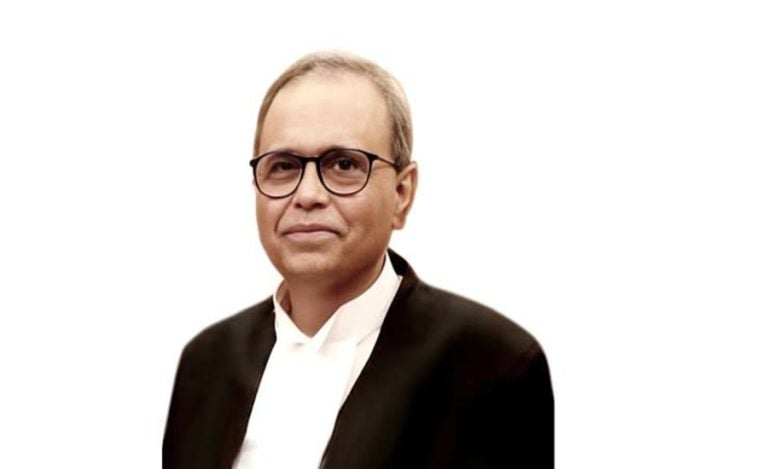
New Delhi: A Supreme Court judge, Justice Joymalya Bagchi, has proposed setting up dedicated 24/7 Artificial Intelligence (AI) courts to handle mutual consent divorce cases in India. The proposal aims to reduce the workload of human judges and make the justice system faster and more accessible.
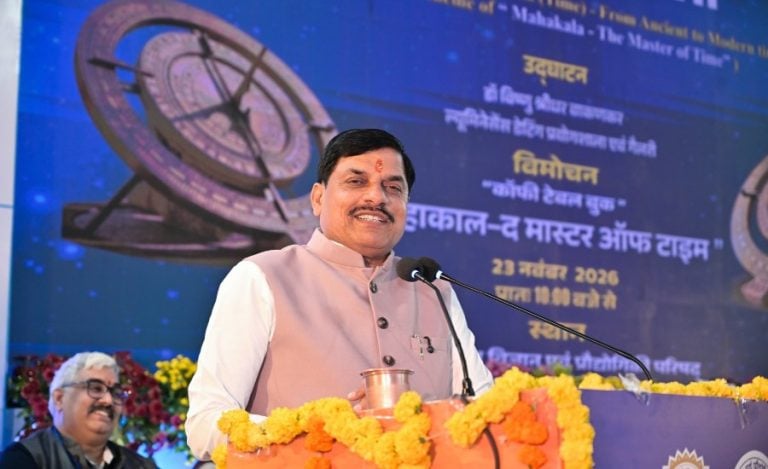
Speaking at the Just Tech National Conclave organised by Dharmashastra National Law University in Jabalpur on November 21, 2026, Justice Bagchi also suggested using AI for routine court procedures and other predictable cases.
However, he made it clear that human judges must continue handling important matters that require legal reasoning and constitutional understanding.
What Did Justice Joymalya Bagchi Say About AI Divorce Courts
Justice Joymalya Bagchi suggested separating mutual consent divorce cases from the regular workload of human judges.
Read also: Big Change in India’s Justice System: NIC Unveils Automated Prisoner Release Software
He proposed dedicated AI-powered divorce courts that could work 24 hours a day, seven days a week.
According to him, this could improve access to justice and reduce the time spent by judges on routine matters that do not require extensive judicial reasoning.
The proposal focuses on using technology to handle predictable legal procedures while allowing human judges to concentrate on more complex disputes.
Why Does India Need AI-Powered Courts
Justice Bagchi highlighted the growing number of pending cases in India’s judicial system.
He pointed out that the country has more than five crore pending cases. The existing court infrastructure and available human resources face major challenges in delivering quick and timely justice.
He believes that artificial intelligence could help address this problem by taking over certain routine and predictable judicial tasks. The main objective is to reduce delays and improve the overall efficiency of courts.
Which Court Activities Could Be Handled By Artificial Intelligence
Apart from mutual consent divorce cases, Justice Bagchi suggested using AI for several routine judicial activities. These include:
- Early Hearing Applications: AI tools could examine requests for early hearings based on case pendency, waiting time, age and other relevant factors.
- Filing Of Affidavits: AI could help manage procedural directions related to filing affidavits.
- Extension Of Time: Routine requests for additional time to submit documents could be processed through AI systems.
- Case Preparation: AI could assist with preparing cases and completing procedural requirements before hearings.
These measures could reduce the time judges spend on administrative and procedural work.
AI Could Also Assist In Predicting Case Outcomes
Justice Bagchi also discussed a wider role for artificial intelligence in the judicial system. He suggested developing AI-based predictive systems for certain categories of cases, including:
- Cheque dishonour cases.
- Land acquisition disputes.
- Commercial disputes involving money recovery.
Under this approach, AI systems could analyse case documents and available information to generate possible outcomes.
These predictions could be presented before arguments begin, helping judges and lawyers understand the likely issues in a case. However, predictive outcomes would not automatically become final court judgments.
Justice Bagchi Says Human Judges Must Remain Important
Despite supporting greater AI adoption, Justice Bagchi warned against allowing artificial intelligence to replace human judicial reasoning.
He referred to important constitutional judgments, including Kesavananda Bharati and Maneka Gandhi, to explain why human intelligence remains essential in developing constitutional law.
Such cases involve complex legal questions, constitutional values and judicial interpretation.
According to Justice Bagchi, human judges must continue handling matters that require independent thinking, legal understanding and deeper reasoning.
His proposal is to use AI as a tool for improving efficiency, not as a complete replacement for human judges.
AI Is Already Being Used In India’s Judicial System
India has already started using artificial intelligence in different areas of court administration.
According to the Ministry of Information and Broadcasting, AI-based tools are supporting activities such as legal research, judgment translation, courtroom transcription and the identification of filing defects.
The Supreme Court has also developed technology-based systems such as SUVAS for translating judgments into Indian languages.
Other tools, including SUPACE and LegRAA, have been developed to assist judicial research and case analysis.
These developments show that AI is gradually becoming part of India’s judicial technology system.
FAQs
He believes AI courts could handle routine mutual consent divorce cases, improve access to justice and reduce the workload of human judges.
Supreme Court Justice Joymalya Bagchi proposed dedicated 24/7 AI courts to handle mutual consent divorce cases at the Just Tech National Conclave in Jabalpur on November 21, 2026.
No. Justice Joymalya Bagchi emphasised that human judges must remain responsible for cases requiring complex legal reasoning, constitutional interpretation and independent judicial thinking.