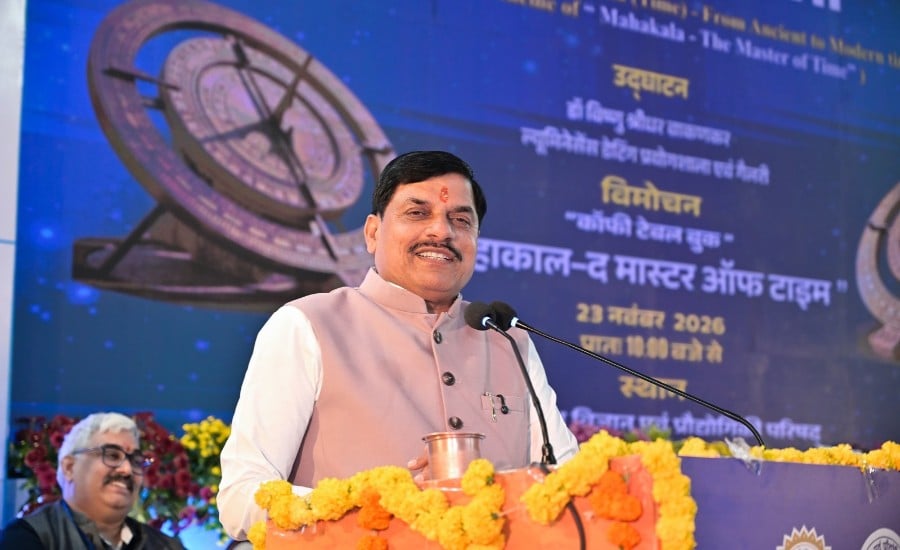
Bhopal: Madhya Pradesh has inaugurated its first luminescence dating laboratory, enabling scientific examination of archaeological materials dating back as far as one million years, Chief Minister Mohan Yadav said on Monday.
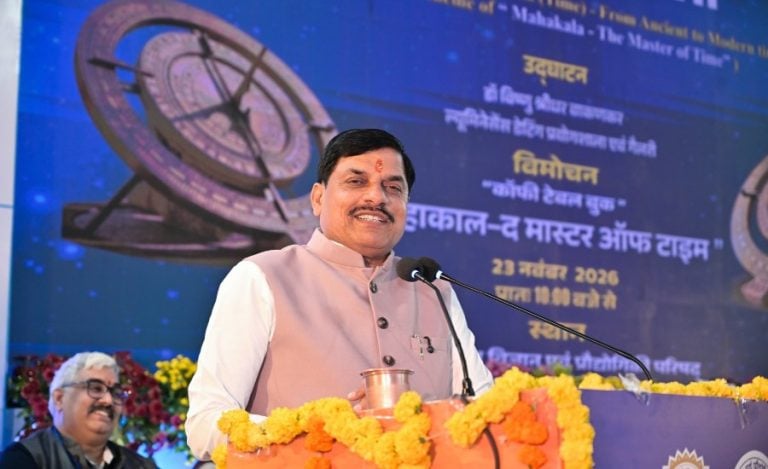
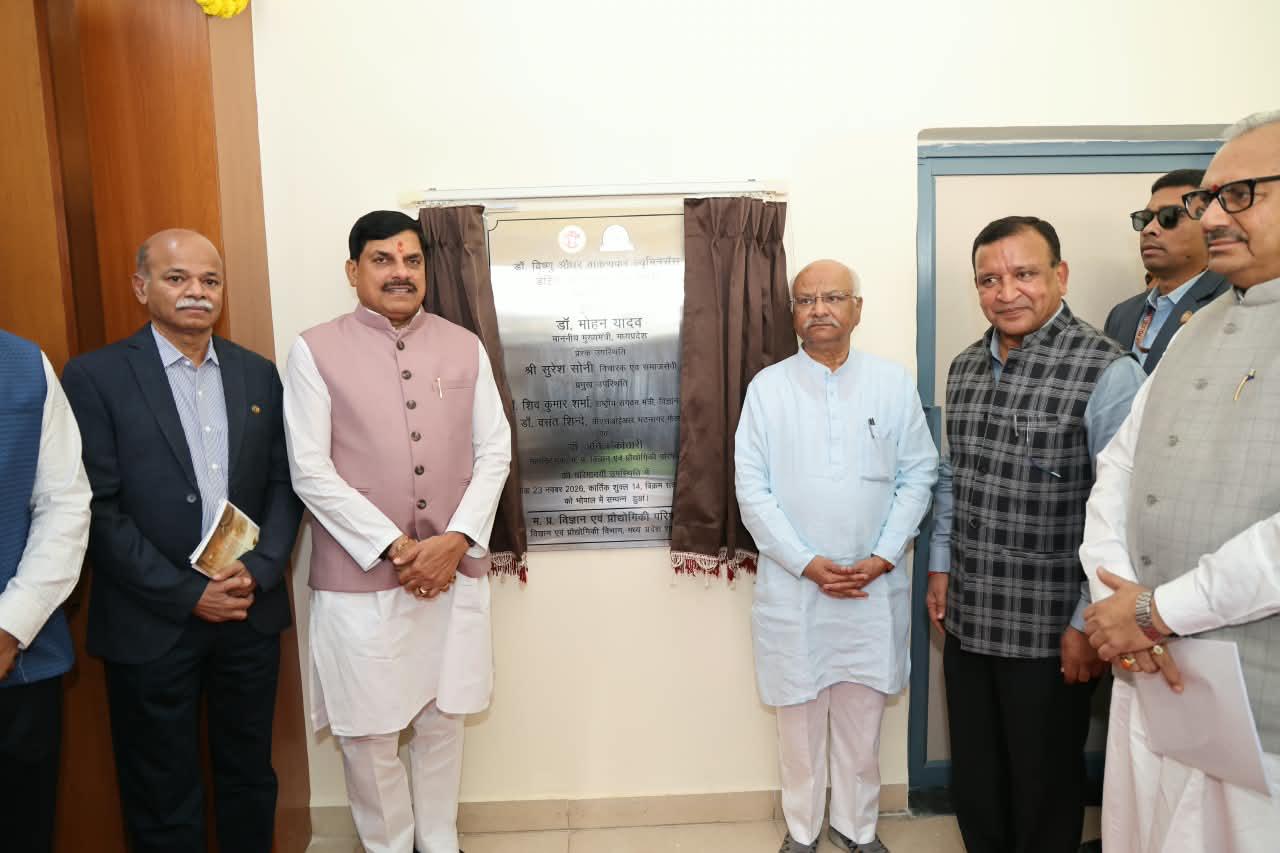
Yadav inaugurated the Dr Vishnu Shridhar Wakankar Luminescence Dating Laboratory and the Dr Vishnu Shridhar Wakankar Gallery at the Madhya Pradesh Council of Science and Technology (MAPCAST) Science Bhawan in Bhopal.
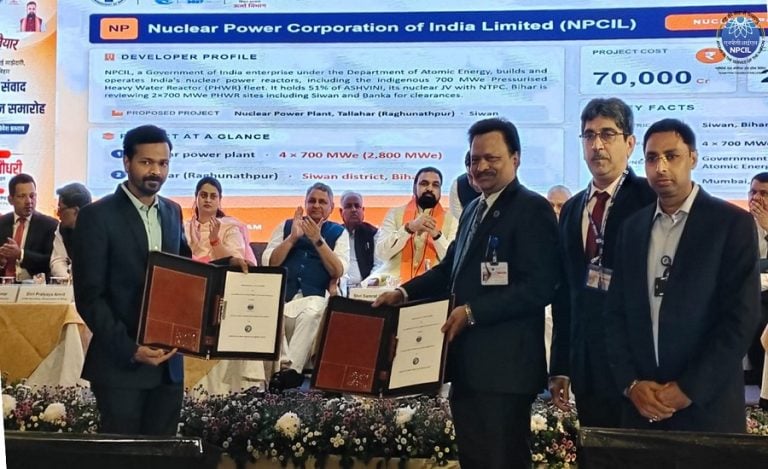
The inauguration was part of a programme that also featured a national workshop themed ‘Mahakal: The Master of Time’. The Chief Minister also released a coffee-table book with the same title. An MoU was signed between Dhanush Quantum Limited and MAPCAST during the event.
New Laboratory to Strengthen Archaeological Research
The laboratory and gallery have been dedicated to Padma Shri Dr Vishnu Shridhar Wakankar, the noted archaeologist, painter and historian.
According to the Chief Minister, the facility will allow the examination of archaeological materials of up to one million years in age. He said the initiative would connect scientific research with India’s ancient cultural and archaeological heritage.
Yadav highlighted Wakankar’s contribution to archaeological research, noting that he pursued his work despite limited resources and difficult circumstances. He also recalled his interactions with the archaeologist during his student years.
The Chief Minister further referred to the efforts of archaeologist Padma Shri Narayan Vyas in carrying forward Wakankar’s research tradition.
Ujjain to Get ₹237-Crore DeepTech Research and Innovation Park
Alongside the laboratory inauguration, the Chief Minister highlighted the proposed DeepTech Research and Innovation Park in Ujjain.
The Madhya Pradesh government has approved ₹237 crore for the project, which is planned across 100 acres. IIT Indore will serve as its technical partner, while the Chief Minister will head the park as its chairman.
The proposed facility will have four specialised centres designed to connect traditional Indian knowledge with contemporary scientific research and technological innovation.
The four centres will focus on:
- Varahamihir Centre: Astronomy and related research.
- Sandipani Centre: India’s traditional knowledge systems.
- Balram Centre: Agricultural science.
- Aryabhata Centre: Emerging and new technologies.
Yadav said the park would bring together expertise from IITs and mathematics and physics faculty members from universities across Madhya Pradesh.
He also noted that the state had prepared a space policy and was working to promote research in space science.
Ujjain Envisioned as a Centre for Scientific Research
The Chief Minister described Ujjain as a historic centre of time calculation and said the city was now being developed as a centre for science and innovation alongside its religious and industrial significance.
He also referred to the development of Bhopal as a knowledge city and highlighted initiatives associated with the state’s historical and scientific traditions.
These include the development of the Vedic clock through the Vikramaditya Research Foundation and plans to develop the Vikramaditya Research Foundation into the Vikramaditya Academy.
Government Emphasises Research Infrastructure and Innovation
Additional Chief Secretary for Industries Neeraj Mandloi (IAS: 1993: MP), said scientific research requires suitable infrastructure, equipment and an enabling environment.
He said the DeepTech Park was being developed to encourage research and innovation, with the objective of connecting young researchers with startup opportunities.
Mandloi also highlighted India’s historical contributions to mathematics, medicine and traditional knowledge, stressing the importance of scientific research in examining and establishing evidence for such contributions.
MAPCAST Highlights Research and Fellowship Initiatives
MAPCAST Director General Dr Anil Kothari said the council was working to connect science and technology with societal needs through research, innovation, traditional knowledge, environmental protection and socio-economic development.
He described the new laboratory and gallery dedicated to Wakankar as an important initiative linking archaeological heritage with modern scientific investigation.
Kothari also said MAPCAST had provided fellowships to more than 250 young scientists and was undertaking work in science and technology, innovation and space technology.
Experts Discuss India’s Traditional Understanding of Time
Thinker and social worker Suresh Soni, speaking at the programme, emphasised the importance of India’s traditional systems of time calculation.
He said the proposed DeepTech Park would bring together traditional knowledge and modern technology through its four specialised centres. He also called for renewed efforts to strengthen society’s relationship with the concept of time, referring to India’s traditional understanding of time cycles and astronomical calculations.
The programme brought together scientists, subject experts and other participants to discuss the relationship between India’s knowledge traditions and contemporary scientific research.
Read Also: MP: Gwalior Telecom Manufacturing Zone Gets ₹3,611 Crore Investment Proposals; 15,000 Jobs Projected