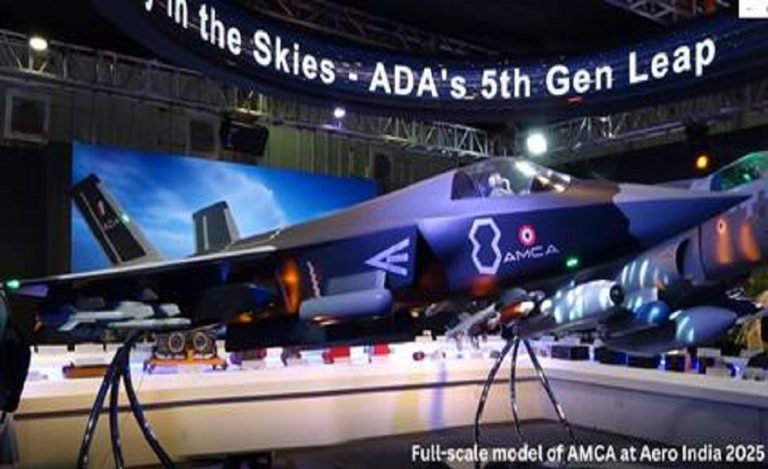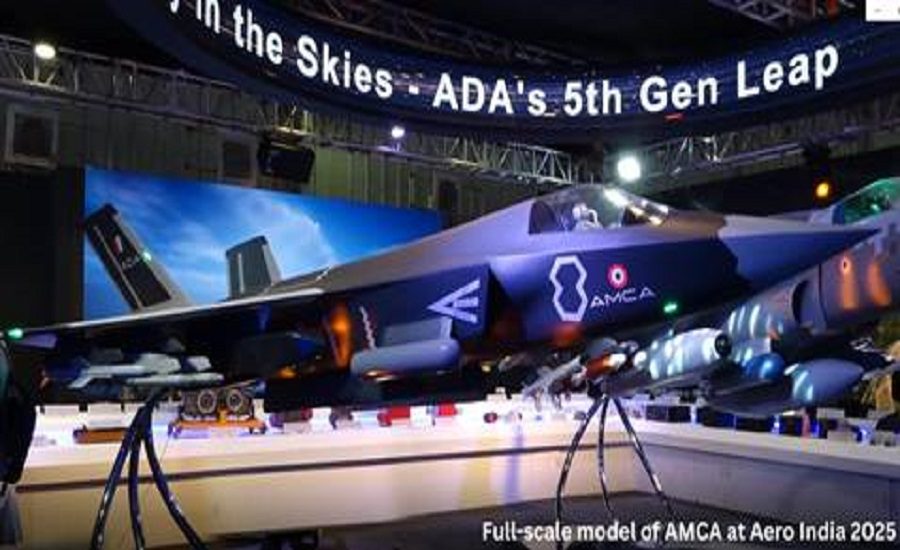
New Delhi: India’s Advanced Medium Combat Aircraft programme is one of the country’s most ambitious defence projects. The government wants to accelerate the development of this indigenous fifth-generation stealth fighter to strengthen the Indian Air Force and reduce dependence on foreign military aircraft.
However, developing an advanced stealth fighter is a major technological challenge. Engine technology, stealth materials, advanced electronics, aircraft testing and manufacturing capacity will play a crucial role in deciding whether India can achieve its ambitious development targets.
India’s AMCA Fighter Programme Gains Strategic Importance
The AMCA is being developed to give India its own fifth-generation fighter aircraft with advanced combat capabilities.
Read also: India AMCA Stealth Fighter Programme: Why the 2028 First Flight Target Faces Uncertainty
The Aeronautical Development Agency (ADA), under the Defence Research and Development Organisation (DRDO), is responsible for the aircraft’s design and development.
The programme is expected to strengthen India’s long-term air combat capabilities and support the government’s Aatmanirbhar Bharat vision.
Unlike conventional fighter aircraft, fifth-generation fighters combine stealth technology, advanced sensors, powerful computing systems and modern weapons.
This makes the AMCA project particularly important for India’s future defence preparedness.
Government Opens AMCA Fighter Programme Development To Indian Industries
An important step towards accelerating the AMCA programme came on May 27, 2025.
Defence Minister Rajnath Singh approved a new programme execution model under which the Aeronautical Development Agency will execute the project through industry partnerships.
The model gives both private and public sector companies equal opportunities to participate in the programme.
Indian companies can participate independently, through joint ventures or as consortia.
This approach aims to bring together the manufacturing experience, engineering knowledge and industrial capabilities of different Indian companies.
It also represents an important change in India’s military aircraft manufacturing ecosystem, where private companies are expected to play a bigger role in developing advanced combat aircraft.
September 2028 First Flight Target Raises Expectations
India has set an ambitious target for the AMCA’s first prototype flight. Defence Secretary Rajesh Kumar Singh publicly indicated at the NDTV Defence Summit in September 2026 that the first prototype is expected to fly in September 2028, provided the programme remains on track.
Achieving this target will require several development activities to progress simultaneously.
These include aircraft manufacturing, engine integration, avionics development, stealth technology validation and preparation of testing infrastructure.
The timeline also highlights the importance of close coordination between DRDO, ADA, the Indian Air Force and Indian defence manufacturers. However, a prototype’s first flight does not mean that the aircraft is ready for operational deployment.
Extensive flight testing, weapons integration and certification will still be necessary.
Major Challenges Facing India’s AMCA Programme
Despite India’s growing aerospace manufacturing capabilities, developing a fifth-generation fighter from the ground up involves several difficult challenges.
1. Indigenous Jet Engine Technology
Developing a powerful and reliable fighter aircraft engine remains one of India’s biggest aerospace challenges.
A modern fifth-generation fighter requires an advanced propulsion system capable of delivering high thrust, fuel efficiency and reliable performance under demanding operating conditions.
India has been working to strengthen its domestic gas turbine engine development capabilities.
For future AMCA variants, developing a more advanced indigenous engine will be particularly important.
The government has also highlighted the need to develop jet engines within India to reduce dependence on foreign technology.
2. Developing Advanced Stealth Technology
Stealth technology is another critical requirement for the AMCA.
A stealth fighter is designed to reduce its visibility to enemy radar systems, making detection and tracking more difficult.
Achieving this requires specialised aircraft shapes, radar-absorbing materials, careful management of external equipment and advanced manufacturing techniques.
India will need to develop and test these technologies to achieve the required stealth performance.
Maintaining stealth characteristics while ensuring aircraft strength, performance and operational reliability will also be challenging.
3. Advanced Sensors And Electronic Warfare Systems
Modern aerial combat increasingly depends on information, electronic warfare and the ability to detect threats before the enemy detects the aircraft.
The AMCA is expected to incorporate advanced radar, sensors, electronic warfare systems and integrated avionics.
These systems must work together to provide pilots with a clear understanding of the battlefield.
Developing and integrating such technologies will require extensive research, testing and coordination among Indian defence organisations and industry partners.
4. Manufacturing Five Advanced Fighter Prototypes
Building an advanced fighter aircraft is very different from manufacturing conventional industrial products.
The AMCA programme requires specialised manufacturing infrastructure, precision engineering, advanced materials and strict quality control.
Indian manufacturers will have to develop the industrial capacity to produce complex aircraft structures and integrate multiple sophisticated systems.
The programme will also test the ability of private Indian companies to manage large-scale military aerospace development projects.
5. Testing And Certification Requirements
Even after the first prototype is manufactured, the AMCA will face an extensive testing process.
The aircraft must demonstrate reliable performance across different flight conditions.
Its flight-control systems, radar, sensors, propulsion, stealth characteristics and weapons integration will require detailed evaluation.
Testing and certification are essential because even a small technical problem can affect aircraft safety and operational performance.
Therefore, maintaining development speed without compromising testing standards will be a major challenge.
Why AMCA Fighter Programme Is Important For India’s Future Air Power
The AMCA is not simply another fighter aircraft development project. It represents India’s ambition to become more technologically independent in advanced military aviation.
Developing an indigenous fifth-generation fighter could reduce long-term dependence on foreign suppliers for critical combat aircraft technologies.
It could also strengthen India’s ability to design, manufacture, upgrade and maintain advanced military aircraft domestically.
At a time when modern air forces are investing heavily in stealth aircraft, advanced sensors and network-based warfare, developing these capabilities has become increasingly important.
The programme could also create opportunities for Indian aerospace companies to participate in international defence supply chains.
Read also: Indian Air Force’s 6 Billion Dollars 150 Jet Trainer Programme Attracts South Korea’s KAI
FAQs
India’s first AMCA prototype is targeted to make its maiden flight in September 2028, according to the Defence Secretary’s public remarks in September 2026. The timeline remains subject to development progress.
The Advanced Medium Combat Aircraft (AMCA) is India’s indigenous fifth-generation stealth fighter development programme. It is being developed by the Aeronautical Development Agency under DRDO for the Indian Air Force.
The biggest challenges include indigenous jet engine technology, stealth materials, advanced radar and sensors, electronic warfare systems, aircraft manufacturing and extensive flight testing.