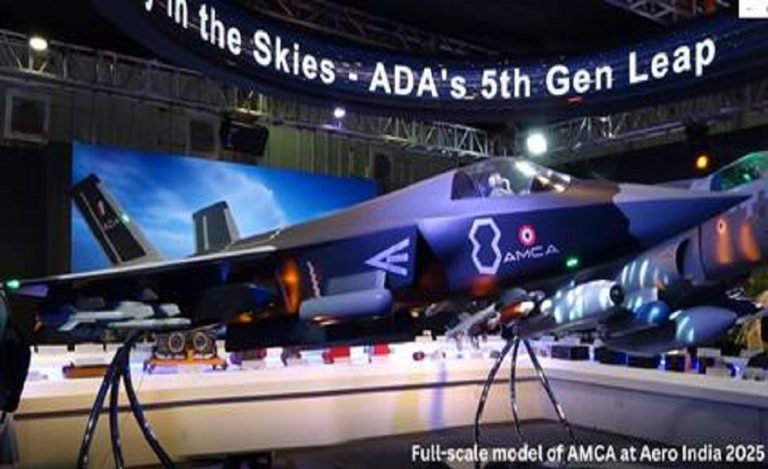
New Delhi: India’s AMCA maiden flight 2028 target may face delays as the Indian Air Force (IAF) raises concerns about the development of its indigenous fifth-generation fighter aircraft. Air Chief Marshal A.P. Singh has indicated that the Advanced Medium Combat Aircraft (AMCA) may not achieve its planned first flight in 2028.
The main challenges include the pending selection of a private manufacturing partner, complex aircraft development, supply chain preparation and extensive ground testing. Despite these concerns, the AMCA remains a major part of India’s long-term defence modernisation plans.
India AMCA Stealth Fighter Programme: Maiden Flight 2028 Target Faces Possible Delay
The Indian Air Force is working towards developing the AMCA, an advanced fighter aircraft designed to strengthen India’s future air combat capabilities. However, the programme faces important challenges before its first prototype can take to the skies.
Read also: Inside India’s Plan To Build A World-Class Fighter Jet Engine For AMCA
Air Chief Marshal A.P. Singh has expressed concerns about the possibility of missing the planned 2028 maiden flight schedule.
The delay is linked to the selection of a private-sector Development-cum-Production Partner (DcPP) and the technical work required before the aircraft can safely begin flight testing.
The AMCA programme is being developed under the Aeronautical Development Agency (ADA), which operates under the Defence Research and Development Organisation (DRDO).
What is the Reason of India AMCA Stealth Fighter Programme Delay
The selection of a private manufacturing partner is one of the most important steps in the AMCA development programme.
The Aeronautical Development Agency is evaluating proposals from private-sector companies to identify a suitable partner for manufacturing the aircraft prototypes.
Three major industry groups are competing for the development and production contract. These include Tata Advanced Systems, a consortium led by Larsen & Toubro (L&T), and a group led by Bharat Forge.
The L&T-led consortium includes Bharat Electronics Limited (BEL) and Dynamatic Technologies. The Bharat Forge-led group includes BEML and Data Patterns.
The selected partner will work with ADA to manufacture the aircraft prototypes and support the development process.
The programme is expected to receive government funding of approximately ₹15,000 crore for the prototype development phase.
AMCA Programme Requires Five Flying Prototypes
The AMCA development programme involves manufacturing five flying prototypes and one structural test aircraft. These prototypes will help engineers evaluate the aircraft’s design, performance, safety and operational capabilities.
The structural test aircraft will be used to examine the strength and durability of the fighter’s airframe. The flying prototypes will support flight testing and the evaluation of different aircraft systems.
The development process will require close coordination between ADA, the selected private partner, suppliers and testing teams.
Manufacturing the prototypes is only one part of the programme. The aircraft must also complete extensive testing before it can move towards operational development.
Why AMCA Development Requires Extensive Technical Work
Developing a fifth-generation fighter aircraft is a complex engineering task. The AMCA is designed with advanced technologies, including stealth features, modern sensors, sophisticated avionics and integrated aircraft systems.
These technologies must work together to ensure the aircraft performs safely and effectively. Engineers must also ensure that the aircraft’s structure, flight controls, electronics and other systems meet the required standards.
The development process includes detailed design work, manufacturing preparation, system integration and ground testing. These activities require significant time and technical expertise.
According to the IAF Chief’s concerns reported in the article, completing this groundwork could affect the planned 2028 first-flight schedule.
Ground Testing Is Essential Before The First Flight
Before the AMCA prototype can fly, engineers must complete several important ground-level checks. These tests help confirm that the aircraft’s systems are functioning correctly and that its structure can safely support flight operations.
The process includes checking aircraft components, integrating sensors, testing electronic systems and validating flight-control functions.
Engineers must also examine the aircraft’s structural strength and overall system performance. Ground testing is necessary because problems identified before flight can be addressed in a controlled environment.
Only after the required checks and safety clearances are completed can the aircraft proceed towards its first flight.
Read also: Indian Air Force Drone Roadmap: What The 16 Platform Families Mean
FAQs
The AMCA programme could face delays because the private manufacturing partner has not been finalised. Aircraft development, supply chain preparation, system integration and extensive ground testing are also important factors.
India’s Advanced Medium Combat Aircraft (AMCA) has a planned maiden flight target of 2028. However, the Indian Air Force Chief has indicated that the aircraft may face delays because of pending partner selection and technical development work.
The Indian government has allocated approximately ₹15,000 crore for the AMCA prototype development phase. The funding will support the development and manufacturing of five flying prototypes and one structural test aircraft.