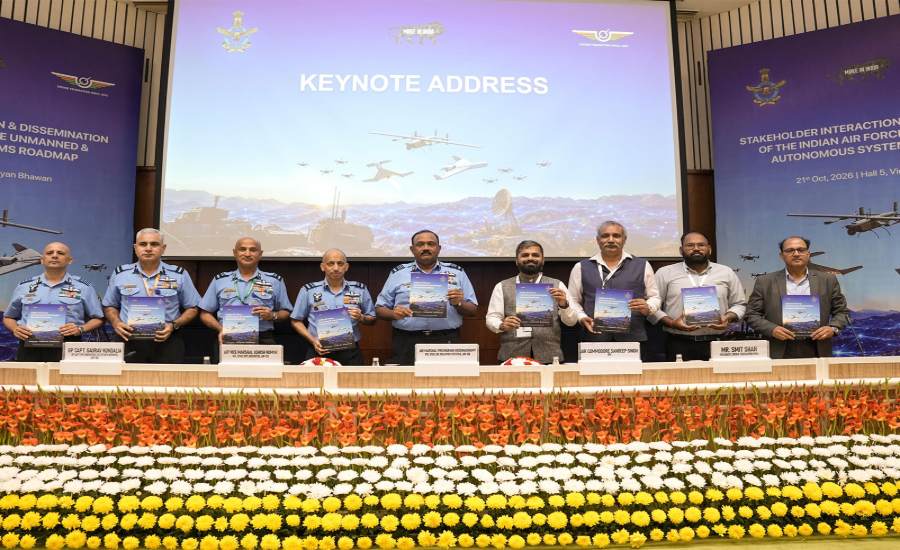
New Delhi: The Indian Air Force unmanned and autonomous systems roadmap is a major step towards strengthening India’s future air power. On October 21, 2026, the IAF held a stakeholder workshop at Vigyan Bhawan in New Delhi in partnership with Drone Federation India (DFI).
The event brought together senior defence officials and more than 100 defence industry professionals to discuss future drone technologies, autonomous systems and India’s defence manufacturing capabilities.
Indian Air Force Holds Workshop With Drone Industry
The Indian Air Force organised the workshop to share its long-term requirements for unmanned and autonomous systems with India’s defence industry. The meeting also aimed to help companies, startups, universities and research institutions understand the technologies the IAF may need in the coming years.
Read also: India Unveils NIDAR 2.0: MeitY Pushes Indigenous AI Drone Technology with VEGA Chips
Senior officials from the IAF and the Ministry of Defence attended the event. Smit Shah, President of Drone Federation India, and more than 100 senior defence industry professionals also participated.
The workshop created an opportunity for industry representatives to interact directly with senior Air Force officials. This will help developers understand military requirements before designing and manufacturing new systems.
Details of Indian Air Force Drone Roadmap
The IAF’s roadmap outlines future requirements across 16 platform families, divided into four categories. These categories cover different levels of military operations and the roles unmanned systems may perform. The four categories are:
- Strategic: Systems designed for important, high-level military objectives.
- Operational: Systems supporting air operations and wider mission planning.
- Tactical: Systems intended to support missions at the tactical level.
- Distributed/Attritable: Systems that can be deployed across different locations, including platforms designed to be affordable enough for use in higher-risk operations.
The roadmap was first introduced during the IAF’s Dronathon-2026 event. The latest workshop focused on sharing the plan with the wider defence industry.
Indian Air Force Drone Roadmap: Autonomous Drones And Swarm Operations In Focus
Autonomous systems are becoming increasingly important in modern military operations. These systems can perform certain tasks automatically, reducing the need for constant human control.
The IAF is also focusing on manned-unmanned teaming, in which crewed aircraft work alongside unmanned platforms. This approach can give military commanders more options for carrying out complex missions.
Another key area is swarm operations. In these operations, multiple unmanned systems work together to perform coordinated tasks. Such technologies could support future air campaigns by improving operational flexibility and expanding the range of available capabilities.
Indian Air Force Drone Roadmap: IAF Officials Highlight Need For Advanced Technologies
Air Marshal Premkumar Krishnaswamy, Director General (Weapon Systems) at Air Headquarters, highlighted the importance of unmanned systems as air power moves towards greater autonomy and swarm operations.
He said that clearly communicating the Air Force’s requirements would help industry focus on the right technologies and support their timely introduction into service.
Air Vice Marshal Ashish Kumar, Assistant Chief of the Air Staff (Operations – Remote), also stressed the importance of understanding military needs at an early stage.
He explained that when industry understands operational requirements early, it can develop systems that are relevant, reliable and suitable for future demands.
Drone Federation India Supports Indigenous Defence Technology
Smit Shah, President of Drone Federation India, said the workshop would help align India’s drone ecosystem with the operational requirements of the IAF.
The initiative is expected to give defence companies, startups and academic institutions a clearer understanding of long-term development priorities. This could help them make better decisions about research, investment and product development.
Greater coordination between the military and domestic manufacturers can also support the development of Indian technologies for defence applications.
Indian Air Force Drone Roadmap To Support India’s Defence Self-Reliance
The initiative is expected to strengthen cooperation between India’s armed forces and its innovation ecosystem.
A key objective is indigenisation, which means developing and manufacturing more defence technologies within India rather than depending heavily on foreign suppliers.
Domestic development can help build technical expertise, support defence manufacturing and improve India’s ability to develop systems suited to its own operational needs. However, the roadmap outlines future requirements; it does not mean that every system has already been developed, ordered or inducted into service.
Defence Industry Participants To Receive Roadmap Under Verification Process
According to the release, industry participants will receive copies of the roadmap after completing a structured verification process.
This process includes formal undertakings and non-disclosure agreements. These measures are intended to control access to the information shared with participants. The process will allow eligible companies and institutions to study the IAF’s requirements while following the applicable confidentiality conditions.
What The Indian Air Force Drone Roadmap Means For India
The workshop marks an important step in connecting the Indian Air Force’s future operational needs with the country’s growing drone and defence technology sector.
By sharing its requirements with industry, the IAF aims to encourage focused research, faster technology development and stronger cooperation between military users and manufacturers. As autonomous systems and coordinated drone operations become more important in modern warfare, this partnership could play a significant role in strengthening India’s indigenous defence capabilities.
Read also: How Indian Drone Sector Grew 65x In Just Four Years Under Make In India
FAQs
The Indian Air Force held the workshop on October 21, 2026, at Vigyan Bhawan in New Delhi. The event was organised in partnership with Drone Federation India.
The Indian Air Force Unmanned And Autonomous Systems Roadmap outlines future requirements for unmanned and autonomous military platforms. It covers 16 platform families divided into four categories: Strategic, Operational, Tactical, and Distributed/Attritable.
The roadmap will help defence companies, startups, universities and research institutions understand the IAF’s future technology requirements. It aims to support indigenous innovation, improve industry coordination and strengthen India’s defence manufacturing capabilities.