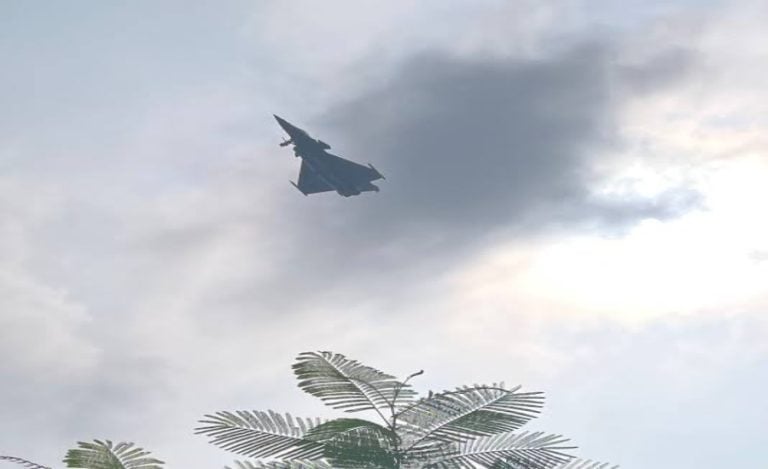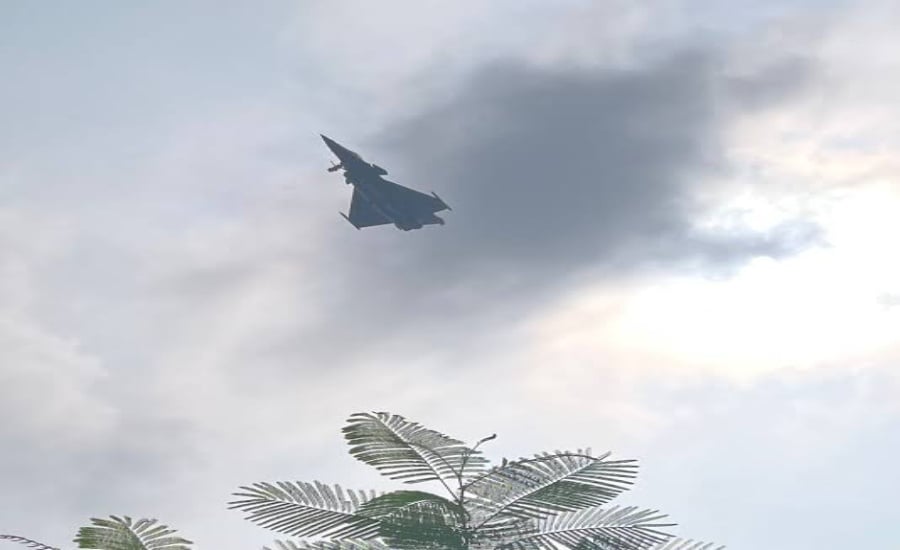
Goa: The Indian Navy Rafale M trials are an important step towards improving India’s aircraft carrier operations. The trials are intended to check whether the French-made Rafale M fighter jet can operate safely from INS Vikrant, India’s first indigenously built aircraft carrier.
A key focus is compatibility with the carrier’s Short Take-Off But Arrested Recovery (STOBAR) system. The evaluation is important for India’s plans to strengthen naval aviation, improve maritime security and modernise its carrier-based fighter fleet.
Details of Indian Navy Rafale M Trials
According to the report published by Defence.in, the Indian Navy has begun flight trials of the Rafale M at the Shore Based Test Facility (SBTF) in Goa.
Read also: How Indian Navy is Planning to Counter Advanced Drone Threats
These trials aim to evaluate aircraft modifications and operating procedures required for carrier-based missions. The main objective is to establish whether the fighter can safely take off from and land on a carrier using India’s existing STOBAR arrangement.
The trials are particularly important for INS Vikrant, which uses a ski-jump ramp for take-off and arrestor wires to stop aircraft during landing.
What Is The STOBAR System
STOBAR stands for Short Take-Off But Arrested Recovery. It is a system that allows fighter aircraft to take off from a short aircraft carrier runway and land using arrestor wires.
During take-off, the aircraft uses the carrier’s ski-jump ramp to gain the required lift. During landing, a hook under the aircraft catches a wire on the flight deck, helping the aircraft stop within a short distance.
Compatibility with this system is essential because carrier-based fighter jets must operate safely within the limited space available on a moving warship.
India’s Rafale M Deal With France
In April 2025, India and France finalised an intergovernmental agreement for the procurement of 26 Rafale M fighter aircraft for the Indian Navy. The deal was reported to be worth approximately ₹63,000 crore.
The planned fleet includes 22 single-seat Rafale M fighters and four twin-seat trainer aircraft, according to the announced procurement arrangement.
The aircraft are intended to strengthen India’s carrier-based air combat capabilities and support operations from INS Vikrant and INS Vikramaditya, subject to operational integration and suitability.
The programme also includes provisions for maintenance, training, equipment and greater involvement of India’s domestic defence industry.
Why Does India Need Rafale M Fighter Jets
The Indian Navy needs modern fighter aircraft to protect its carrier groups, respond to threats at sea and support maritime strike missions.
Carrier-based fighters can perform several tasks, including air defence, reconnaissance, precision strikes and protection of naval forces during operations.
The Rafale M is designed for aircraft carrier operations and is manufactured by France’s Dassault Aviation. It is powered by two Safran M88 engines and features modern radar, electronic warfare and targeting systems.
Its weapons options include air-to-air missiles and precision-guided weapons. The exact weapons carried during any mission depend on operational requirements and approved configurations.
How Rafale M Could Strengthen INS Vikrant
INS Vikrant is a major part of India’s efforts to build a stronger indigenous aircraft carrier capability. However, an aircraft carrier’s effectiveness depends not only on the ship itself but also on the aircraft it can operate.
Successful integration of a modern fighter such as the Rafale M could improve the carrier’s ability to conduct air defence and strike missions. It could also help the Navy maintain a more capable carrier-based air wing alongside its existing MiG-29K fighters. However, the trials alone do not confirm that the Rafale M has completed every stage of testing or has entered operational service aboard INS Vikrant.
What Happens After The Indian Navy Rafale M Trials
The evaluation process is expected to provide technical information about aircraft handling, take-off performance, landing procedures and compatibility with carrier infrastructure.
Any necessary changes to aircraft equipment, operating procedures or support arrangements would need to be assessed before full operational integration.
The final outcome will depend on the test results and decisions by the Indian Navy and the relevant defence authorities. An announcement about the start of trials should not be treated as confirmation that all integration requirements have been completed.
Read also: India-France Rafale M Deal: How India Plans To Integrate Its Own Weapons in Rafale M Fighter Jets
FAQs
The Indian Navy is testing the Rafale M at a shore-based facility in Goa to evaluate its suitability for carrier operations, including compatibility with the STOBAR system used by INS Vikrant.
India has contracted for 26 Rafale M aircraft for the Indian Navy under an agreement finalised with France in April 2025.
The Rafale M is designed for aircraft carrier operations, but its compatibility with INS Vikrant’s specific systems must be established through testing and integration. The reported trials are intended to evaluate this suitability.