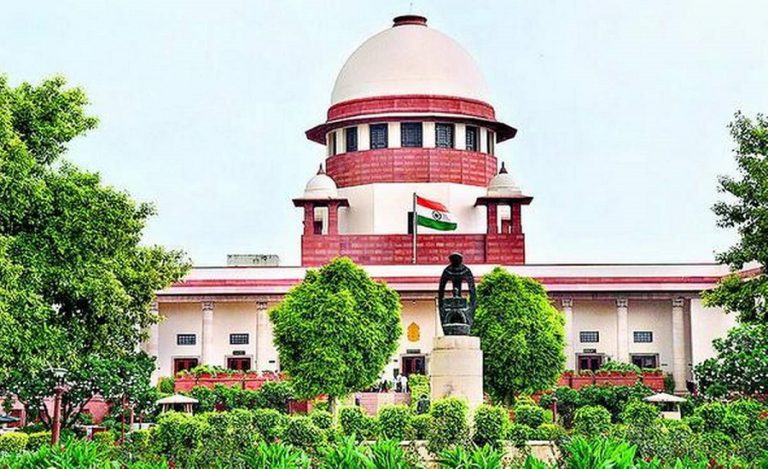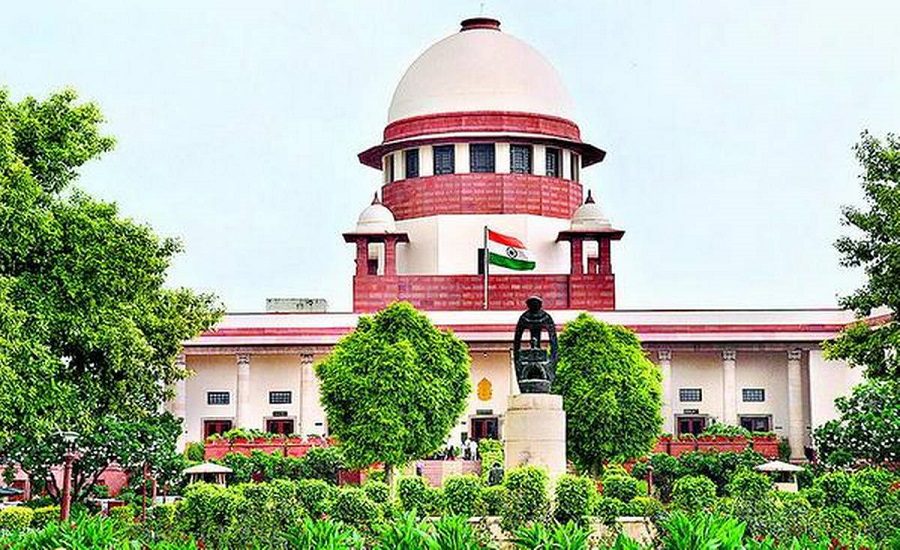
New Delhi: The Supreme Court of India has ruled that an accidental gunshot injury caused by an Army personnel’s own service weapon during operational duty can qualify as a Battle Casualty.
The ruling means that eligible soldiers can receive the enhanced War Injury Element of Pension, even when the bullet comes from their own gun.
The judgment clarifies that an accidental injury cannot automatically be treated as self-inflicted simply because the soldier’s own weapon caused it.
Supreme Court’s Important Ruling On War Pension
A bench of Justice Satish Chandra Sharma and Justice Nongmeikapam Kotiswar Singh delivered the judgment on November 20, 2026.
Read also: Major Relief For Retired UP Employees As Supreme Court Protects Pre-Regularisation Pension Rights
The Supreme Court allowed an appeal filed by retired Army Subedar Major and Honorary Lieutenant Devi Singh.
The Court set aside the Armed Forces Tribunal’s earlier decision, which had rejected his claim for the enhanced War Injury Element of pension.
The judgment explained that the source of the bullet alone cannot decide whether an injury was self-inflicted.
If the injury was accidental, occurred during qualifying operational circumstances and meets the required medical severity conditions, it can be classified as a Battle Casualty.
How Did The Army Personnel Suffer The Injury
The case relates to an incident that happened on August 7, 2002, in Jammu and Kashmir. Devi Singh was serving with the Army during Operation Rakshak/Operation Parakram when his loaded service weapon accidentally discharged while he was on duty.
The bullet passed through his left thigh and damaged his femoral vein. He was taken to a military hospital for medical treatment.
The Release Medical Board later assessed his disability at 40% for life and confirmed that the injury was attributable to military service. However, the Army granted him only the ordinary Disability Element of pension instead of the enhanced War Injury Element.
Why Was The War Pension Rejected Earlier
The retired Army officer approached the Armed Forces Tribunal after his claim for the enhanced pension was rejected.
The Tribunal accepted that his disability was connected with military service. However, it denied the War Injury Element because the final Battle Casualty approval from the competent authority, MP-5, was not available. His name was also missing from the relevant digital database.
The Tribunal dismissed his application in May 2023. His request for permission to appeal was also rejected in July 2023. He then approached the Supreme Court to challenge these decisions.
Why Did The Supreme Court Support The Army Officer
The Supreme Court examined the available Army records and found important evidence supporting the retired officer’s claim.
One key document was Part II Order No. BC-59, dated December 16, 2002. It recorded the incident as a Battle Casualty Wound during Operation Rakshak/Operation Parakram.
The Court also considered the Battle Casualty Certificate issued by Signals Records and the medical documents confirming the seriousness of the injury. These records supported the officer’s claim that the injury occurred during operational duty.
Own Weapon Does Not Automatically Mean Self-Inflicted Injury
The Supreme Court made an important distinction between an accidental injury and a deliberately self-inflicted injury.
It explained that a service weapon can discharge accidentally because of a fall, impact, trigger snagging, accidental pressure on the trigger or a mechanical defect. Therefore, the fact that a bullet came from a soldier’s own weapon does not prove that he deliberately injured himself.
The Court observed that weapon ownership and intention are two different things. The authorities must examine the actual circumstances and available evidence before classifying an injury as self-inflicted.
Missing Army Records Cannot Automatically Deny Pension
The Supreme Court also examined why some original Army records were unavailable.
The original records had been destroyed during the 2014 floods while they were in official custody.
The Court held that the soldier should not suffer because government records were lost for reasons beyond his control.
It also clarified that the absence of his name from a later digital database could not disprove surviving, signed and contemporaneous official documents.
The Court found no evidence establishing that the injury was deliberately self-inflicted.
What Are The Conditions For Battle Casualty Classification
The Supreme Court examined Paragraph 69 of Army Order 1/2003/MP. According to this provision, two important conditions must be satisfied to classify an injury as a Battle Casualty.
1. Injury Must Have An Operational Connection
The injury must occur under the prescribed operational circumstances. These include gunshot or splinter injuries sustained accidentally or due to firing by own troops while carrying out operations against enemy forces or militants.
2. Injury Must Be Of Grievous Nature
The injury must also meet the required medical severity conditions.
The rules include serious injuries such as permanent damage to a body part, loss of sight or hearing, bone fractures and injuries that endanger life.
The Supreme Court found that both conditions were satisfied in Devi Singh’s case. Therefore, his injury qualified for Battle Casualty classification.
What Did The Supreme Court Order
The Supreme Court allowed the appeal and cancelled the Armed Forces Tribunal’s decisions dated May 10, 2023, and July 19, 2023.
It directed the Union Government to grant Devi Singh the War Injury Element of pension from his date of retirement under Regulation 103 of the Pension Regulations for the Army, 2008. The Court also ordered that:
- The Disability Element already paid for the same injury and period must be adjusted.
- A revised Pension Payment Order (PPO) must be issued.
- The remaining pension arrears must be calculated and paid.
- The entire process must be completed within three months from the date of the judgment.
Read also: Supreme Court Backs ‘Pay Minus Pension’ Rule For Retired Government Employees
FAQs
Disability pension benefits relate to disabilities attributable to or aggravated by military service under applicable rules. War Injury Element is an enhanced pension benefit available for qualifying injuries sustained under specified operational circumstances.
Yes. The Supreme Court has ruled that an accidental gunshot injury from a soldier’s own service weapon during qualifying operational duty can qualify as a Battle Casualty if the required conditions are satisfied.
On November 20, 2026, the Supreme Court allowed Devi Singh’s appeal and directed the government to grant him the War Injury Element from his retirement date, after adjusting the Disability Element already paid. The revised PPO and arrears must be issued within three months.