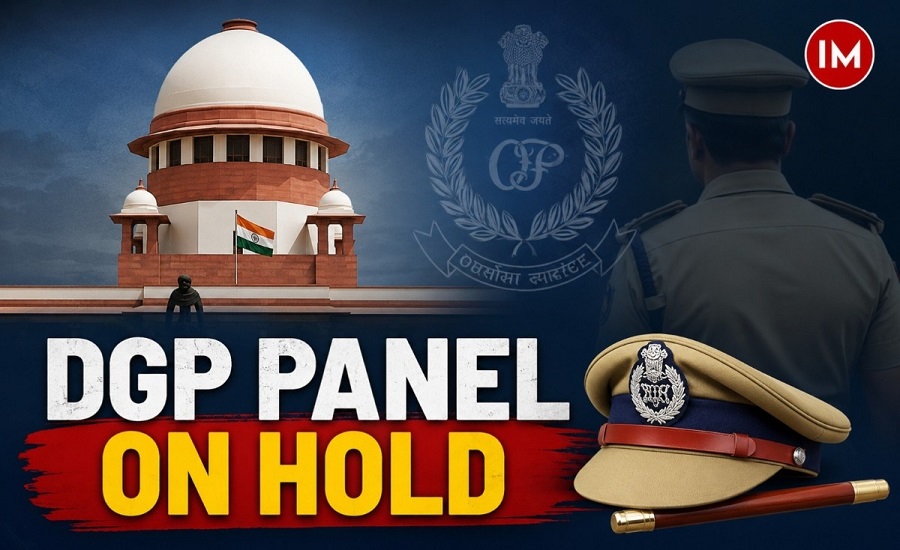
New Delhi/Bhubaneswar: The appointment of Odisha’s next Director General of Police (DGP) has come under renewed scrutiny, with the Supreme Court directing the Union Public Service Commission (UPSC) not to finalise its panel for the state police chief until August 18, when it will hear a petition challenging the selection process.
The direction came after the UPSC assured the Supreme Court that it would defer its proposed meeting to finalise recommendations for the Odisha DGP post. The development assumes significance as incumbent DGP Y B Khurania (IPS: 1990:OD) is due to retire on August 16, just two days before the scheduled hearing.
The matter was heard by a three-judge bench headed by Chief Justice of India Surya Kant, comprising Justice Joymalya Bagchi and Justice V. Mohana.
The Court’s intervention follows allegations that the Odisha government attempted to alter the pool of officers being considered for the post by promoting ADG-rank officers to DGP rank and subsequently seeking their inclusion in the selection process.
Supreme Court Asks UPSC Not to Finalise DGP Panel
During Thursday’s proceedings, the Supreme Court indicated that it was inclined to prevent the UPSC from making any fresh selection until the matter was heard in detail on August 18.
The UPSC subsequently assured the Court that it would not convene a meeting to finalise its recommendations for Odisha’s next DGP before the next date of hearing.
The bench observed that “any backdoor entry is not acceptable” and made it clear that the UPSC should not finalise the panel until the Court considers the challenge.
The intervention came after an application alleged that Odisha had attempted to circumvent the procedure laid down by the Supreme Court for appointment of state DGPs by expanding the pool of officers after the selection exercise had already begun.
Senior Advocate P. Chidambaram appeared for the petitioner.
Read also: Odisha DGP Selection: Supreme Court PIL Delayed, UPSC Empanelment Committee to Meet on Aug 13
What Is the Prakash Singh Procedure for DGP Appointment?
The dispute centres on the procedure prescribed by the Supreme Court in its landmark 2006 Prakash Singh judgmentconcerning police reforms.
Under the framework, state governments are required to send proposals of eligible officers to the UPSC. The commission then prepares a panel of three officers after considering factors including their length of service, service record and relevant experience.
The state government is required to appoint the DGP from this UPSC panel.
The petition before the Supreme Court alleges that Odisha’s actions in expanding the pool of officers and subsequently promoting certain officers could undermine this prescribed selection mechanism.
Odisha Initially Sent Three DGP-Rank Officers
The controversy began with the list of officers initially forwarded by the Odisha government to the UPSC.
In April, the state submitted the names of three DGP-ranked officers:
- Sudhanshu Sarangi (IPS: 1990:OD)
- Susanta Kumar Nath (IPS: 1993:OD)
- R P Koche (IPS: 1993:OD)
The petition claims that the state subsequently expanded the list in May by adding eight ADG-rank officers, taking the total number of officers under consideration to 11.
The expansion of the pool became a key point of contention in the subsequent selection process.
According to the allegations placed before the Court, the state later withdrew its proposal ahead of an earlier UPSC empanelment exercise.
Sanjeeb Panda, YK Jethwa Promotions Become Key Issue
The issue gained further significance after Odisha promoted two 1994-batch IPS officers — Sanjeeb Panda and Yeshwant Kumar Jethwa — to the rank of DGP.
The promotions took place on August 10, shortly before the latest developments in the Supreme Court.
The petitioners have alleged that the promotions could enable the two officers to become part of a revised pool for consideration for the DGP post, potentially altering the seniority and eligibility framework.
Senior Advocate P. Chidambaram had earlier alleged before the Court that an ADG-rank officer was being promoted to DGP rank with the objective of subsequently including the officer in the panel sent to the UPSC.
The allegations, however, remain contentions before the Court and have not been judicially established.
Odisha Government Denies Allegations
The Odisha government has denied the allegations raised in the PIL.
Appearing for the state, Advocate General Pitambar Acharya questioned the maintainability of the public interest litigation, arguing that the matter essentially concerned a service-related issue.
The bench had also raised questions regarding the maintainability of the PIL, particularly in view of the fact that no affected serving officer had directly approached the Supreme Court.
However, Raju Ramachandran, who is serving as amicus curiae in the Prakash Singh matter, supported the petitioner’s submissions and told the Court that the ongoing selection process did not appear to be in accordance with the guidelines laid down by the Supreme Court.
The amicus’ submissions were taken into consideration by the bench while deciding to defer the UPSC process.
Supreme Court’s Earlier Concern Over Eligibility
The latest intervention follows oral submissions made before the same bench earlier in the week.
At that stage, the Court had indicated that it expected the UPSC to follow its earlier directions and ensure that only eligible officers were considered.
The Court had observed that the UPSC was aware of the Supreme Court’s directions governing the appointment of state police chiefs and had the responsibility to ensure compliance.
The Court had also remarked that if a panel containing ineligible officers was sent, the UPSC was expected to act in accordance with the Court’s directions.
The matter was then scheduled for further consideration.
PIL Was Not Listed on Wednesday
The development also followed an unusual sequence of events earlier in the week.
The PIL was mentioned before the CJI-led bench on Tuesday after senior advocate P. Chidambaram raised the issue urgently. The bench had indicated that the matter would be listed on Wednesday.
However, the petition was not listed on Wednesday, August 12.
The matter subsequently came before the Court on Thursday in the context of the broader Prakash Singh proceedings, leading to the UPSC undertaking not to finalise the selection panel until the August 18 hearing.
Incumbent DGP YB Khurania Retires on August 16
The timing of the Supreme Court’s intervention is significant because incumbent Odisha DGP Y B Khurania, a 1990-batch IPS officer, is scheduled to retire on August 16, 2026.
Khurania was appointed as Odisha’s police chief on August 16, 2024, and is completing his two-year tenure.
The Supreme Court’s direction means that the UPSC cannot finalise its recommendations before August 18, potentially leaving a short window between the incumbent’s retirement and the next hearing.
Depending on the outcome and further directions, the Odisha government may therefore have to consider an interim arrangement for heading the state police force.
UPSC Panel Now on Hold
The UPSC’s empanelment process had assumed urgency because the commission was expected to consider a three-member panel for the Odisha government.
The revised pool reportedly under consideration includes Sudhanshu Sarangi, R P Koche, Sanjeeb Panda and Yashwant Jethwa, although the exact composition of any panel remains subject to the UPSC’s process and the Supreme Court’s directions.
The Court’s latest order means that the UPSC cannot finalise its recommendations until the matter is taken up on August 18.
The converging timelines of the Supreme Court hearing, the UPSC empanelment exercise and Khurania’s retirement have therefore placed the Odisha DGP appointment under intense scrutiny.
Why the Odisha DGP Appointment Matters
The case has implications beyond the immediate appointment of Odisha’s next police chief because it concerns compliance with the Supreme Court’s long-standing police reform directions.
At the heart of the dispute is whether the field of officers eligible for consideration can be altered after the selection process has already commenced, particularly through promotions that change an officer’s rank.
The Supreme Court’s August 18 hearing is therefore expected to clarify the permissible scope of the state’s role in modifying the pool of officers and the extent to which the UPSC must adhere to the eligibility framework prescribed under the Prakash Singh judgment.
For now, the Court has not permitted the UPSC to finalise its Odisha DGP panel, and the next hearing on August 18 is likely to determine the immediate course of the appointment process.