India’s banking sector has reached a turning point. The Department of Financial Services (DFS), Ministry of Finance, concluded its flagship programme PSB Manthan 2025, where Public Sector Banks (PSBs) were placed at the heart of India’s economic transformation agenda. The two-day programme, held in Gurugram, Haryana, was more than a policy dialogue—it was a blueprint for how PSBs will move from being stabilisers of the financial system to becoming leaders of growth, innovation, and global competitiveness in the country’s journey towards Viksit Bharat 2047.
From Survival to Global Competitiveness
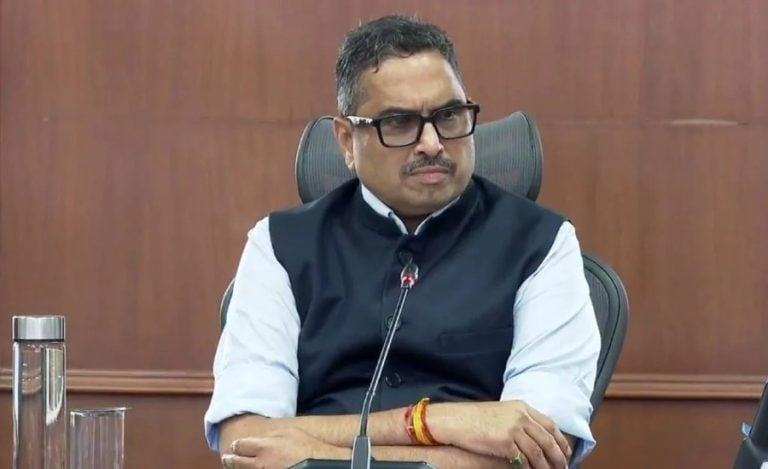
In his keynote address, the Secretary, Financial Services, struck a candid but optimistic note. He observed that PSBs have travelled a long distance in the past decade—from a phase dominated by concerns of survival, recapitalisation, and stability, to a present where they are healthier, more resilient, and ready to shoulder the role of growth leaders.
“Public Sector Banks are no longer in the business of survival alone. They have stabilised, strengthened, and now stand positioned to lead India’s growth story. Their role must evolve from being national anchors of inclusion to becoming globally competitive institutions,” he said, underlining the dual challenge of scaling up governance and modernising operations while simultaneously seizing opportunities in emerging industries.
This shift—from crisis management to global competitiveness—set the tone for the entire two-day programme.
Innovation as the Cornerstone of Transformation
Seven panel discussions, three expert sessions, fireside chats, and open houses brought forward one unifying theme: innovation is the cornerstone of the future of Indian banking.
The event was chaired by the Secretary, DFS, and brought together an impressive line-up of policymakers, regulators, bankers, industry veterans, and thought leaders. Among the eminent participants were Swaminathan J., Deputy Governor, Reserve Bank of India; Dr. V. Anantha Nageswaran, Chief Economic Adviser to the Government of India; M. Damodaran, Former SEBI Chairman; Debasish Panda, Former IRDAI Chairman; former RBI Deputy Governors R. Gandhi, N. S. Vishwanathan, and M.K. Jain; and former SBI Chairmen Rajnish Kumar and Dinesh Kumar Khara.
Speakers consistently emphasised that PSBs must not restrict themselves to incremental change or mere digitisation of existing services. Instead, they must reimagine themselves as innovation-led organisations capable of transforming customer journeys, designing hyper-personalised financial products, and competing with global financial institutions.
Key recommendations that emerged include:
Digital Transformation Beyond Legacy Systems: Banks must move away from outdated, siloed systems and adopt agile, interoperable, cloud-ready platforms that can deliver seamless services across physical and digital touchpoints. Cyber resilience, scalability, and integration with India’s expanding digital public infrastructure were flagged as priorities.
AI and Data Governance: With Artificial Intelligence increasingly shaping credit assessment, fraud detection, and customer service, experts called for strong governance frameworks. Responsible AI, robust model risk management, and ethical safeguards were identified as essential to building customer trust.
Partnership with Fintechs and Academia: Instead of viewing fintechs as disruptors, PSBs were urged to collaborate with them as co-creators of solutions. Collaborations with academic institutions and international financial bodies were also highlighted as ways to embed cutting-edge research into practical banking models.
Customer-Centric Banking: Deliberations placed strong emphasis on customer trust. Simplification of processes, faster grievance redressal, and hyper-personalised offerings were seen as key to retaining relevance in a market increasingly served by agile private and digital-first banks.
PSBs as Enablers of Sunrise Sectors
If agriculture, MSMEs, housing, and infrastructure were the cornerstones of PSB identity in the past, the discussions highlighted that the future lies equally in sunrise sectors.
Experts pointed out that India’s ambitions in renewable energy, green hydrogen, electric mobility, semiconductors, shipbuilding, and digital industries will require robust financial backing—and PSBs must be ready to provide it.
“India cannot aspire to global leadership in green hydrogen or semiconductors without a banking system that understands and supports these industries. PSBs must be both financiers and thought partners in these transitions,” said one panellist.
The consensus was clear: PSBs’ sectoral leadership must now extend beyond traditional pillars to the industries that will define India’s role in the 21st-century global economy.
Empowering Workforce for a Digital Future
Technology alone cannot drive transformation. Several sessions emphasised that PSBs must invest heavily in human capital development.
Training employees in digital tools, data literacy, and AI-based decision-making was seen as non-negotiable. Moreover, cultural transformation within PSBs—traditionally seen as slow-moving—was highlighted as necessary for agility in a fast-changing financial landscape.
“Technology will not replace people, but people empowered with technology will replace those who are not,” remarked an industry expert, drawing attention to the need for continuous HR skilling programmes, leadership development, and inclusive workforce readiness.
Reimagining Customer Experience
Customer experience was perhaps the most debated theme at PSB Manthan 2025. With fintechs offering frictionless apps and global banks delivering instant services, PSBs were reminded that customer patience is thinner than ever.
Discussions focused on:
- Designing intuitive, app-first experiences.
- Reducing paperwork and manual verification.
- Offering multilingual, personalised interfaces.
Integrating grievance redressal into customer journeys instead of treating it as an afterthought.
The consensus was that customer centricity must move from being a slogan to being the defining ethos of PSBs.
Technology, Governance, and Risk Management
The event also devoted significant attention to the need for stronger governance and risk frameworks. With technology modernisation, banks face new vulnerabilities—from cyber threats to risks associated with algorithm-driven decision-making.
Suggestions included:
- Establishing independent risk and AI governance committees.
- Regular stress-testing of systems and processes.
- Collaboration with global cyber experts to benchmark resilience.
- Building shared utilities across PSBs to reduce duplication and ensure consistent standards.
By institutionalising these safeguards, PSBs can build resilience while scaling globally.
Global Competitiveness: Standing Shoulder to Shoulder
One of the boldest ambitions articulated during PSB Manthan 2025 was the aspiration for PSBs to stand shoulder to shoulder with the world’s largest banks.
Panelists argued that PSBs must build the capacity not only to serve Indian markets but also to finance and support Indian enterprises expanding overseas. For this, PSBs need scale, global presence, advanced treasury management, and the ability to compete for international mandates.
“Indian enterprises are globalising rapidly. Our banks must globalise with them. Otherwise, we will have world-class companies dependent on foreign banks, while Indian PSBs remain domestically bound,” cautioned a former RBI Deputy Governor.
A Shared Roadmap for Viksit Bharat 2047
Perhaps the most important outcome of the two-day event was the articulation of a shared sense of direction.
Near-term priorities identified include:
- Embedding strong governance.
- Modernising technology platforms.
- Strengthening credit delivery.
Enhancing customer service and trust.
Long-term goals outlined include:
- Establishing PSBs as globally competitive institutions.
- Financing India’s sunrise sectors.
- Supporting international expansion of Indian enterprises.
- Aligning PSBs with sustainable and inclusive growth models.
The roadmap is ambitious but necessary for India’s aspiration of becoming a developed nation by 2047.
Bold Ambitions, Transformative Purpose
The final sessions of PSB Manthan 2025 reinforced a sense of urgency and ambition.
The event concluded with recognition that while challenges remain—from regulatory rigidity to cultural inertia—PSBs have the scale, trust, and reach to become the backbone of India’s economic transformation.
Conclusion: From Anchors of Stability to Leaders of Growth
PSB Manthan 2025 reaffirmed that the future of Indian banking will not be shaped by survival strategies but by bold ambition, innovation, and transformative purpose.
With their wide networks, established credibility, and renewed focus on technology and governance, PSBs are positioned to move from being anchors of financial inclusion to becoming globally competitive institutions central to India’s journey towards Viksit Bharat 2047.
The message from Gurugram was unambiguous: Indian Public Sector Banks must not only adapt to the future—they must define it.