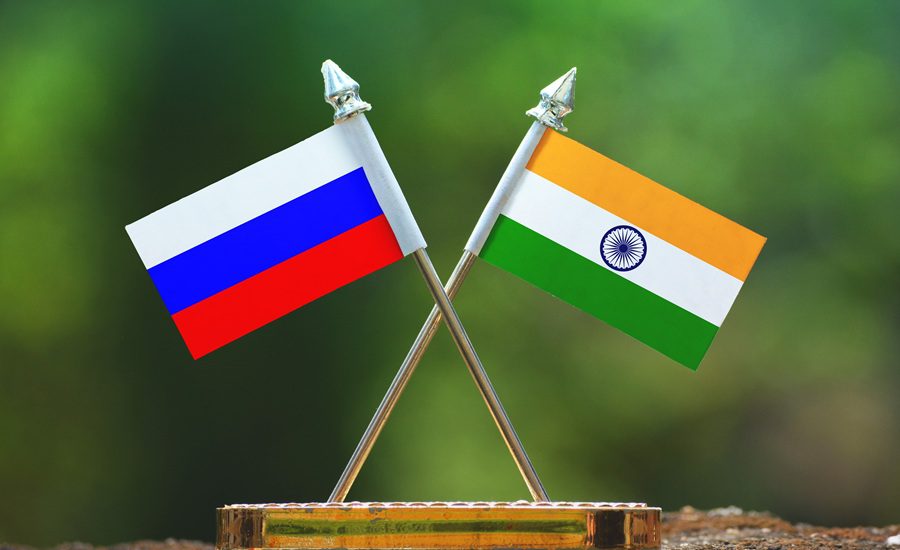
In a landmark move that underscores deepening defence cooperation between India and Russia, Russian President Vladimir Putin has signed a federal law ratifying the Reciprocal Exchange of Logistics Support (RELOS) Agreement with India.
The ratification of RELOS — a pivotal military logistics pact — marks a significant milestone in the long-standing strategic partnership between the two nations.
The law, now officially published on the Russian legal acts website, establishes the legal framework for reciprocal military logistics support, allowing armed forces of both countries to access each other’s territories for critical operational needs.
What Is the RELOS Agreement?
The Reciprocal Exchange of Logistics Support (RELOS) is a bilateral military logistics agreement signed earlier in February 2025 between India and Russia. It allows the mutual deployment and support of military formations, warships, and aircraft on each other’s soil, facilitating refuelling, resupply, maintenance, and other logistical requirements.
Read also: India’s Flying Thunder! 800 km Range BrahMos-ER To Become IAF’s Deadliest Weapon Yet
Historically, India and Russia have enjoyed a special and privileged strategic partnership dating back to the Indo-Soviet Treaty of Peace, Friendship, and Cooperation of 1971 and formalised through annual summits since 2000. Their defence relationship has spanned decades of military hardware cooperation, joint exercises, and strategic dialogues — from the BrahMos cruise missile programme to the S-400 air defence systems and joint naval exercises under the “INDRA” series.
Signing into Law: The Ratification Process
The RELOS agreement was ratified domestically within Russia through a two-stage parliamentary process:
- On December 2, 2025, the State Duma — the lower house of the Russian Parliament — approved the pact.
- On December 8, 2025, the Federation Council, the upper house, followed with its approval.
Following these approvals, the agreement was forwarded to President Vladimir Putin, who signed it into federal law on December 15, 2025. The law’s official publication on Russia’s legal acts portal cements the pact as part of Russian domestic legislation.
While the law has been signed, RELOS will enter into force only after the formal exchange of instruments of ratification between Russia and India, which is the final procedural step required under international treaty practice.
Key Provisions of the RELOS Agreement
The RELOS agreement provides a detailed structure for how military forces from both nations can support each other logistically, including:
1. Reciprocal Access to Military Facilities
Under RELOS, Indian and Russian military assets — including army units, warships, and aircraft — can access each other’s ports, airfields, and bases for logistical needs such as resupply, repairs, fuel, and maintenance.
2. Joint Exercises and Humanitarian Operations
The agreement facilitates more fluid cooperation during joint military exercises, training missions, and humanitarian assistance and disaster relief (HADR) operations, reducing bureaucratic hurdles that might otherwise delay crucial support activities.
3. Sustained Operational Capabilities
RELOS also aims to streamline logistics for prolonged military operations, enabling forces to maintain supplies, personnel support, and equipment readiness across distant theatres — including the Indian Ocean, the Arctic, and the Pacific — should future strategic requirements arise.
Strategic and Defence Implications of RELOS Agreement
A Boost to India–Russia Military Partnership
The ratification of RELOS caps a year of intensive diplomatic and military engagement between India and Russia, including President Putin’s December 2025 state visit to New Delhi. India has historically been one of Russia’s largest defence partners, relying on Russian platforms such as Su-30MKIs and other legacy hardware while also pursuing co-development projects such as BrahMos and helicopter ventures.
By formalising logistics cooperation, both countries move beyond traditional hardware sales toward deeper interoperability in operations and training — laying groundwork for smoother coordination in future joint endeavours.
Enhancing India’s Operational Reach
For India, RELOS expands logistical footprints into strategic regions where Russian bases and facilities offer value, including the Arctic and Far East. Indian naval and air assets stand to benefit from extended access, bolstering India’s ability to operate far beyond its immediate maritime neighbourhood.
Balancing Geopolitical Dynamics
Amid shifting global geopolitics, RELOS reinforces India’s multi-alignment foreign policy — allowing New Delhi to retain strong ties with Russia while also engaging with Western partners through logistics pacts like the Logistics Exchange Memorandum of Agreement (LEMOA) with the United States and similar agreements with France, Australia, and Japan.
The pact also comes at a time when Russia faces Western sanctions and complex relations with both China and NATO states — and yet continues to prioritise strategic collaboration with India, one of its longstanding defence partners.
Diplomatic Context: Putin’s India Visit and Broader Engagement
President Putin’s December 2025 state visit to India — which included bilateral talks with Prime Minister Narendra Modi — heightened cooperation in economic, defence, and technology sectors. RELOS ratification was one of several agreements signalling renewed momentum in Moscow-New Delhi ties.
Beyond defence, talks also covered economic partnership programmes through 2030, reflecting shared interests in trade, energy cooperation, and broader geopolitical coordination.