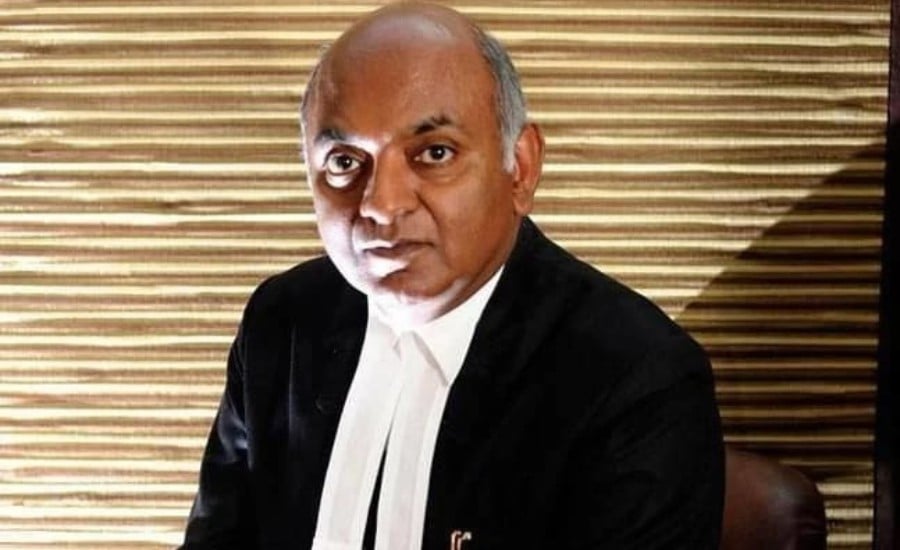
New Delhi: A sharp exchange took place before the Supreme Court on Wednesday after Odisha Advocate General Pitambar Acharya suggested that amicus curiae Raju Ramachandran was arguing the Odisha DGP appointment case as though he represented the petitioner.
A Bench comprising Chief Justice of India Surya Kant and Justices Joymalya Bagchi and V Mohana was hearing petitions challenging the process followed by the Odisha government in selecting the next Director General of Police (DGP).
The case concerns, among other issues, the exclusion of senior IPS officer Sushant Kumar Nath (IPS: 1993: Odisha), changes to the eligibility list and the creation of temporary ex-cadre DGP posts. The petitioners have alleged that the process does not conform to the Supreme Court’s directions in the Prakash Singh case.
Ramachandran Seeks Withdrawal of Remark
During the hearing, Advocate General Acharya objected to the manner in which the amicus was presenting his submissions, suggesting that he appeared to be arguing from the petitioner’s side.
Ramachandran strongly objected and asked the Odisha AG to withdraw the remark.
Read Also: SC Puts Odisha on the Spot: Did Govt Know of CBI Case When Nath’s Name Was Sent for DGP Post?
“I seek your lordships’ protection. I will withdraw from this case if such an allegation by an Advocate General is allowed to be on record,” Ramachandran told the Bench.
He further said that in his nearly 50 years of legal practice, he had never been accused of being unfair before the Court and insisted that the comment be withdrawn.
When Justice Bagchi indicated that the amicus was not on trial, Ramachandran said the comment had nevertheless put him in that position.
“I have assisted this court as Amicus in many cases. This can’t be allowed to pass,” he said, according to the court report.
Odisha AG Clarifies His Position
The Odisha Advocate General subsequently clarified that he had “profound respect” for Ramachandran as a senior lawyer and colleague.
Acharya said his intention was to ensure that the relevant facts were properly placed before the Court, rather than to question the amicus’s integrity.
The Bench also intervened during the exchange. Chief Justice Surya Kant indicated that the Court would not accept allegations concerning the amicus, while Justice Bagchi observed that such comments were not something the Bench would take note of.
The CJI later remarked, in a lighter vein, that an amicus is generally liked by the Court and noted that Ramachandran was expected to assist the Bench fairly.
Senior Advocate Kapil Sibal, appearing for Jharkhand, also supported Ramachandran, describing him as a senior lawyer with an impeccable reputation and stating that he was “certainly not biased.”
What Is the Odisha DGP Case About?
Ramachandran has previously questioned the Odisha DGP empanelment process, including the exclusion of Sushant Kumar Nath and the State’s decision concerning his integrity certificate. He has also raised questions over the inclusion of officers who were promoted after the original eligibility list had been forwarded to the UPSC.
During the September 23 hearing, he argued that the State should explain why and under what circumstances the integrity certificate of an eligible DGP-level officer was withheld.
The Supreme Court was also examining whether Odisha had informed the UPSC about the CBI case concerning alleged irregularities in the recruitment of police sub-inspectors when Nath’s name was forwarded for DGP empanelment.
The hearing in the matter is continuing.
Read Also: Odisha DGP Appointment: Chidambaram Alleges ‘Conspiracy’ Before Supreme Court