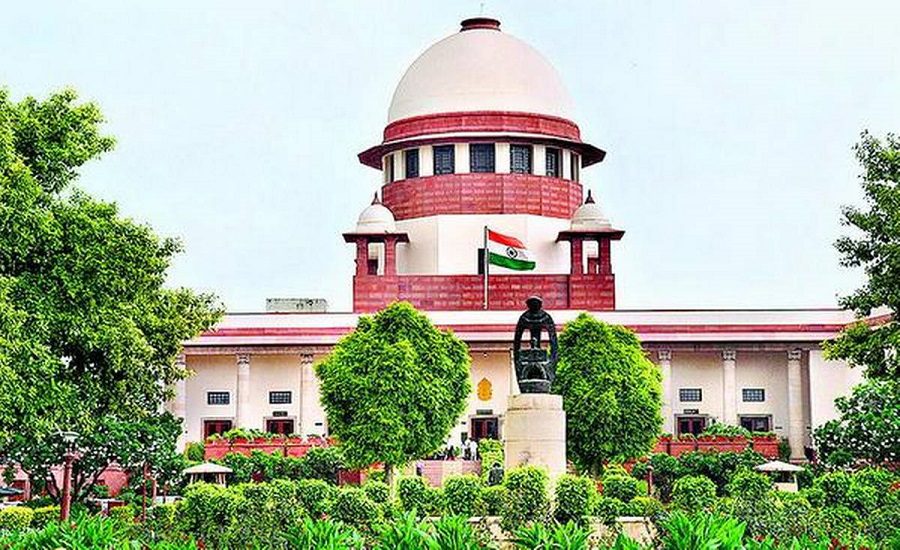
New Delhi: The Supreme Court on Wednesday sought clarity from the Odisha government on whether it was aware of a Central Bureau of Investigation (CBI) request to examine Sushant Kumar Nath, a 1993-batch senior IPS officer of the Odisha cadre, when his name was forwarded for consideration for the post of Director General of Police (DGP).
A Bench comprising Chief Justice of India Surya Kant and Justices Joymalya Bagchi and V Mohana was hearing petitions challenging aspects of Odisha’s process for selecting its next police chief, including Nath’s exclusion from consideration.
The Court’s questions centred on the sequence of events involving the CBI’s investigation into alleged irregularities in the recruitment of sub-inspectors and the State’s decision to withdraw Nath’s integrity certificate. The State has subsequently moved to send a revised list of officers to the Union Public Service Commission (UPSC).
What the Supreme Court Asked
Justice Bagchi questioned whether the State should have brought the CBI proceedings to the notice of the UPSC if the government was already aware of them when Nath’s name was forwarded.
The Court sought to establish whether Odisha knew about the CBI’s request before forwarding Nath’s name, or whether the request came only afterwards.
Read Also: Odisha DGP Appointment: Chidambaram Alleges ‘Conspiracy’ Before Supreme Court
The distinction was considered relevant to understanding the circumstances in which Nath’s integrity certificate was subsequently withdrawn.
The Court clarified that it was not at that stage saying that the integrity certificate should or should not have been withdrawn. Instead, it sought clarity on whether relevant information had been placed before the authority responsible for considering the DGP panel.
What Nath’s Counsel Told the Court
Senior Advocate Karuna Nundy, appearing for Nath, submitted that the CBI registered its case concerning the alleged SI recruitment irregularities on November 12, 2025, and that Nath was not named as an accused in the case.
According to Nundy, the Odisha government was aware of the case when it forwarded Nath’s name to the UPSC in May 2026.
She argued that the CBI wanted to examine Nath because of his position as the ex-officio chairman of the Odisha Police Recruitment Board (OPRB) and maintained that there was no allegation against him personally in the case.
Nundy also highlighted Nath’s service record, arguing that his integrity and 32 years of service had not been questioned.
Allegations Over the DGP Selection Process
The hearing is part of a broader challenge to the procedure adopted by Odisha for selecting its next DGP.
Senior Advocate P Chidambaram, appearing for one of the petitioners, alleged “premeditated collusion” between the Centre and Odisha government. He argued that Nath’s integrity certificate was withdrawn after the CBI indicated that he “may be required to be examined.”
Other submissions before the Court questioned the subsequent creation of temporary ex-cadre posts and the enlargement of the pool of officers eligible for consideration.
Amicus curiae Raju Ramachandran has also raised questions about the procedure and its consistency with the principles laid down in the Supreme Court’s Prakash Singh judgments governing the selection and tenure of state DGPs.
The State has disputed the allegations made against its selection process, and the Supreme Court is examining the procedure rather than making a final finding on the competing claims.
Jharkhand DGP Appointment Also Examined
During the hearing, the Bench also considered issues concerning the appointment of Tadasha Mishra as Jharkhand DGP.
Mishra, a 1994-batch IPS officer of the Jharkhand cadre, was appointed DGP on December 30, 2025, one day before her scheduled retirement. An amicus report submitted to the Supreme Court has questioned the appointment against the court’s earlier directions requiring a DGP candidate to have at least six months of residual service.
The Bench also examined the role assigned to the UPSC under the Prakash Singh framework and questioned aspects of Jharkhand’s DGP selection mechanism. Senior Advocate Kapil Sibal, appearing for Jharkhand, defended the State’s rules and argued that some flexibility was necessary given the smaller pool of DGP-level officers.
The Supreme Court will continue hearing the Odisha DGP selection matter.
Read Also: Why The Supreme Court Wants A Common System For Money Deposited In Courts