India’s coal sector is at a crucial stage. While domestic production has crossed the one-billion-tonne mark for two consecutive years, the country continues to import coal to meet specific industrial and quality requirements. The government has now set an ambitious target of raising domestic production to approximately 1.5 billion tonnes by FY 2029-30, while reducing import dependence and transforming coal into a key industrial resource through gasification, technology adoption and value addition.
In an interview with Indian Masterminds, G. Kishan Reddy, Union Minister of Coal and Union Minister of Mines, speaks to Sharad Gupta about the government’s roadmap for achieving coal self-reliance. He discusses the steps being taken to accelerate mine operationalisation, promote coal gasification, modernise mining and logistics, strengthen mine safety, and reduce the environmental impact of coal production. He also explains how the government plans to support communities dependent on coal through District Mineral Foundation funds, mine-land restoration and alternative livelihood opportunities as India moves towards its 2030 goals.
India has significantly expanded domestic coal production, yet coal imports continue, What is the government’s roadmap for achieving greater self-sufficiency in coal, and what measurable targets have been set?
In the current financial year, Ministry of Coal maintained robust coal supply performance, ensuring adequate and uninterrupted availability to meet the requirements of both the power and non-regulated sectors. Despite a 10% year-on-year increase in coal-based power generation, alongside a 13% decline in hydropower generation, coal dispatches to the power sector were consistently maintained to meet the increased demand. Importantly, this enhanced availability did not come at the cost of other consumers, with coal supply to the Non-Regulated Sector (NRS) also higher by 17.66% during the corresponding period in FY 2025-26.
Also Read– DIGICOP 360: How Gujarat Police Is Using Technology to Make Policing Smarter
India has crossed the one-billion-tonne production milestone for two consecutive years, with production of 1,047.52 MT in FY 2024-25 and 1,040.08 MT in FY 2025-26. The Government has set an ambitious target of approximately 1.5 billion tonnes of domestic coal production by FY 2029-30 matching with the projected coal requirement in the country.
During the current FY 2026-27 (as on 31st October, 2026), the total coal production, dispatch and dispatch to power sector is 539.30 MT, 618.30 MT and 491.63 MT (provisional) with a growth rate of 2.34%, 9.01% and 8.65% respectively. The objective is to progressively eliminate non-essential imports, particularly of non-coking coal, while addressing the specific quality and availability requirements of sectors such as steel.
DECLINING IMPORTS
Coal imports declined by 5.83% during the period April–August 2026 to 104.57 MT, compared to 111.05 MT in the corresponding period last year, registering a reduction of 6.48 MT. Further, coal blending declined by 35.34%, from 4.64 MT to 3.00 MT during the same period, indicating a further reduction in reliance on imported coal.
Government is implementing an Integrated Coal Logistics Plan for development of 139 First Mile Connectivity (FMC) projects with an aggregate capacity of approximately 1,319 MT by FY 2029-30, development and augmentation of 33 critical railway projects to address evacuation bottlenecks and strengthening railway sidings, mechanised coal handling and rapid loading infrastructure.
What are the major bottlenecks delaying operationalisation of these mines, and what steps are being taken to accelerate production?
Allocation of captive and commercial coal blocks is translating into production at a steady pace. As on 8 November 2026, 217 captive and commercial coal blocks have been allocated, and 88 of them are operational. Production from these blocks crossed 200 million tonnes for the first time in FY 2025-26. The compound annual growth rate (CAGR) of captive and commercial mine production from FY 2020-21 to FY 2025-26 is about 27%.
To bring blocks into production faster and raise output from operating mines, the Ministry of Coal, together with the Ministry of Environment, Forest and Climate Change (MoEF&CC), has taken several reform initiatives. Incentives being given for early operationalisation and higher production. An allottee that starts production ahead of the Scheduled Date of Operationalisation gets a 50% rebate on the revenue share for early production.
For faster exploration and mine planning, 44 additional Accredited Prospecting Agencies have been notified, and they need no Prospecting Licence from State Govt for exploration. Mining plans are now approved on the Single Window Clearance System. Environmental Clearance and Forest Clearance has been made simpler. As a result of these reforms, the scheduled period for operationalisation under the CMDPA has been cut from 66 months to 52 months for partially explored blocks and from 51 months to 40 months for fully explored blocks.
What investments and policy interventions are being planned to promote coal beneficiation, coal gasification, methane recovery, carbon capture where commercially viable, and more efficient mining practices?
Coal gasification involves the conversion of coal into synthesis gas (syngas), comprising primarily carbon monoxide and hydrogen, which can subsequently be processed into synthetic natural gas, hydrogen, methanol, ammonia, fertilisers, synthetic fuels and other industrial products. Unlike direct combustion, the gasification process allows impurities such as sulphur compounds, nitrogen compounds and particulates to be removed from the syngas before its downstream utilisation, thereby providing opportunities for better pollution control and environmental management.
The Ministry has launched a ₹37,500 crore scheme providing financial assistance of up to 20% of eligible Plant and Machinery costs. The Government has introduced dedicated coal linkages for gasification projects, for up to 30 years. Further, a 50% rebate in revenue share is available for coal utilised for gasification under the commercial coal auction framework.
The Ministry is promoting collaboration with international technology providers, development of indigenous gasification technologies and exchange of technical knowledge and best practices. The Government is also encouraging the development of Underground Coal Gasification (UCG) as an alternative technology for unlocking the potential of deep-seated and otherwise difficult-to-mine coal resources.
How does the government propose to reduce the environmental footprint of coal production and utilisation?
To control air pollution, measures such as installation of water sprinklers and fog cannons at coal handling plants, stockyards and transportation routes are being taken. Further, development of First Mile Connectivity (FMC) and mechanised coal evacuation systems, including conveyor belts, is being promoted to reduce dependence on road transportation and minimise fugitive dust emissions.
For conservation of water resources and prevention of water pollution, coal companies are adopting measures such as treatment of mine water through Effluent Treatment Plants (ETPs), construction of settling ponds and sedimentation tanks, and treatment of domestic sewage through Sewage Treatment Plants (STPs). Treated mine water is also being reused for industrial purposes, dust suppression, plantation and irrigation, wherever feasible. Rainwater harvesting structures and utilisation of mine sumps for water storage and groundwater recharge are also being undertaken.
Measures are also being implemented to minimise noise pollution and ground vibrations through controlled blasting techniques, regular maintenance of mining machinery, deployment of mechanised and blasting-free mining technologies, and installation of acoustic enclosures wherever required.
How is the Ministry deploying artificial intelligence, drones, real-time monitoring, automation and advanced mining equipment to prevent accidents, improve operational efficiency and strengthen accountability for safety standards?
Directorate General of Mines Safety (DGMS) under the Ministry of Labour and Employment has been inspecting mines to ensure the safety of mine workers. DGMS thoroughly examines all new technologies deployed in mines to ensure their safety, adequacy and effective implementation, thereby enhancing overall mine safety standards.
Following steps have been taken to prevent fatalities and reduce the incidence of accidents in coal mines, thereby improving overall safety standards: adoption of self-regulation, risk-based standard operating procedures, blast-free, eco-friendly safe mining technologies, mechanised strata control, real-time safety monitoring, improved mine atmosphere analysis, traffic safety, modernisation of training, modern and advanced dust suppression and use of digitalisation and ai-based analytics.
How is the government ensuring that District Mineral Foundation funds and corporate social responsibility initiatives deliver measurable outcomes in healthcare, education, drinking water, employment and environmental restoration?
The Companies Act, 2013 (Section 135) provides that for CSR expenditure, companies shall give preference to the local area and areas around it where they operate. CPSEs under Ministry of Coal ensure compliance of the provision through their CSR policies. As a result, over 92% of CSR expenditure by CIL and its subsidiaries during the last five financial years has been incurred in the coal-producing (operational) States, so the benefits reach the communities most affected by mining operations.
NLCIL spends 75% of CSR funds in the local area. An estimated 50–55% of the total CSR budget is spent for the welfare of Backward and Scheduled Caste populations in surrounding villages/regions of NLCIL depending upon the necessity.
CSR activities are focused on activities that matter most to these communities like healthcare, education, drinking water, skill development and employment, and environmental sustainability. A third-party impact assessment of all CSR projects costing ₹1 crore and above are being carried out by the CPSEs. This checks whether outcomes have been delivered and informs the design of future interventions.
DEDICATED MECHANISM
To further compensation of mining districts, Government of India has built a dedicated mechanism to return a share of mining revenue to these communities. This framework operates through District Mineral Foundations (DMFs). Pradhan Mantri Khanij Kshetra Kalyan Yojana (PMKKKY), launched on 17th September 2015, specifies the critical and priority areas in which these funds have to applied for welfare and development of the concerned deposit.
The Revised PMKKKY mandates that 70% of the funds are utilized and spent upon High-priority sector projects like drinking water supply, environment preservation and pollution control measures., healthcare and education, welfare of women and children, and of the aged and differently abled, skill development and livelihood generation, sanitation and housing and agriculture and animal husbandry.
The remaining 30% funds are to be invested in in other Priority sectors like Physical infrastructure, Irrigation, energy and watershed development. The initiative has witnessed substantial progress, with 4.70 lakh projects involving approximately ₹1.10 lakh crore sanctioned as on July 2026, of which over 2.92 lakh projects have been completed. Government of India.
What is the government’s strategy for preparing regions where mines have closed, through skill development, economic diversification, mine-land reclamation and alternative employment opportunities, while protecting the livelihoods of workers and their families?
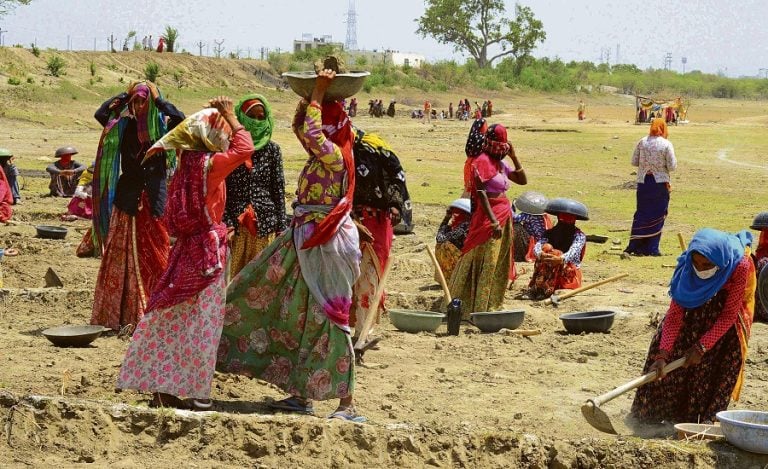
The Government sees mine closure as a chance to build lasting livelihoods, not just a statutory clean-up of land. Under the Ministry of Coal’s Mining Plan and Mine Closure Plan Guidelines, 2025, closure is being turned into a model of “Just Transformation”. This means restoring the environment while giving coal-dependent communities a stable economic future by repurposing mined-out areas.
Coal companies deposit ₹14 lakh per hectare (opencast) and ₹2 lakh per hectare (underground) in an escrow account for scientific closure. At least 25% of the five-year mine closure fund must be spent directly on community development and livelihoods. This is done through a dedicated Community Development and Livelihood Plan (CDLP) for each mine. 10% of the final closure deposit is set aside only for Just Transformation activities, so support continues after a mine formally closes.
Besides District Level Advisory Committees (DLACs), chaired by the District Collector, oversee CDLP implementation. 463 DLACs have been formed so far, against 464 identified mines. Mine Closure Cells under Director (P&P) operate in all CIL subsidiaries. Institutions such as IIT Kanpur, IG Tribal University Amarkantak, Heartfulness Institute Hyderabad and AFC India are helping design and run community-based livelihood activities.
GERMAN COOPERATION
A pilot project, “Technical Cooperation on To-Be-Closed Coal Mines”, is being implemented by the Deutsche Gesellschaft für Internationale Zusammenarbeit (GIZ) on behalf of Germany’s Federal Ministry for Economic Cooperation and Development (BMZ), and is equally co-financed by the European Union. Backed by a €10 million grant over four years, it will support socially inclusive and environmentally sound repurposing across coal-dependent regions. It will provide frameworks for scientific mine closure, environmental remediation and repurposing of degraded mine land for alternative uses, and develop skill-development pathways to protect the livelihoods of workers and local communities.
As many as 41 of the 136 mines identified for closure by FY 2027-28 have already been scientifically closed. 91 more are scheduled for closure, and 4 will be re-operationalised. 26 mines have been identified for repurposing. Work has started on sericulture, Amrit Sarovar, eco-parks, solar plants, pisciculture, agroforestry and bamboo plantation.
To promote Pisciculture, 10 sites with 327 floating cages benefit 708 people and produce 6.06 lakh kg of fish a year. 28 more projects are planned by 2030. 39 eco-tourism parks receive over 2 lakh visitors a year, 558 MW Solar energy has been commissioned, including over 200 MW on mine land.
3,140.55 lakh cubic metres Mine water has been supplied for community use, benefiting 971 villages and 16.20 lakh people, with irrigation potential of 8,174 acres. Six Coal Neer plants serve over 50,000 beneficiaries. Over 40,000 ha green cover has been restored since inception, including 52.92 lakh saplings planted over 2,404 ha in 2025-26.
Together, these measures help coal-bearing districts move to diversified, sustainable economies while protecting the livelihoods of workers and their families.
Looking ahead to 2030 and beyond, what are the Coal Ministry’s principal priorities for transforming India’s coal sector into a more productive, technologically advanced and environmentally responsible industry?
The Ministry of Coal’s long-term vision is to transform India’s coal sector into a technologically advanced, investment-driven and globally competitive industry, with a greater emphasis on efficient resource utilisation, value addition and reduced import dependence. In this context, coal gasas emerged as a key strategic priority, with the Government targeting 100 MT of coal gasification by 2030.
Which major policy reforms, investment commitments and infrastructure projects will be critical to achieving these objectives, and what outcomes should the country expect by the end of this decade?
The roadmap towards achieving this objective is centred on the following priorities:
Accelerating Investments through the ₹37,500 Crore Financial Incentive Scheme: The Scheme for Promotion of Surface Coal/Lignite Gasification Projects is the principal instrument for achieving the national gasification target. It is expected to facilitate gasification of approximately 75 MT of coal/lignite, mobilise investments of ₹2.5–3 lakh crore and support the development of approximately 25 projects. The scheme provides financial incentives of up to 20% of eligible Plant and Machinery costs, subject to prescribed ceilings, to improve project viability and encourage participation from public and private sector entities.
Promotion of Underground Coal Gasification: Alongside surface gasification, the Ministry is pursuing Underground Coal Gasification to explore the utilisation potential of deep-seated coal resources. Going forward, the focus will be on advancing pilot projects, assessing technological feasibility and progressively developing the framework for wider adoption.
Development of Indigenous Technologies and Manufacturing Capabilities: A key priority is to promote indigenous gasification technologies, particularly those suited to the high-ash characteristics of Indian coal. The technology-agnostic framework of the new scheme encourages innovation, technology partnerships and domestic manufacturing of gasification equipment, thereby reducing dependence on imported technologies and strengthening India’s engineering and manufacturing ecosystem.
Ensuring Long-term Feedstock Security and Investment Certainty: The Government has introduced dedicated coal linkages for gasification projects with a tenure of up to 30 years, along with a 50% rebate in revenue share for coal utilised in gasification. These measures, together with financial incentives and coordinated facilitation of project approvals, are aimed at addressing key investment and implementation challenges.
Development of an Integrated Coal-to-Chemical Ecosystem: The Ministry is encouraging the development of an integrated value chain covering coal gasification and downstream manufacturing of synthetic natural gas, ammonia, methanol, urea, ammonium nitrate, dimethyl ether and syngas-based DRI. This will create opportunities across technology development, equipment manufacturing, engineering, construction and downstream industries, while strengthening domestic supply chains.
Besides, the government is promoting expansion of existing mines and development of new projects through Coal India Limited (CIL), Singareni Collieries Company Limited (SCCL) and captive/commercial miners, wider adoption of Mass Production Technologies and Mine Developer and Operator (MDO) models, allowing captive coal mine operators to sell up to 50% of their annual production in the open market after meeting the requirements of their end-use plants and implementing the Revised SHAKTI Policy, 2025, to widen access to domestic coal linkages, including for imported coal-based power plants.
DIGITISATION
Digitalisation of mining processes and operations through the adoption of technologies such as drone-based surveys, GPS/GIS-enabled fleet management, remote sensing, real-time monitoring and data analytics, to enhance productivity, safety and transparency.
Undertaking a series of reforms to improve ease of doing business, including the Single Window Clearance System, simplified approval of mining plans and online monitoring of coal blocks, to expedite the operationalisation of allocated mines.
COALSETU
Introducing the CoalSETU window to facilitate coal linkages for a wider range of industrial uses and exports, while also promoting availability of washed coal. Promoting multimodal transportation through railways, coastal shipping and inland waterways.
Overall, the Government’s endeavour is to move beyond conventional coal utilisation and increasingly leverage domestic coal as a strategic industrial feedstock for producing high-value energy and chemical products. Through targeted financial incentives, policy reforms, technology development and private sector participation, the Ministry aims to strengthen energy security, reduce import dependence and position India as a globally competitive hub for coal gasification and coal-based value-added manufacturing, in furtherance of the vision of Aatmanirbhar Bharat and Viksit Bharat.
Also Read – 750 Wells, 750 Digital Identities: How Varanasi is Preserving Its Water Heritage