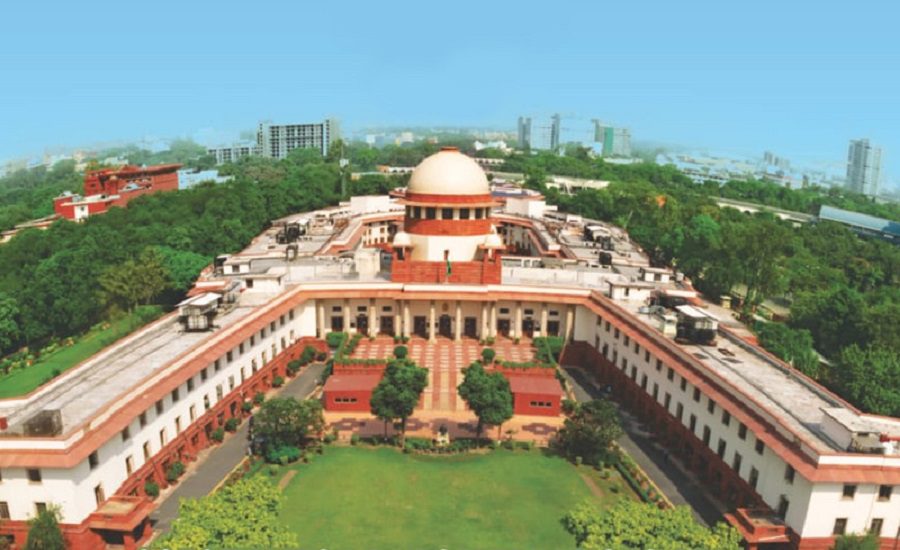
New Delhi: The Supreme Court of India has proposed a new system to manage money deposited by litigants in courts and tribunals across the country.
The Court observed that there is currently no uniform method for handling such deposits. As a result, litigants often face uncertainty, inconsistent treatment, and even financial losses.
The proposal came during a case involving National Seeds Corporation Ltd. vs National Agro Seed Corporation (India), where the Court examined issues related to interest earned on money deposited during a legal dispute.
Why The Supreme Court Wants A Court Common Deposit Platform
According to the Supreme Court, different courts and tribunals currently follow different practices for handling deposited money. Some deposits are kept in fixed deposits, while others may be handled differently depending on the court. This lack of standardization creates confusion and unequal treatment for litigants.
Read also: Why This Supreme Court Judgment Could Change Human Rights Litigation In India
The Court suggested that money deposited before courts and tribunals could be pooled under a common platform and invested through a unified system. This would create consistency, improve transparency, and help litigants earn fair returns on their deposited funds.
How The Court Common Deposit Platform Could Work
The Court explained that a common platform could:
- Pool money deposited across different courts.
- Invest funds through approved financial instruments.
- Ensure uniform interest rates and investment practices.
- Make access to funds easier for litigants.
- Reduce administrative burden on courts and tribunals.
The judges said such a system would provide certainty and fairness while simplifying the management of court deposits.
Why “Time Value Of Money” Matters
One important reason behind the proposal is the concept known as the time value of money. In simple terms, money available today is generally worth more than the same amount received years later because it can earn returns during that period.
The Court noted that delays in handling court deposits can create financial disadvantages for litigants who are waiting for their money.
Problems In The Current System
The Supreme Court highlighted several challenges in the existing framework.
Different Rules In Different Courts
There is no nationwide rule governing:
- How much money must be deposited.
- Where the money should be kept.
- Which financial instrument should be used?
- How interest should be calculated.
- How earned interest should be distributed.
Financial Loss For Litigants
The Court pointed out that decree holders may not be able to use money that has already been awarded to them. At the same time, judgment debtors may continue accumulating interest liabilities even after depositing money in court.
More Litigation
Uncertainty about deposits and interest calculations can sometimes create new legal disputes even after the main case has been resolved.
International Examples Cited By The Court
The Supreme Court referred to systems used in other countries.
United States Model
The Court mentioned the Court Registry Investment System (CRIS) used by federal courts in the United States. Under this system, funds deposited before different courts are pooled together and invested in government securities through a centralized mechanism.
Canada Model
The Court also noted that Canada follows a centralized system for handling deposits made as security while seeking a stay order.
Law Commission Asked To Study The Issue
Recognizing the need for reform, the Supreme Court requested the Law Commission of India to examine the issue in detail. The Commission has been asked to study international practices and consult key institutions, including:
- Reserve Bank of India (RBI)
- Ministry of Finance
- Ministry of Law and Justice
The objective is to explore whether India should create a similar nationwide framework.
Important Ruling On Court Deposits And Interest
Apart from proposing reforms, the Supreme Court also clarified an important legal principle. The Court held that merely depositing money in court does not automatically mean that payment has been made.
For a deposit to count as payment, the money must be unconditionally available to the award holder for withdrawal. Otherwise, interest may continue to accrue.
Why Court Common Deposit Platform Matters
The proposal could eventually lead to a more transparent and efficient system for managing court deposits across India. If implemented, a common platform could:
- Protect litigants’ financial interests.
- Ensure equal treatment across courts.
- Reduce unnecessary disputes.
- Improve returns on deposited funds.
- Simplify court administration.
For millions of litigants involved in court proceedings, such reforms could make the legal process more predictable and financially fair.
Read also: NDPS Act Reform Plea: Why Is the Supreme Court Concerned About Drug Trafficking in India?
FAQs
The Court found that different courts follow different methods for handling deposits, leading to inconsistency, uncertainty, and possible financial losses for litigants.
The Supreme Court has suggested creating a common platform that would pool and invest money deposited by litigants in courts and tribunals across India.
No. The Court has asked the Law Commission of India to study the issue and examine whether a nationwide framework should be introduced.