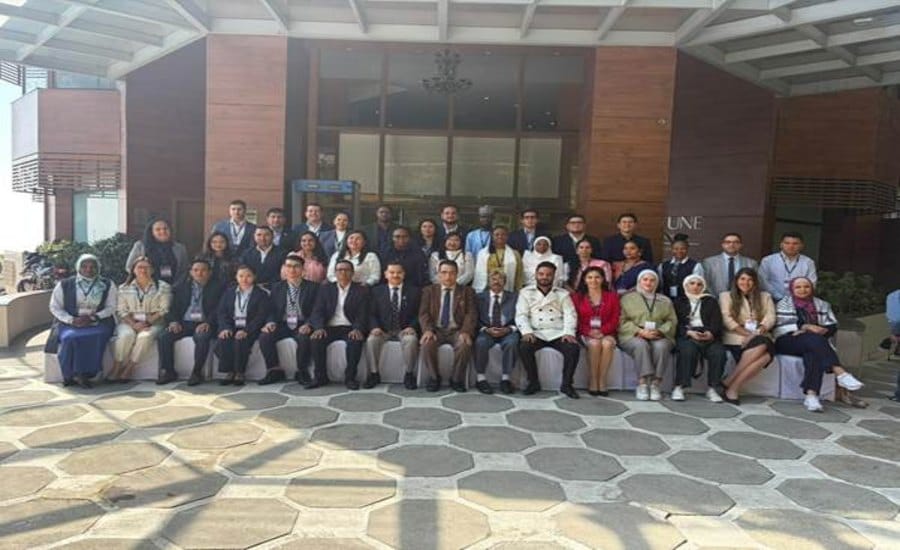
New Delhi: India’s BHASHINI language technology platform is helping civil servants from multiple countries communicate across language barriers during an international training programme on urban service delivery in Mussoorie. The Digital India BHASHINI Division has deployed its Shrutlekh platform to provide real-time English-Spanish translation, supporting more inclusive participation and knowledge exchange among international delegates.
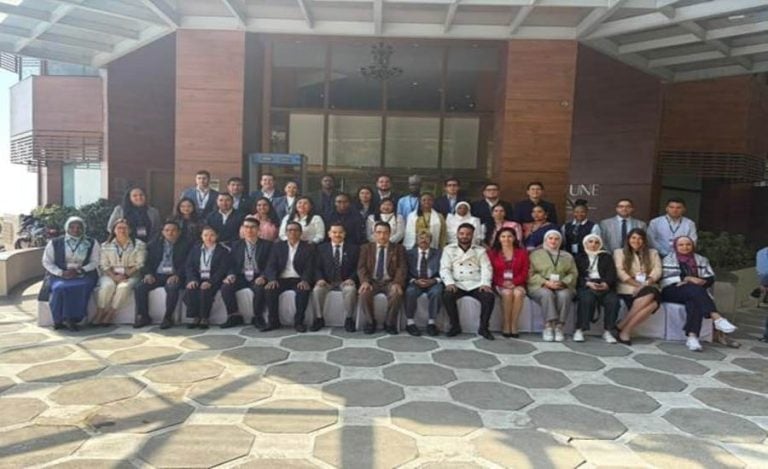
The Capacity Building Programme on Urban Service Delivery for Civil Servants of Multiple Countries is being held at the National Centre for Good Governance (NCGG) from October 12 to 23, 2026. Sponsored by the Ministry of External Affairs (MEA), the programme forms part of India’s international capacity-building efforts under the Indian Technical and Economic Cooperation (ITEC) Programme.
BHASHINI Enables Real-Time English-Spanish Translation
During the programme’s ice-breaking session, BHASHINI’s Shrutlekh platform facilitated two-way translation between English and Spanish. This allowed participants to communicate more easily despite language differences.
The platform supports translation from English to Spanish and Spanish to English, helping delegates take part in discussions and interact with other participants. Shrutlekh is intended to remain available throughout the programme until October 23, subject to operational requirements.
The deployment demonstrates how speech-based artificial intelligence can support international training programmes by making communication more accessible to participants who speak different languages.
Read Also: Breaking Language Barriers: CAG and BHASHINI Launch AI-Powered Translation
Civil Servants From Nine Countries Join the Programme
The NCGG programme brings together civil servants and public-sector representatives from countries including Peru, Cambodia, Nigeria, Kenya, Palestine, Lebanon, The Gambia, Ecuador and Spain.
The programme provides a platform for participants to exchange experiences and learn from different approaches to governance and urban service delivery. By reducing language barriers, BHASHINI aims to support more effective interaction and knowledge-sharing among delegates.
The initiative also reflects India’s broader efforts to share its digital capabilities through international cooperation and capacity-building programmes.
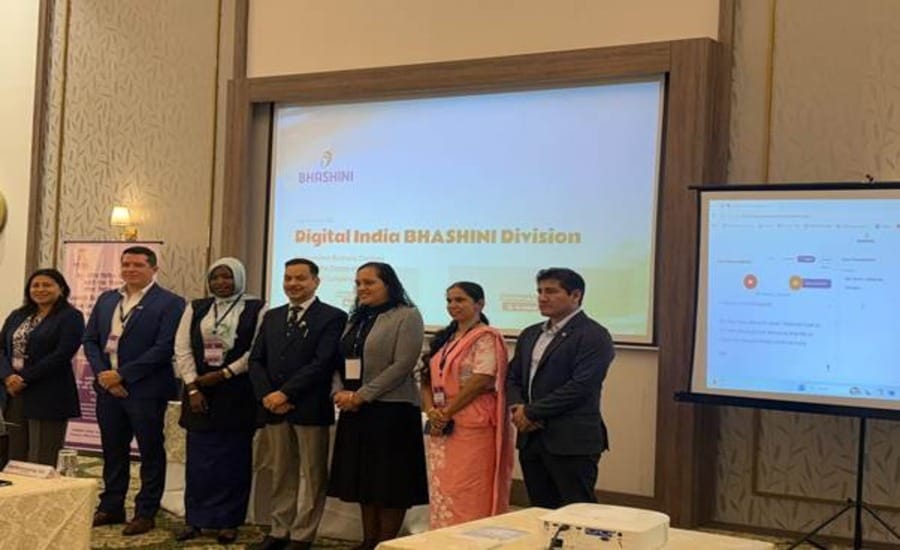
Shrutlekh Showcases Voice-First Multilingual AI
BHASHINI’s deployment follows its Voice-First Multilingual AI approach, which aims to make digital communication and services more accessible through speech-based language technology.
The BHASHINI team helped participants use Shrutlekh and introduced them to the wider BHASHINI ecosystem, including its multilingual AI capabilities and potential applications across sectors.
These applications include healthcare, finance, agriculture and public service delivery, where language barriers can affect access to information and services. Voice-based translation tools can help people interact with digital platforms more easily, particularly when they are not comfortable using another language.
Participants were also encouraged to explore the BHASHINI mobile application and its features for overcoming language barriers in everyday communication and digital interactions.
BHASHINI Expands India’s Language AI Ecosystem
The Digital India BHASHINI Division (DIBD) operates under Digital India Corporation (DIC), which functions under the Ministry of Electronics and Information Technology (MeitY), Government of India.
BHASHINI is developing India’s language AI ecosystem through datasets, AI models, application programming interfaces (APIs) and multilingual applications. It serves as India’s Language Digital Public Infrastructure, supporting the integration of language technologies into digital platforms and services.
According to the information provided by the division, BHASHINI-enabled technologies have been integrated into 2,353 government platforms, including more than 800 government websites.
The platform supports 36 Indian languages in text, 23 Indian languages in voice and 35 international languages. It has also recorded more than nine billion cumulative AI inferences, with over 24 million AI inferences daily.
These figures indicate the scale at which language technologies are being used to improve access to digital services across government platforms.
How Multilingual AI Can Support Governance
Language barriers can make it difficult for people to access government information, use online services or participate in discussions involving people from different linguistic backgrounds. Voice-first AI tools can help address these challenges by enabling communication across languages.
At the Mussoorie programme, Shrutlekh offers a practical demonstration of how multilingual technology can support international collaboration and public-sector training. The experience may also help participants understand how similar solutions could be applied in their own administrative systems.
As India continues to develop its digital public infrastructure, BHASHINI’s work highlights the role of language technology in making digital services more accessible. Its use in international capacity-building programmes also demonstrates how India’s AI capabilities can support cooperation and knowledge exchange across countries.
Read Also: RRB NTPC Recruitment 2026: Indian Railways Announces 3,548 Graduate Vacancies, Apply by November 6