New Delhi: The Digital India BHASHINI Division (DIBD) and the Office of the Comptroller and Auditor General of India (CAG) have launched “CAG-BHASHINI Anuvaad”, an AI-enabled document translation solution designed to support the translation of official CAG documents and audit-related reports.
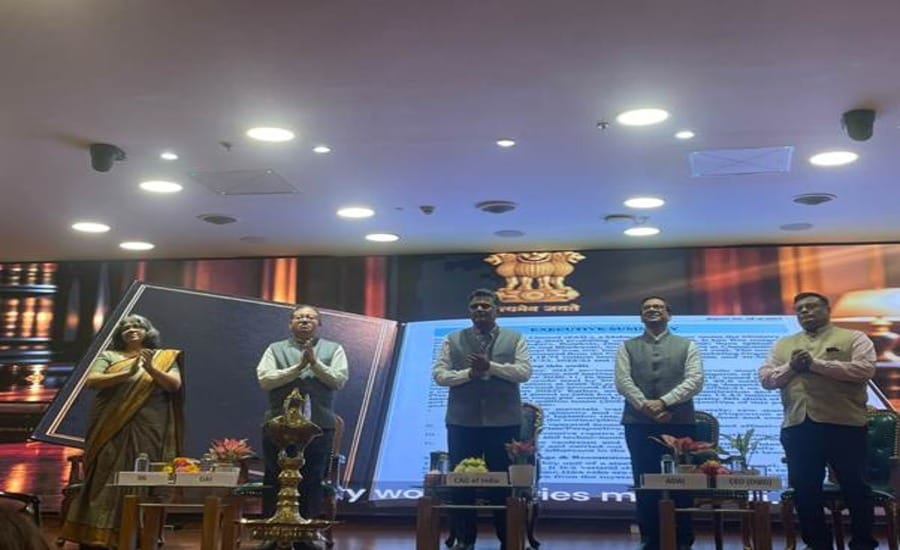
The solution was launched during the closing ceremony of the 74th Hindi Diwas and Hindi Pakhwada 2026 at the CAG Office in New Delhi. The initiative brings multilingual Language AI into an institutional workflow while retaining human oversight for official translation processes.
AI Enters CAG’s Official Translation Workflow
CAG-BHASHINI Anuvaad has been developed as a customised Language AI solution for the CAG. It focuses on consistent terminology, contextual translation and improved quality of translated official documents.
The solution is designed to create an AI-enabled environment for translating CAG documents while addressing institutional requirements related to security, controlled access and data sovereignty.
The collaboration combines BHASHINI’s multilingual language technology with the specialised language requirements of the CAG. Rather than replacing existing institutional processes, the system is intended to complement them through AI-assisted translation and human supervision.
This could help make official audit-related information available in more Indian languages and improve access for citizens who may prefer to read government information in their regional language.
Read also: India-Australia Nuclear Cooperation Agreement: Everything You Need to Know
Focus on Wider Access to Audit Information
CAG Comptroller and Auditor General K. Sanjay Murthy stressed the importance of ensuring that audit findings and reports reach citizens in languages they understand.
The initiative reflects the broader potential of Language AI in government institutions, particularly where large volumes of official information need to reach diverse linguistic communities.
By integrating multilingual technology into established workflows, CAG and BHASHINI aim to support more efficient access to official information while continuing to rely on institutional expertise and oversight.
BHASHINI Expands India’s Language AI Network
Speaking at the event, Amitabh Nag, CEO of the Digital India BHASHINI Division, highlighted the evolution of BHASHINI across language data, AI models, applications and use cases.
According to the PIB release, BHASHINI currently supports:
- 36 Indian text languages
- 23 Indian voice languages
- 35 international languages
The platform is being applied across a growing range of public-service use cases. These include multilingual agricultural advisory services, voice-enabled grievance registration and processing, and conversational services that allow users to access information through voice and telephone-based interfaces.
BHASHINI’s broader objective is to use Language AI to reduce linguistic barriers and make digital public services more accessible across India’s diverse language landscape.
CAG-BHASHINI Collaboration Extends Beyond Translation
The partnership between CAG and BHASHINI also featured technology-enabled activities during Hindi Pakhwada 2026, held from September 14 to 29.
Alongside conventional Hindi language activities, officers and employees participated in language activities and games developed with BHASHINI. The programme provided an opportunity for officials to interact with digital language technology in an institutional setting.
The Hindi Pakhwada programme included competitions and activities related to official language usage, Hindi noting and drafting, translation, typing and other language-based skills.
Winners were felicitated during the closing ceremony, with awards and certificates presented for their participation and performance.
The programme also included demonstrations of digital language technologies, showing how AI can support both official translation workflows and interactive language engagement within government institutions.
Technology Meets Hindi and Indian-Language Governance
Additional Deputy Comptroller & Auditor General (Rajbhasha) Dr Nilotpal Goswami said the combination of artificial intelligence and communication could help overcome linguistic barriers across geographical areas.
He said integrating language technology into institutional processes could make communication more accessible, timely and effective while strengthening the use of Indian languages in governance and official work.
The CAG-BHASHINI initiative therefore connects two areas of digital governance: the translation of official information and wider adoption of Indian-language technology within government institutions.
More Than 9 Billion AI Inferences
The Digital India BHASHINI Division operates under the Digital India Corporation (DIC), Ministry of Electronics and Information Technology (MeitY) and serves as India’s national platform for AI-powered multilingual digital inclusion.
According to the PIB release, BHASHINI currently powers more than 800 government websites and has enabled over 9 billion cumulative AI inferences. It processes more than 24 million AI inferences every day.
Its language capabilities cover Indian text and voice languages as well as international languages, supporting wider access to Digital Public Infrastructure through Language AI.
What CAG-BHASHINI Anuvaad Could Mean
The launch gives the CAG a customised technology platform for handling multilingual translation requirements for official documents and audit-related reports.
For citizens, wider availability of official information in Indian languages can make government reports and audit findings easier to understand and access. For government institutions, the initiative demonstrates how AI can be integrated into established workflows while retaining human expertise, institutional controls and oversight.
The launch of CAG-BHASHINI Anuvaad, together with the technology-enabled Hindi Pakhwada activities, marks a broader collaboration between CAG and BHASHINI to explore practical applications of Language AI in government.
The initiative brings together artificial intelligence, multilingual technology and institutional expertise with the larger objective of making official information more accessible across India’s linguistic diversity.
Read also: India-France FCAS: Everything We Know About the Mach 2 Variable Cycle Engine Project