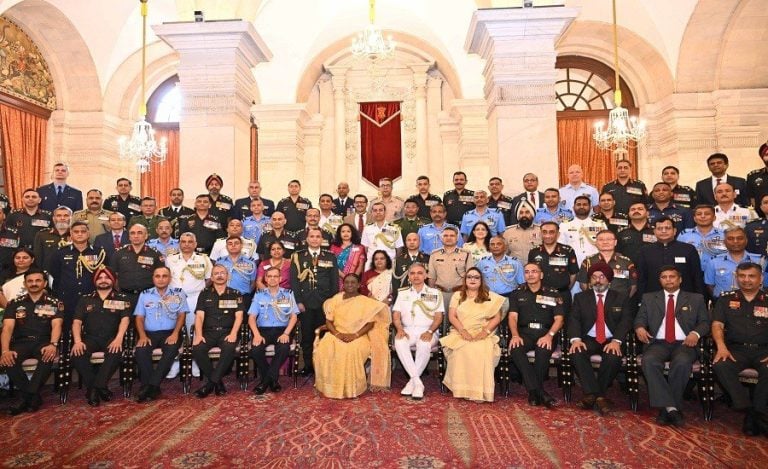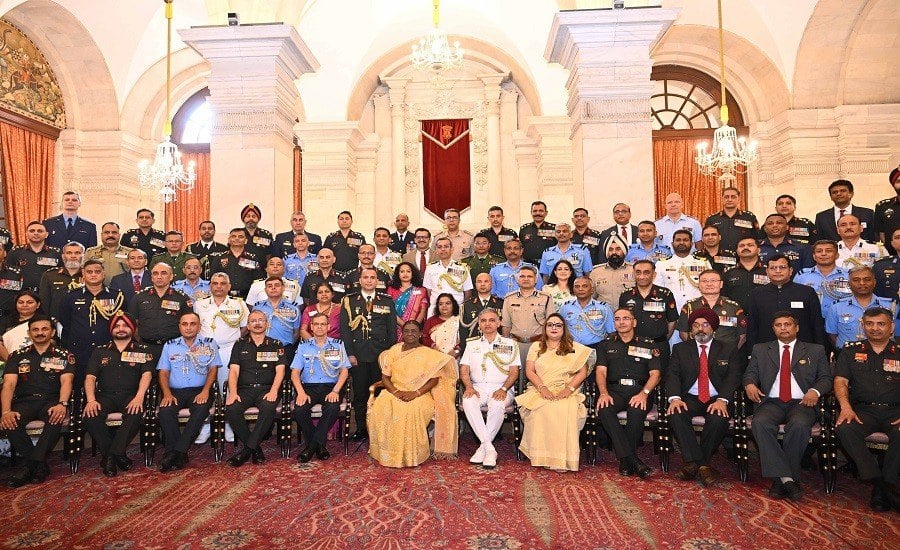
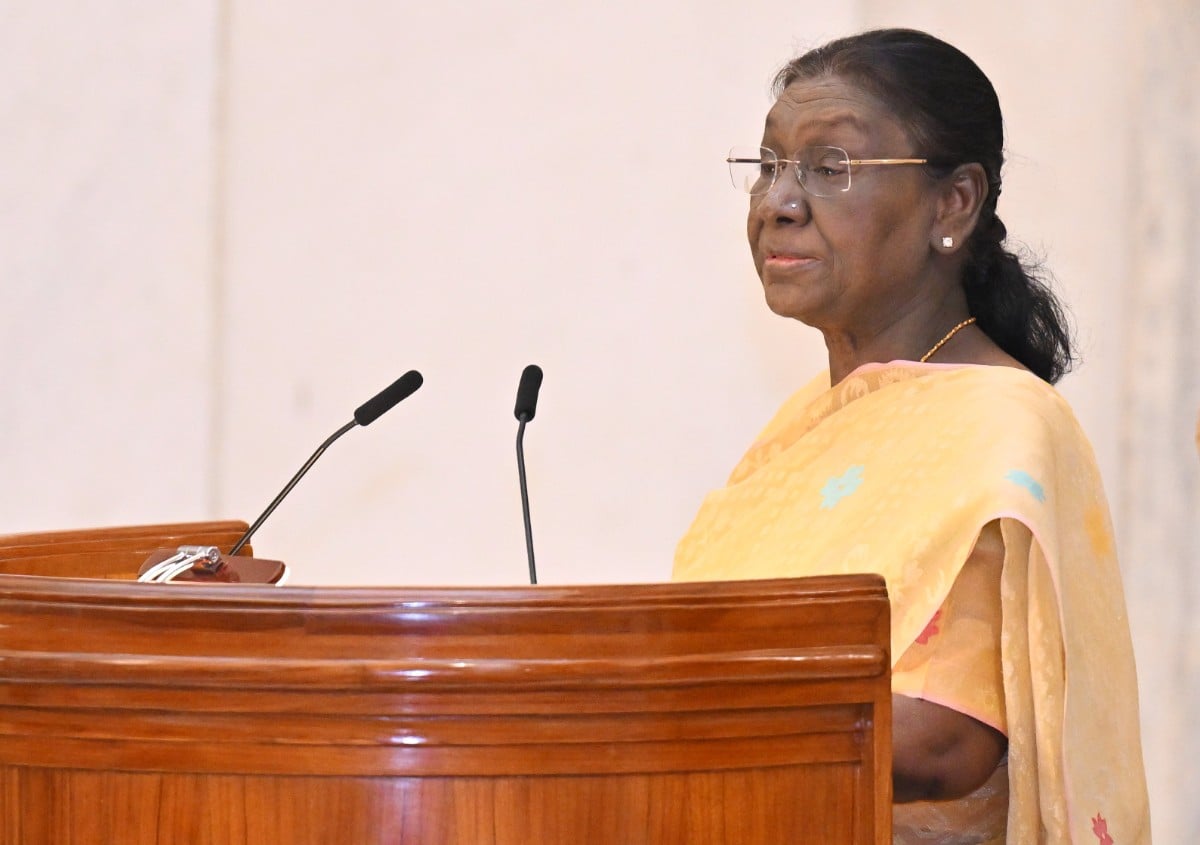
New Delhi: President of India Droupadi Murmu interacted with the faculty and course members of the 66th National Defence College (NDC) Course at Rashtrapati Bhavan on Tuesday, highlighting the need for strategic foresight, technological preparedness, and stronger coordination between scientific institutions and the armed forces to address emerging national security challenges.
Addressing the gathering, the President said that rapid changes in the security and technological landscapes are creating new and complex challenges. She stressed that these developments require greater preparedness, the ability to anticipate strategic shifts, and adaptability to changing circumstances.
The President also emphasised the growing importance of fast decision-making mechanisms as modern warfare expands beyond traditional military domains into areas such as cybersecurity, space technology, and biotechnology.
President Murmu Highlights Emerging Dimensions of National Security
President Murmu said that national security today extends beyond conventional military capabilities and requires a comprehensive approach that incorporates technological innovation, scientific research, and strategic planning.
She underlined the importance of strengthening cooperation between scientific institutions and the armed forces to convert research and innovation into practical solutions for national security.
According to the President, recent conflicts have demonstrated the significance of cost-effective technologies that can complement advanced defence systems while ensuring the efficient use of available resources.
She also highlighted the role of government initiatives, including the Research, Development and Innovation (RDI) Scheme, in strengthening the connection between innovation and national security.
Read also: Indian Navy Set to Commission Indigenous Multi-Purpose Warship ‘Samarthak’ at Karwar on October 16
AI in National Security Requires a Balanced Approach
The President noted that the use of Artificial Intelligence (AI) is increasing across several fields, including scientific research, national security, and economic activities.
While acknowledging the growing role of AI in these areas, she cautioned against relying exclusively on technology for decision-making.
President Murmu emphasised the need for a balanced approach to AI adoption, highlighting the continued importance of human judgement and responsible decision-making, particularly in matters involving national security.
Her remarks underscored the importance of integrating emerging technologies into security frameworks while ensuring that critical decisions remain guided by appropriate human oversight.
Economic Resilience an Integral Part of National Security
President Murmu also highlighted economic resilience as an essential component of India’s national security framework.
She said that the Indian economy has demonstrated its ability to absorb disruptions caused by external factors without compromising the country’s strategic freedom of action.
Her remarks emphasised the close relationship between economic stability and national security, particularly at a time when countries face evolving geopolitical, technological, and economic challenges.
The President’s address highlighted the importance of maintaining a resilient economy alongside strong defence capabilities to safeguard national interests and preserve India’s ability to make independent strategic decisions.
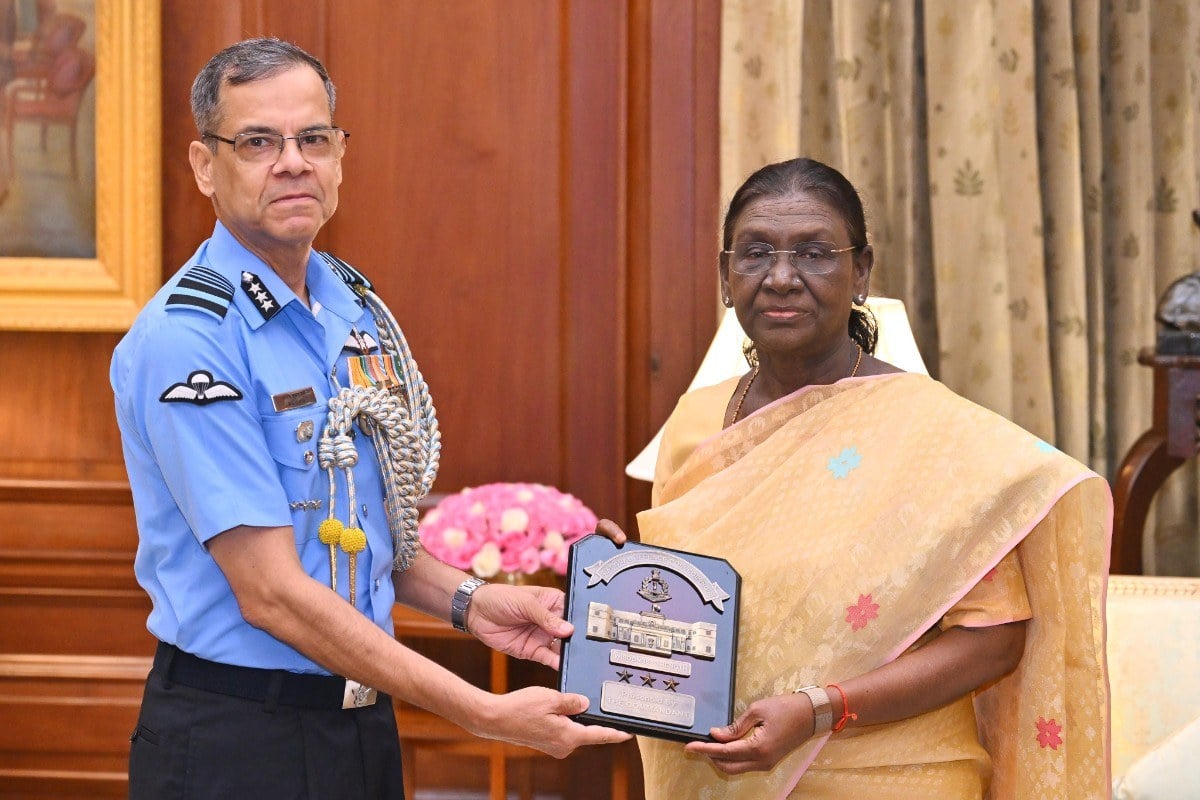
66th National Defence College Course Focuses on Strategic Understanding
The interaction between the President and the faculty and course members of the 66th National Defence College Course took place at Rashtrapati Bhavan on October 13, 2026.
The engagement highlighted key issues shaping India’s contemporary national security priorities, including emerging technologies, modern warfare, defence innovation, economic resilience, and the need for coordinated decision-making.
President Murmu’s address reinforced the importance of preparing national security leaders to respond effectively to evolving challenges through strategic foresight, technological advancement, and cooperation across institutions.
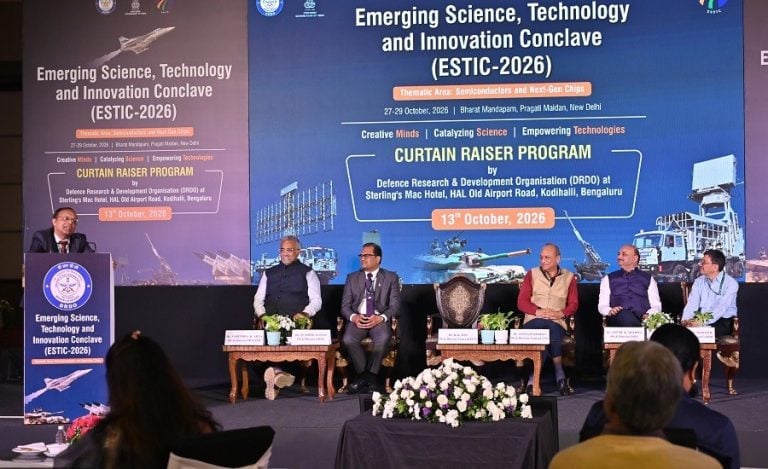
Read also: DRDO to Lead Semiconductor and Next-Gen Chips Session at ESTIC 2026 in New Delhi