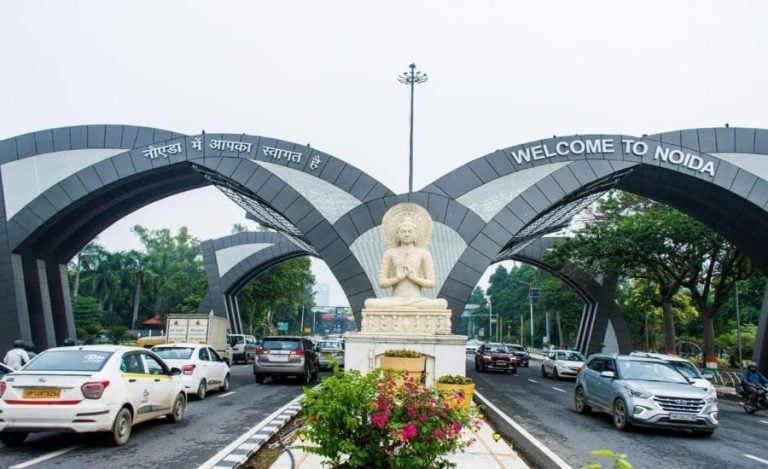
Lucknow: Uttar Pradesh is preparing a major urban and industrial expansion through the proposed New Noida development plan, which will cover around 20,000 hectares and aim to create 5–6 lakh direct and indirect employment opportunities by 2030. The New Okhla Industrial Development Authority (Noida Authority) is planning the expansion to meet rising industrial demand, attract fresh investment and strengthen the region’s position as a manufacturing and technology hub.
Noida Authority CEO Krishna Karunesh said limited land availability in the existing city had made expansion necessary. The authority expects to begin land acquisition for the project in phases soon. The plan will focus on industrial development, modern infrastructure, better transport connectivity and opportunities for domestic and international investors.
New Noida Plan to Create 5–6 Lakh Jobs by 2030
Employment generation is a major objective of the New Noida project. The authority has set a target of creating between 5 lakh and 6 lakh direct and indirect jobs by 2030.
The proposed expansion is expected to provide space for new industrial units, commercial establishments, logistics facilities and other businesses. These developments could generate employment across manufacturing, information technology, warehousing, services and supporting industries.
For Uttar Pradesh, the project could also strengthen industrial activity beyond Noida’s existing sectors. New industrial areas may attract companies seeking land for factories, offices and large-scale infrastructure, while supporting businesses could benefit from rising commercial activity.
Why Noida Needs a Major Expansion
Established in 1976 as an industrial township near Delhi, Noida has developed into one of North India’s important economic centres. Its proximity to the national capital, established industrial ecosystem and transport links have helped attract businesses in manufacturing, electronics, information technology and commercial real estate.
According to Karunesh, around 90% of Noida’s existing area—spread across nearly 20,000 hectares and divided into 168 sectors—has already been developed. Limited land availability has increased the need to create additional space for industrial and commercial growth.
Over the past three decades, the authority has made around 9,500 industrial allotments, 5,000 commercial allotments and more than 250 institutional allotments. These developments have generated over 1.2 million jobs during the past 30–35 years, according to the CEO.
The New Noida plan aims to build on this economic base by providing additional land and infrastructure for future investment.
Three Proposed Metro Corridors to Improve Connectivity
Transport connectivity will be an important part of the expansion strategy. The authority is preparing plans for three proposed Metro corridors to improve access between Noida and key locations in the wider region.
The proposed corridors would connect Noida with the multimodal transport hub at Bodaki, Botanical Garden and Gaur City via Char Murti. These links are intended to improve access for commuters, residents and businesses, although the corridors remain at the planning stage.
Noida already benefits from several major road links, including the Noida–Greater Noida Expressway, Yamuna Expressway, Delhi–Noida Direct Flyway and Eastern Peripheral Expressway.
Improved public transport and road connectivity could help businesses move goods and employees more efficiently. However, the impact will depend on the progress of the proposed corridors and the supporting infrastructure developed alongside New Noida.
₹35,000 Crore Investment Expected Through Upcoming GBC
Noida is also preparing for another major investment round. Karunesh said around 120 projects involving investments of nearly ₹35,000 crore are expected to be grounded during the upcoming fifth ground-breaking ceremony (GBC).
The proposed projects cover several sectors, including data centres, electronics, commercial real estate, logistics and institutional development.
Ground-breaking ceremonies mark the transition of investment proposals towards project implementation. If the planned projects move forward as expected, they could add to Noida’s industrial capacity and create further demand for skilled and semi-skilled workers.
The investment pipeline also reflects the city’s growing role in technology infrastructure, electronics manufacturing and business services.
Noida’s Contribution to Uttar Pradesh’s Economy
Noida has become a major contributor to Uttar Pradesh’s economic activity. According to the authority’s CEO, the city accounts for around 10% of the state’s gross state domestic product (GSDP).
Karunesh also said Noida contributes around 60% of Uttar Pradesh’s electronics and information technology exports and nearly 80% of its apparel exports. These figures underline the city’s importance to the state’s export-oriented industries.
Several major companies have established operations in Noida, including Samsung, Dixon, Tata Consultancy Services, Infosys, HCL, Microsoft, Wipro and Adobe. Data centre investments by Sify and AdaniConneX have further strengthened the region’s technology infrastructure.
The authority is also promoting research and development in emerging fields such as semiconductors, artificial intelligence and battery technology. These sectors could support new business opportunities as demand for advanced manufacturing and digital infrastructure grows.
Uttar Pradesh Explores Additional Construction Potential in Existing Noida
Alongside the New Noida expansion, the state government is considering policy options to allow an additional floor area ratio (FAR) in existing Noida.
FAR determines the permissible built-up floor area in relation to the size of a plot. Allowing additional FAR could enable more construction on eligible plots, subject to the final policy and applicable planning rules.
The proposal could provide another route for commercial and urban development within the existing city, even as New Noida creates room for expansion into new areas. The details and implementation of any change will depend on the state government’s final decision.
New Noida Could Strengthen UP’s Industrial Growth
The proposed 20,000-hectare expansion represents a long-term effort to address land constraints and accommodate future industrial demand. By combining additional industrial space with investment, transport planning and technology development, the authority aims to build on Noida’s existing economic strengths.
The target of 5–6 lakh jobs by 2030 highlights the project’s employment ambitions. However, the scale of the eventual benefits will depend on phased land acquisition, infrastructure development, project implementation and the arrival of new businesses.
If these plans progress as intended, New Noida could expand Uttar Pradesh’s capacity to attract manufacturing and technology investment while creating new employment opportunities across the region.
Read also: Uttar Pradesh CM Yogi Adityanath Launches 78 Development Projects Worth ₹803 Crore in Balrampur