New Delhi: Prime Minister Narendra Modi is set to move into the newly constructed Seva Tirtha complex, the new Prime Minister’s Office, on February 13, 2026. The move marks a historic shift from the nearly 95-year-old North and South Blocks of the Secretariat Building, which have long been considered the epicenter of administrative power in India.
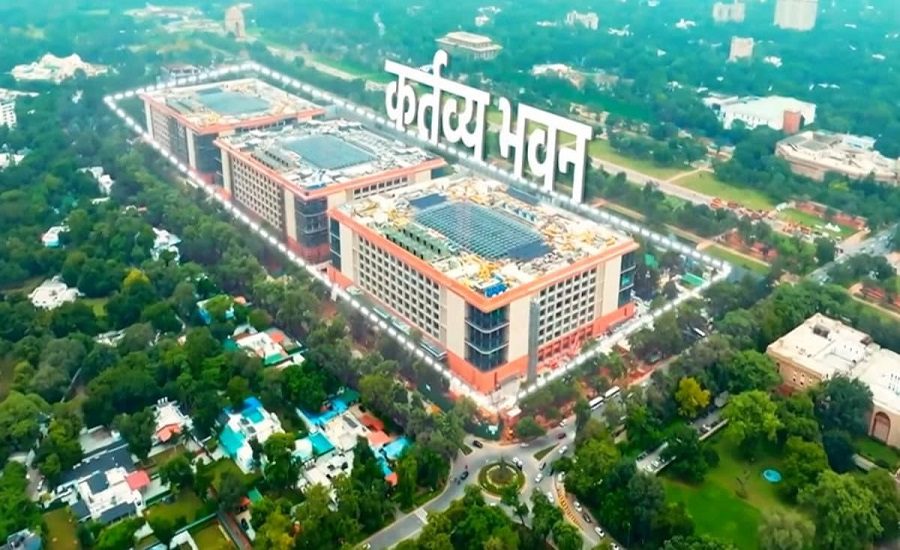
According to news agency ANI, PM Modi will unveil the official name of the building complex, “Seva Tirtha,” at around 1:30 pm, followed by the formal inauguration of Seva Tirtha and Kartavya Bhawan 1 and 2 at 6 pm. The Prime Minister will also address a public event later in the day.
Kartavya Bhawan 1-2: New Offices for Ministries
Kartavya Bhawan 1 and 2 will accommodate offices of several central government ministries, streamlining operations that were previously spread across the North and South Blocks of the Secretariat Building. Key ministries moving to these buildings include:
- Ministry of Finance
- Ministry of Defence
- Ministry of Health and Family Welfare
- Ministry of Corporate Affairs
- Ministry of Education
- Ministry of Culture
- Ministry of Law and Justice
- Ministry of Information and Broadcasting
- Ministry of Agriculture and Farmers Welfare
- Ministry of Chemicals and Fertilizers
- Ministry of Tribal Affairs
The relocation is expected to enhance administrative coordination, efficiency, and public service delivery while reducing operational delays caused by decentralized offices in older buildings.
Seva Tirtha: Modern PMO Complex
The Seva Tirtha complex, formerly called the Executive Enclave, was renamed on December 2, 2025. Located on Dara Shikoh Road, New Delhi, the complex spans approximately 2.26 lakh square feet (around 5 acres) and was constructed by L&T at a cost of ₹1,189 crore.
The complex consists of three buildings:
- Seva Tirtha-1: Houses the Prime Minister’s Office (PMO)
- Seva Tirtha-2: Cabinet Secretariat (already shifted in September 2025)
- Seva Tirtha-3: National Security Council Secretariat and office of the National Security Advisor, Ajit Doval
A new residence for the Prime Minister is also under construction nearby, and once completed, PM Modi will relocate from his current residence at 7, Lok Kalyan Marg.
Modern Features of Kartavya Bhawan and Seva Tirtha
Kartavya Bhawan 1 and 2 have been designed with digitally equipped offices, centralized reception, and public interaction spaces to enhance transparency and citizen engagement. The buildings adhere to 4-star GRIHA standards, incorporating:
- Renewable energy systems
- Water conservation measures
- Waste management systems
- Energy-efficient construction techniques
- Smart security systems, including access control, surveillance networks, and emergency response systems
These features aim to reduce environmental impact while providing a future-ready workspace for government officials.
Historic Significance and Central Vista Project
The North and South Blocks, the historic British-era Secretariat Buildings, have served as administrative hubs for nearly 95 years. The relocation to Seva Tirtha is part of the Central Vista Redevelopment Project, a ₹20,000 crore initiative announced in September 2019.
Key aspects of the Central Vista Project include:
- Construction of the new Parliament House
- Development of Seva Tirtha and Kartavya Bhawan 1-3
- Redevelopment of roads, office buildings, and public spaces between Rashtrapati Bhavan and India Gate
Kartavya Bhawan-3, inaugurated by PM Modi on August 6, 2025, already houses ministries including Home, External Affairs, Rural Development, MSME, Petroleum, and Principal Scientific Advisor. The total Common Central Secretariat (CCS) will consist of 10 office buildings and a convention center.
North and South Block Transformation
The North and South Blocks will now be converted into the Yuge-Yuge Bharat National Museum, envisioned as a world-class museum displaying 25,000–30,000 artifacts chronicling the history of Indian civilization. Once completed, it is expected to be among the largest museums globally.
Government’s Rationale
The government cited multiple reasons for the move:
- Consolidating ministries and offices into modern buildings to improve coordination
- Reducing maintenance costs associated with older structures
- Providing a better working environment for officials
- Ensuring eco-friendly, energy-efficient, and secure infrastructure
The move to Seva Tirtha and Kartavya Bhawan 1-2 is expected to streamline administrative operations, improve public access, and enhance the overall efficiency of governance.