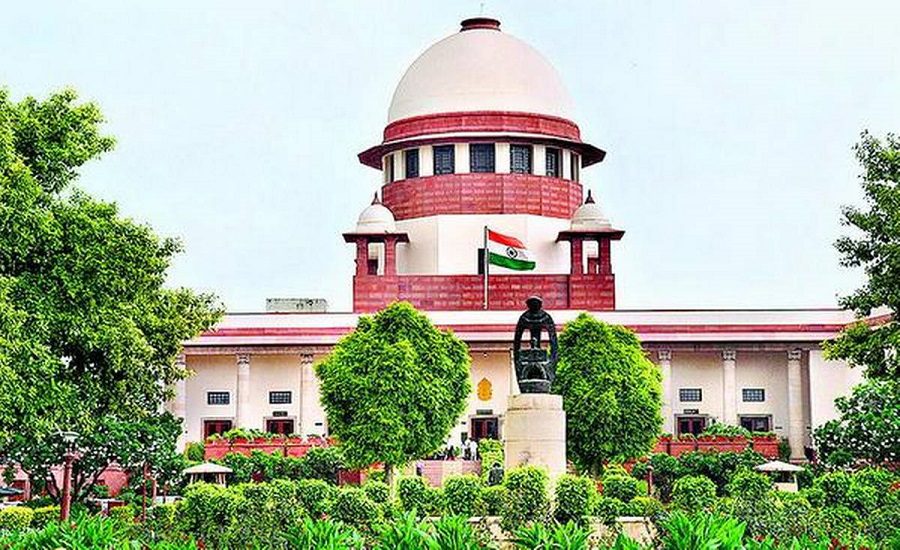
Lucknow: In a significant judicial intervention touching on issues of hate speech, digital evidence, and alleged abuse of authority, the Supreme Court of India has directed a forensic examination of a mobile phone purportedly containing an audio clip of alleged anti-Muslim remarks by a serving Uttar Pradesh police officer.
The apex court’s order marks a pivotal moment in the ongoing legal battle over the authenticity and implications of the controversial voice recording. The direction comes amid concerns over alleged misuse of the criminal justice system and the protection of fundamental rights.
Background of the UP Police Hate Speech Case
The controversy traces back to March 2020, at the height of the COVID-19 pandemic, when a WhatsApp voice clip allegedly featuring Sanjeev Tyagi, then Superintendent of Police (SP), Bijnor — now Deputy Inspector General (DIG) — was circulated online and privately among citizens. In the clip, a voice purportedly resembling Tyagi’s is heard making objectionable anti-Muslim remarks.
A local resident, Islamuddin Ansari, forwarded the audio to the then SP at Bijnor seeking clarification on whether it was indeed Tyagi’s voice. Instead of a neutral response, an FIR was registered against Ansari by the Uttar Pradesh Police under Section 505 of the Indian Penal Code (IPC) and Section 67 of the Information Technology Act, alleging that he spread rumours with intent to incite communal enmity.
A chargesheet was subsequently filed, and cognisance was taken by the Chief Judicial Magistrate in 2021.
Supreme Court Intervention: Quashing and Interim Directions
The matter reached the Supreme Court after Ansari’s plea to quash the criminal proceedings was rejected by the Allahabad High Court.
On December 8, 2025, a bench led by Justice Ahsanuddin Amanullah and Justice K. Vinod Chandran quashed the FIR, observing that the complaint appeared to be a retaliatory measure rather than a bona fide prosecution. During this hearing, the court also directed DIG Sanjeev Tyagi to submit his voice sample for comparison.
The Supreme Court described the police action against Ansari as potentially amounting to “a total abuse of authority and of the court process,” recognising the serious implications for free expression and misuse of criminal law in cases involving digital speech.
New Direction: Forensic Scientific Examination Ordered
On December 15, 2025, the Supreme Court took the matter a step further. Hearing an interlocutory application seeking modification of its earlier order, the court noted that the mobile phone containing the allegedly incriminating audio clip was already in police custody.
It accordingly directed that this mobile device — and any other seized devices potentially containing relevant data — be safely delivered to the Director of the Forensic Science Laboratory (FSL) in Hyderabad for comprehensive forensic analysis.
The bench specifically ordered:
> “The Superintendent of Police, District Bijnor, Uttar Pradesh, is directed to ensure the safe delivery of any device, including the mobile phone which may have been seized from the petitioner, to the Director, FSL, Hyderabad.”
This forensic scrutiny aims to scientifically establish the authenticity, integrity, and origin of the recording, mitigating disputes over tampering and manipulation — a recurring challenge in digital evidence cases across India’s courts.
The Supreme Court has scheduled the next hearing for January 12, 2026, at 3:30 p.m., where it will examine the FSL report and related submissions.
Read also: Supreme Court Flags Serious Concerns Over ED Asset Seizure Powers Without Judicial Oversight