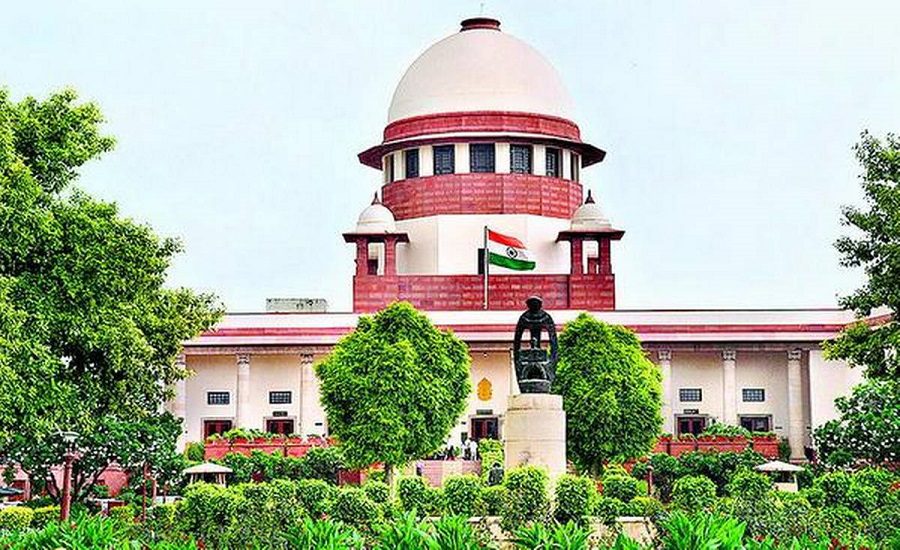
New Delhi: The Supreme Court of India intervened in a controversial police action involving the circulation of an alleged audio clip in which a senior Uttar Pradesh police officer is heard using communal slurs against Muslims. The Court ordered a forensic examination of the audio clip, and simultaneously quashed all criminal proceedings against a senior Muslim man, citing abuse of police authority and judicial process.
The judgment signals an emphatic assertion of judicial oversight over police excesses and highlights the need for credible evidence before criminalising acts of dissent or criticism — especially in cases that implicate hate speech and communal sensitivity.
Background of UP DGP Hate-Speech Audio Controversy
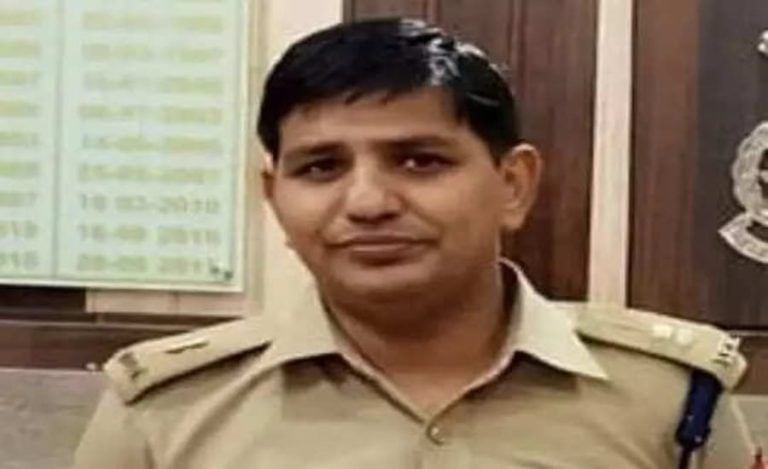
The controversy centers around an audio clip said to contain the voice of Sanjeev Tyagi — a senior Uttar Pradesh police officer. At the time of the incident, Tyagi held the post of Superintendent of Police; he is now serving as Deputy Inspector General (DIG) of Police in the Basti Range.
Read also: Temple vs Dargah: Tamil Nadu Moves Supreme Court Over Thiruparankundram Hill Deepam Row
The audio allegedly captured Tyagi making derogatory remarks about Muslims. The clip began circulating, raising grave concerns about communal bias within law enforcement.
A senior Muslim citizen — Islamuddin Ansari — forwarded the audio clip to Tyagi and asked him to confirm whether it was indeed his voice. Instead of receiving any response, Ansari was booked under charges related to hate speech and circulation of “objectionable material.”
His appeals in trial court and High Court failed, prompting him to approach the Supreme Court.
Supreme Court’s Ruling: What the Court decided in UP DGP Hate-Speech Audio Controversy
A bench comprising Justices Ahsanuddin Amanullah and K Vinod Chandran held that the initiation of the criminal case against Ansari was “totally an abuse of police authority and the judicial process.”
The Court observed that the State of Uttar Pradesh — faced with the Supreme Court notice — opted to withdraw the complaint against Ansari. On this ground itself, the Court quashed the FIR, chargesheet, and all consequent proceedings.
The bench characterized the case as “nothing but a counter-blast” triggered by Ansari’s legitimate question to the officer about whether the audio voice was indeed his.
Order for forensic examination
Beyond quashing the case, the Court ordered a forensic examination of the voice clip to ascertain whether the voice indeed belongs to DIG Tyagi.
It directed that the sample be examined at the Telangana State Forensic Science Laboratory (TSFSL), Hyderabad — under direct supervision of its Director.
The Court mandated that Tyagi must appear before the Hyderabad lab within three weeks and provide a fresh voice sample. The petitioner (Ansari) must furnish the original audio clip or link for comparison.
In addition, the Court warned authorities against any retaliation or intimidation against Ansari during the investigative process, granting him liberty to directly approach the Court in case of any harassment.
Significance of the Verdict: Legal and Social Implications of UP DGP Hate-Speech Audio Controversy
By quashing the criminal proceedings against Ansari, the Supreme Court reasserted the principle that mere forwarding or questioning of an audio clip — especially when used to raise legitimate public interest concerns — cannot be criminalised without credible evidence. The verdict sends a message that police and prosecutorial powers must not be misused to silence dissent under the guise of hate-speech allegations.
Importance of forensic verification in communal allegations
The order for forensic testing underscores the necessity of objective, scientific verification — not conjecture — when allegations involve communal slurs. Given the sensitivity around communal relations in India, the Court’s insistence on forensic clarity before attributing culpability is a robust check against hasty, possibly biased criminal proceedings.
Warning against state overreach & misuse of power
The Court’s censure of the police’s role — describing the FIR, charge-sheet and prosecution as “abuse of police authority” — is a reminder that state apparatus cannot be wielded arbitrarily, especially in matters touching on fundamental rights and social harmony.
Accountability of police in communal/hate-speech contexts
By directing a forensic examination and transparency in collection and testing of voice samples, the verdict increases accountability for senior police officers accused of communal bias. It may serve as a deterrent against potential hate-speech or communal misconduct from those holding public office.
What Happens Next: The Road Ahead
The forensic lab in Hyderabad will compare Tyagi’s voice sample with the contested audio clip. The report will be submitted sealed to the Court by the lab Director.
Based on the forensic findings, further action may be triggered — possibly departmental proceedings, criminal charges, or exoneration. The Supreme Court’s decision has laid the groundwork for an impartial fact-finding process.
The case also sets a precedent for how courts may handle similar matters in the future: demanding credible scientific evidence before allowing prosecutions in hate-speech/audio circulation cases.
Additionally, the Court’s strong language against “abuse of police authority and judicial process” may encourage other citizens to challenge harassment or misuse of power.
Broader Context of UP DGP Hate-Speech Audio Controversy
Communal tensions and allegations of hate speech remain a deeply sensitive issue in India. When law enforcement officers — tasked with upholding law and order — are themselves accused of communal bias, it undermines public trust in institutions. By subjecting such allegations to rigorous forensic scrutiny and protecting those who raise concerns from retaliatory prosecution, the Supreme Court has underscored the imperative of institutional accountability.
Moreover, in an era where audio/video clips — real or doctored — can be weaponised to spread misinformation or foment communal discord, this verdict highlights the critical role of scientific verification and due process.
Read also: Supreme Court Orders UP to Amend Laws Allowing Officials’ Wives in Key Cooperative Roles