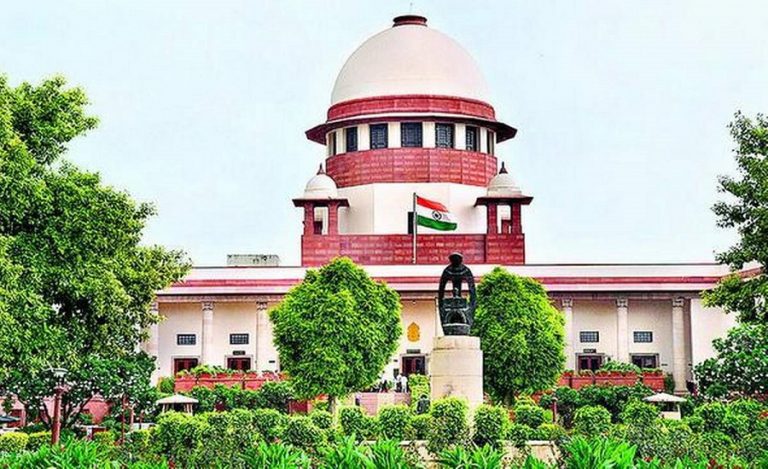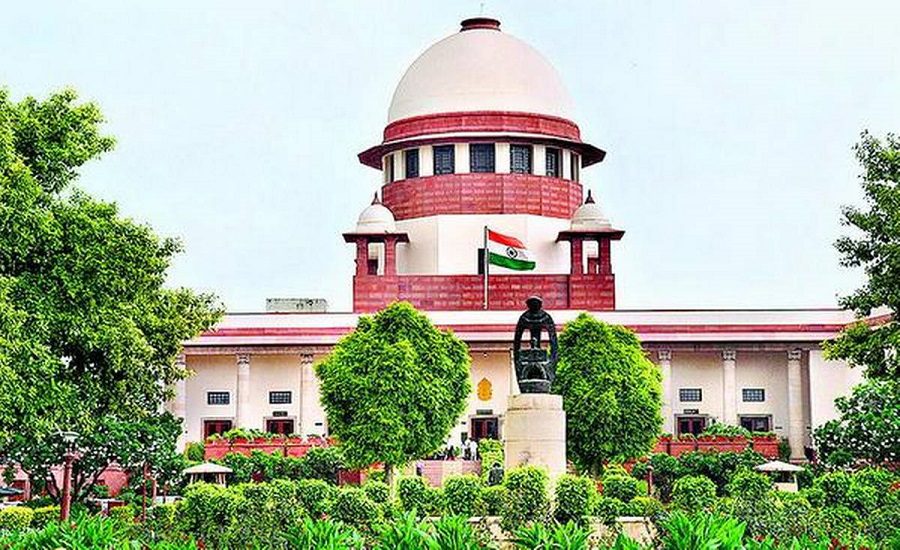
New Delhi: In a sharp observation during the hearing of the illegal construction case in Meerut, the Supreme Court of India on Thursday said that the failure of authorities in handling unauthorised commercial structures should serve as “an eye-opener not only for Uttar Pradesh but for the entire country.”
A Bench comprising J. B. Pardiwala and K. V. Viswanathan resumed hearing the contempt matter involving delayed demolition of illegal commercial properties functioning in residential zones under the jurisdiction of the Uttar Pradesh Awas Evam Vikas Parishad.
The Court ordered strict follow-up action after noting that the present crisis could have been avoided had officials acted in time.
Supreme Court Says Delay by Authorities Led to Present Crisis
The Bench observed that timely administrative intervention could have prevented the situation where schools, hospitals and banks had to be sealed under court directions.
According to the Court: “Had the authorities taken steps in the appropriate time in the right direction, this situation would not have arisen. This case is an eye opener for the state machinery, not just for UP, but for the entire country.”
The matter concerns hundreds of commercial establishments allegedly operating illegally in residential areas in Meerut in violation of sanctioned land use norms.
Read also: Sabarimala Row: These 7 Supreme Court Questions Could Reshape India’s Religious Freedom Laws
IAS Officers Earlier Pulled Up for Non-Compliance
The Court had earlier strongly criticised two senior IAS officers from Uttar Pradesh:
- P Guruprasad, Chairman of UP Awas Evam Vikas Parishad
- Rishikesh Bhaskar Yashod, former Meerut Divisional Commissioner
P Guruprasad was questioned after the Court found that out of nearly 860 identified illegal properties, only one had been demolished.
Rishikesh Bhaskar Yashod had come under scrutiny for issuing an administrative stay on demolitions in October 2025, citing possible public unrest.
The Bench had earlier remarked sharply:
“So will you succumb to hue and cry by the encroachers or go by the rule of law?”
The Court also described the administrative intervention as creating a complete deadlock in implementation of judicial orders.
44 Illegal Structures Sealed Including Schools, Hospitals and Banks
During Thursday’s hearing, Senior Advocate Rajiv Shakdher, appearing for Guruprasad, informed the Bench that authorities had complied with earlier directions and sealed 44 unauthorised vulnerable structures.
The sealed properties include:
- 6 schools
- 6 hospitals
- 3 banks
- Other commercial establishments
Authorities also informed the Court that students, patients and other occupants had been relocated.
Supreme Court Orders Demolition of Over 800 Illegal Setbacks
The Court then turned its focus to over 800 unauthorised setbacks in the central market area.
A setback refers to the mandatory open space that must remain between a building and the property boundary.
The Bench made it clear that:
- all illegal setbacks must be removed
- no regularisation through compounding would be allowed
- owners may first be given notice to remove encroachments
- failing compliance, authorities will demolish and recover costs
The Bench observed:
“After sealing all the 44 unauthorised structures, what further steps will you take? All illegal, unauthorised set backs have to go.”
Two Months Granted for Full Compliance
The Supreme Court granted two months to the Parishad to complete demolition of all illegal setbacks.
It also asked authorities to file a status report clarifying whether any remaining portions of structures could be compounded under existing bylaws.
Direct Warning to UP Awas Evam Vikas Parishad Chairman
The Court directed Guruprasad, who appeared virtually during proceedings, to personally read the fresh order and proceed immediately with demolition action.
Earlier, while warning him over non-compliance, the Bench had remarked:
“He will remember us for the rest of his career. This should not happen again.”
Wider Administrative Message for States
The Court’s remarks are being viewed as a wider institutional message to state governments regarding:
- delayed urban enforcement
- administrative hesitation under political pressure
- illegal land-use violations
- weak municipal compliance mechanisms
The case is likely to influence future urban enforcement actions in multiple states.
Read also: Patna High Court Upholds Termination of IRS Probationary Officer in ₹2.5 Lakh Bribery Case