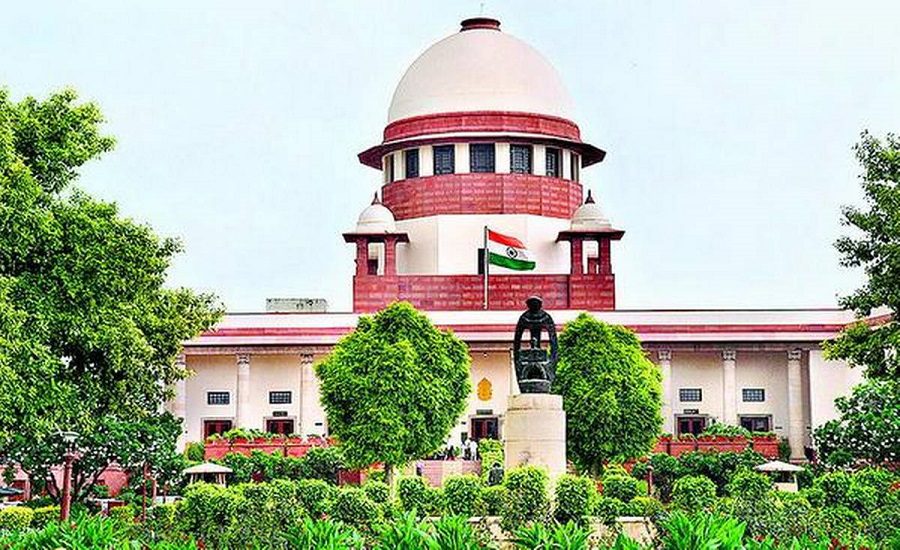
New Delhi: The Supreme Court relief to 60 UPSC aspirants in the OBC reservation case has become an important development for civil service candidates across India. The Supreme Court ruled that determining OBC creamy layer status cannot be based only on parents’ salary or income.
The case involved about 60 candidates who cleared the 2016 Civil Services Examination (CSE) but were denied appointment after being wrongly classified as belonging to the creamy layer.
Background of the Supreme Court Ruling on OBC Creamy Layer Reservation
The Supreme Court of India has granted relief to around 60 candidates who cleared the UPSC Civil Services Examination in 2016 but were denied appointments under the OBC Non-Creamy Layer (NCL) quota.
Read also: UPSC Reservation Rule Clarified: SC Bars Relaxed Candidates from General Category Seats
A bench of Justice P.S. Narasimha and Justice R. Mahadevan ruled that authorities had wrongly categorized these candidates as belonging to the creamy layer.
According to the Court, parental salary alone cannot determine whether a candidate falls under the OBC creamy layer category.
The decision dismissed appeals filed by the Union government against earlier High Court rulings that had supported the candidates.
OBC Creamy Layer Reservation: Why the Candidates Were Denied Appointment
The affected candidates had successfully passed the 2016 UPSC Civil Services Examination.
However, during verification of their eligibility for reservation benefits:
- The Department of Personnel and Training (DoPT) considered their parents’ salary income.
- Because their parents worked in public sector undertakings (PSUs), banks, or similar institutions, the candidates were treated as belonging to the creamy layer.
- As a result, they were denied reservation benefits and appointment in civil services.
The candidates challenged this decision before the Central Administrative Tribunal and various High Courts, which ruled in their favour. The Union government then appealed to the Supreme Court.
Supreme Court Key Observation on OBC Creamy Layer Reservation
The Supreme Court clarified that income alone cannot be the sole factor for determining creamy layer status in the OBC category.
The Court said that while identifying creamy layer:
- Authorities must also consider parents’ position, status and social background.
- Only using income or salary is not legally correct under existing guidelines.
The judgment emphasized that the 1993 government guidelines on creamy layer identification require considering multiple factors, not just income.
Constitutional Principles Highlighted by the Court
The Court also referred to constitutional principles related to equality.
It said excluding candidates automatically because of salary-based income classification may violate:
- Article 14 of the Constitution – Right to equality
- Article 16 – Equality of opportunity in public employment
The judges noted that reservation policies aim to ensure benefits reach socially and educationally backward groups, not just to create artificial differences within the same community.
OBC Creamy Layer Reservation: Directions Issued by the Supreme Court
The Court directed the central government to:
- Re-examine the claims of the affected candidates according to correct creamy layer rules.
- Complete the review within six months.
- If necessary, create additional posts so the candidates can be accommodated.
This means eligible candidates could still receive civil service appointments despite the long delay.
What Is the OBC Creamy Layer Concept
The creamy layer concept refers to relatively advanced or wealthy members of the Other Backward Classes (OBC) who are excluded from reservation benefits.
The concept originated from the 1992 Indra Sawhney (Mandal) judgment of the Supreme Court. The court upheld OBC reservation but ordered that the more advanced section of OBCs should not receive reservation benefits.
Currently:
- OBC candidates with annual family income above ₹8 lakh are generally classified as creamy layer.
- Only OBC Non-Creamy Layer candidates can avail reservation in government jobs and educational institutions.