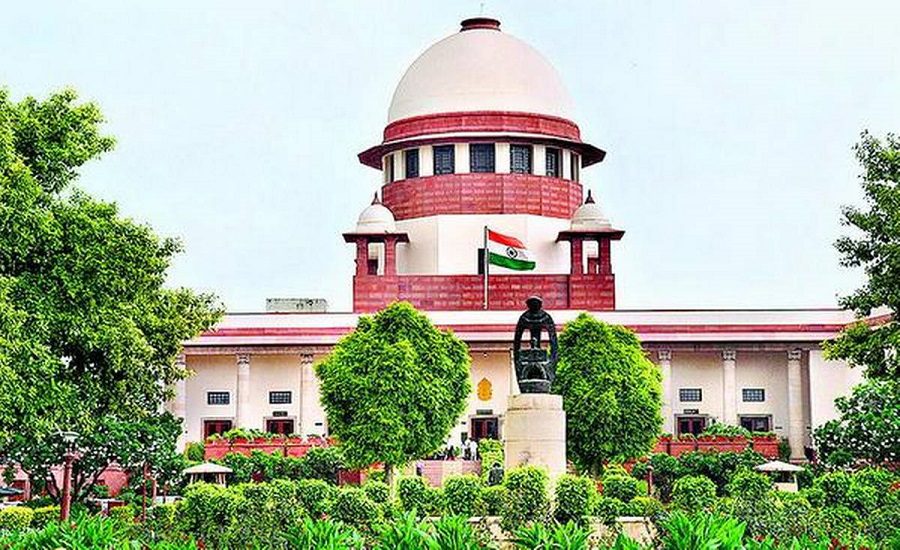
New Delhi: In a significant judicial interpretation impacting competitive examinations and reservation policy in India, the Supreme Court of India has held that a reserved category candidate who has availed relaxation at any stage of the UPSC exam cannot later claim a seat in the unreserved (general) category even if their final rank is higher.
This ruling was delivered by a bench led by Justices J.K. Maheshwari and Vijay Bishnoi while allowing the Union of India’s appeal against the Karnataka High Court order.
The SC has clearly stated that if an applicant has availed of reservation benefits in the UPSC examination, they are not entitled to appointment to general category seats, even if their total score is higher than that of a general category candidate.
Background of the Supreme Court Ruling on Reservation
The dispute originated from the Indian Forest Service (IFS) Examination, 2013, conducted by the Union Public Service Commission (UPSC).
The examination process consists of a Preliminary examination, Main examination, and Interview — with final cadre allocation guided by the Cadre Allocation Policy.
In this specific case:
- The general category cut-off in prelims was 267 marks.
- The SC category relaxed cut-off was 233 marks.
- The SC candidate, G. Kiran, scored 247.18 marks and qualified due to the relaxed standard.
- A General category candidate, Antony S. Mariyappa, scored 270.68 marks — above the general cut-off — and also qualified.
Although Kiran’s final merit rank (19) was higher than Mariyappa’s rank (37) after the mains and interview scores, the cadre allocation for an unreserved vacancy was instead given to the General candidate.
The Karnataka High Court had earlier directed otherwise, prompting the Union Government to appeal to the Supreme Court.
Key Legal Issue: Relaxation vs General Standard
The main legal question was whether a reserved category candidate who avails a relaxation in eligibility standards at any stage of the exam can later be treated as having competed on “general standards” and thus claim an unreserved seat based on higher final merit ranking.
The Supreme Court focused on the interpretation of Rule 14(ii) of the IFS Examination Rules, 2013, which includes a vital provision. It states that reserved candidates who qualify without availing any relaxation or concession at any stage of the examination can be considered for unreserved vacancies.
Supreme Court Ruling on Reservation: Bench’s Rationale
Justice Maheshwari and Justice Bishnoi emphasized:
- A relaxation used at any stage — including Preliminary screening — disqualifies the candidate’s claim to be treated as selected on “general standards”.
- Even if Preliminary exam marks are not counted in the final merit, the prelims remain a necessary gateway. Hence, using a relaxed cut-off impacts the candidate’s eligibility trajectory.
The Court held that the Karnataka High Court’s reasoning — that the Preliminary stage should not affect final allocation because its marks were not counted in the final list — was inconsistent with the statutory framework.