Hyderabad: In a major administrative overhaul, the Telangana government has reorganised the Greater Hyderabad Municipal Corporation (GHMC) into three separate municipal corporations — Greater Hyderabad, Cyberabad, and Malkajgiri — to ensure efficient civic administration and improved service delivery. The restructuring also comes with a significant reshuffle of IAS officers across key urban development and governance roles.
Trifurcation of GHMC: Administrative and Political Significance
The Government Order (Ms No. 55) issued on Wednesday highlighted that the decision to restructure GHMC followed careful examination of administrative requirements arising from the city’s expansion.
The Cyberabad Municipal Corporation comprises Serilingampally, Kukatpally, and Qutbullapur zones.
The Malkajgiri Municipal Corporation includes Malkajgiri, Uppal, and LB Nagar zones.
The remaining areas — Shamshabad, Rajendranagar, Charminar, Golconda, Khairatabad, and Secunderabad zones — continue as the Greater Hyderabad Municipal Corporation.
Each corporation will function as a separate body corporate with perpetual succession, a common seal, and authority to sue and be sued under the provisions of the GHMC Act, 1955, as amended.
The government had earlier reorganised GHMC into 12 zones and 60 circles in December 2025, indicating a step-by-step approach to decentralising governance and enhancing civic administration.
Appointments: Commissioners and Special Officer
To oversee the transition, Jayesh Ranjan, Special Chief Secretary to the Metropolitan Area & Urban Development Department, has been appointed Special Officer for the three newly constituted corporations until elected bodies are formed.
The new commissioner appointments are as follows:
- R.V. Karnan, IAS (2012) – continues as Commissioner of Greater Hyderabad Municipal Corporation
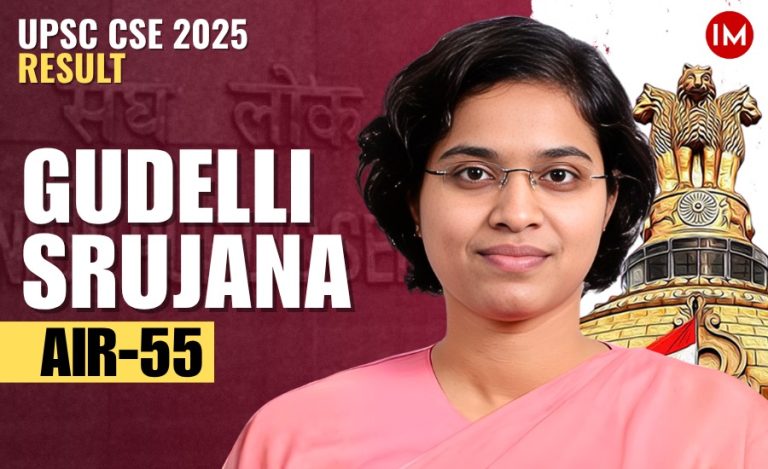
- G. Srijana, IAS (2013) – appointed Commissioner of Cyberabad Municipal Corporation
- T. Vinay Krishna Reddy, IAS (2013) – appointed Commissioner of Malkajgiri Municipal Corporation
These appointments follow the government’s strategy to improve administrative efficiency while decentralising decision-making in the urban region.
IAS Transfers Following the Reorganisation
The government also reshuffled several senior IAS officers in connection with the GHMC reorganisation and other key departments:
Dr. Jyoti Buddha Prakash, IAS (2002) – transferred as Chairman & Managing Director of Singareni Collieries Company Limited (SCCL)
Sabyasachi Ghosh, IAS (1994) – placed in full additional charge of Scheduled Caste Development Department and Commissioner, Scheduled Caste Development
Sandeep Kumar Sultania, IAS (1998) – given full additional charge of Planning Department & EO Director General, Telangana Remote Sensing Applications Centre (TGRAC)
D. Divya, IAS (2010) – assigned full additional charge as Commissioner, Panchayat Raj & Rural Development, relieving Shruti Ojha
P. Katyayani Devi, IAS (2017) – transferred as Prajavani State Nodal Officer, retaining charge as Joint Managing Director, State Finance Corporation
Mayank Mittal, IAS (2020) – posted as Joint Managing Director, Hyderabad Metro Water Supply & Sewerage Board (HMWS&SB)
U. Raghuram Sharma, IAS (SCS) – posted as Special Secretary, Industries & Commerce, also retaining charge as OSD to Minister for IT and Industries
Impact on Governance
The trifurcation of GHMC and the related IAS reshuffle are aimed at:
- Decentralising civic administration for faster decision-making
- Ensuring better service delivery across the newly formed corporations
- Strengthening urban governance in line with population growth and city expansion
- Streamlining administrative oversight through senior officers’ targeted postings
With these changes, Telangana has laid the groundwork for a more efficient and accountable urban governance framework in its metropolitan region.