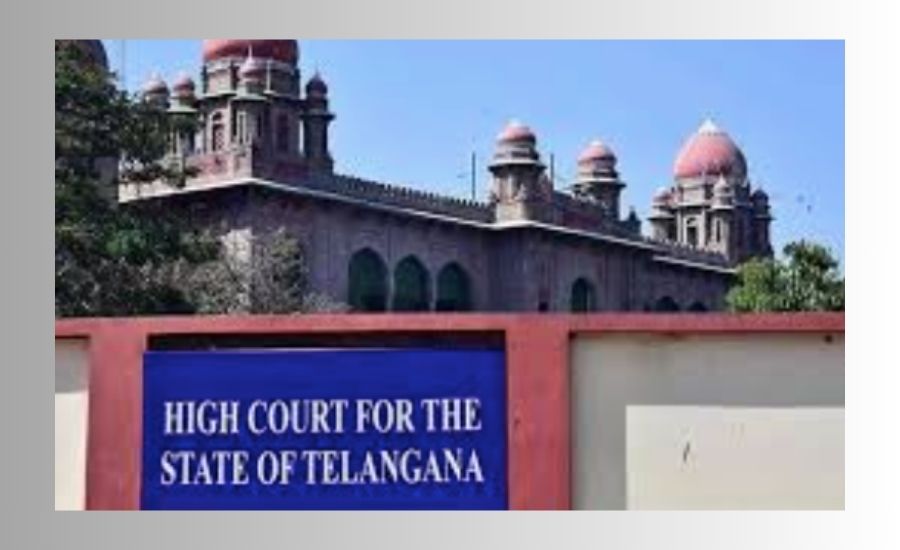
Hyderabad: The Telangana High Court on Thursday initiated judicial scrutiny into the appointment of B Shivadhar Reddy (IPS:1994:TG) as the Director General of Police (DGP) and Head of Police Force, following a petition alleging violation of Supreme Court guidelines governing the selection of state police chiefs.
The matter was heard by a single bench of Justice Pulla Karthik, which emphasised that compliance with Supreme Court directions in police appointments is mandatory. The court, however, did not pass any interim order and adjourned the case to December 22 for further hearing.
Petition Challenges Appointment Process
The petition was filed by social activist and advocate T Dhangopal Rao, seeking a writ of quo warranto to quash the government order (GO No. 1339 dated September 26) appointing Shivadhar Reddy as DGP.
The petitioner contended that the appointment violated the landmark Prakash Singh vs Union of India judgment, in which the Supreme Court laid down strict norms for appointing Directors General of Police. The apex court had ruled that:
DGPs should not be appointed on an acting or temporary basis, and
State governments must send a panel of the three senior-most eligible IPS officers to the Union Public Service Commission (UPSC) at least three months before the retirement of the outgoing DGP.
RTI Reveals No UPSC Empanelment Meeting: Petitioner
Appearing as a party-in-person, Dhangopal Rao argued that the Telangana government bypassed the mandatory procedure. He cited information obtained under the Right to Information (RTI) Act, which, according to him, revealed that:
- The UPSC did not conduct any empanelment committee meeting for the appointment of the present DGP, and
- The state government allegedly failed to forward the required panel of eligible IPS officers to the UPSC.
Based on these claims, Rao sought cancellation of Shivadhar Reddy’s appointment through judicial intervention.
State Defends Appointment, Opposes Quo Warranto
Advocate General A. Sudharshan Reddy, appearing for the Telangana government, refuted the allegations and told the court that a panel of eligible officers had been sent to the UPSC. He said the Commission had sought certain clarifications from the state, which were being addressed.
The Advocate General also argued that a writ of quo warranto was not maintainable in this case. He maintained that if there was any violation of Supreme Court directions, the appropriate remedy would be contempt proceedings before the Supreme Court, not a writ petition in the High Court.
He further submitted that jurisprudence on police appointments has evolved through subsequent judicial orders following the 2018 Prakash Singh judgment and sought additional time to file a detailed counter affidavit.
Court Seeks Written Clarification, Adjourns Matter
After hearing both sides, Justice Karthik reiterated that Supreme Court directives are binding on all states and must be implemented uniformly. While declining the petitioner’s request for immediate suspension of the appointment, the court directed the Advocate General to submit clear written instructions on whether a panel of senior IPS officers was specifically sent to the UPSC for the DGP appointment.
The matter has been posted for further hearing on December 22.
Minister Seethakka Appears in Court Over 2021 Pandemic Protest Case
In a separate development, Minister for Women and Child Welfare Danasari Anasuya, popularly known as Seethakka, appeared before the Special Judicial First Class Magistrate Court for Excise Cases, Nampally, on Thursday in connection with a case related to an unauthorised protest during the COVID-19 pandemic in 2021.
Charges Linked to Lockdown Violations
The case pertains to an incident under the Gandhinagar police limits, when strict lockdown restrictions were in force. Police had booked Seethakka for allegedly organising a protest without permission, in violation of government orders aimed at preventing the spread of COVID-19.
The charges include:
- Section 188 IPC – Disobedience to an order duly promulgated by a public servant
- Section 269 IPC – Negligent act likely to spread infection dangerous to life
- Section 270 IPC – Malignant act likely to spread infection dangerous to life
Court Adjourns Hearing to December 27
Advocate Krishna Kumar Goud represented Seethakka, while Assistant Public Prosecutor Anita Deshmukh appeared for the state. After hearing preliminary arguments, the court adjourned the matter to December 27.
The minister maintained a low profile during her court appearance and was accompanied by party leaders, including Sambasiva Rao and Arun Kumar.
The case is among several legal proceedings initiated against political leaders during the pandemic, when authorities strictly enforced public health regulations.