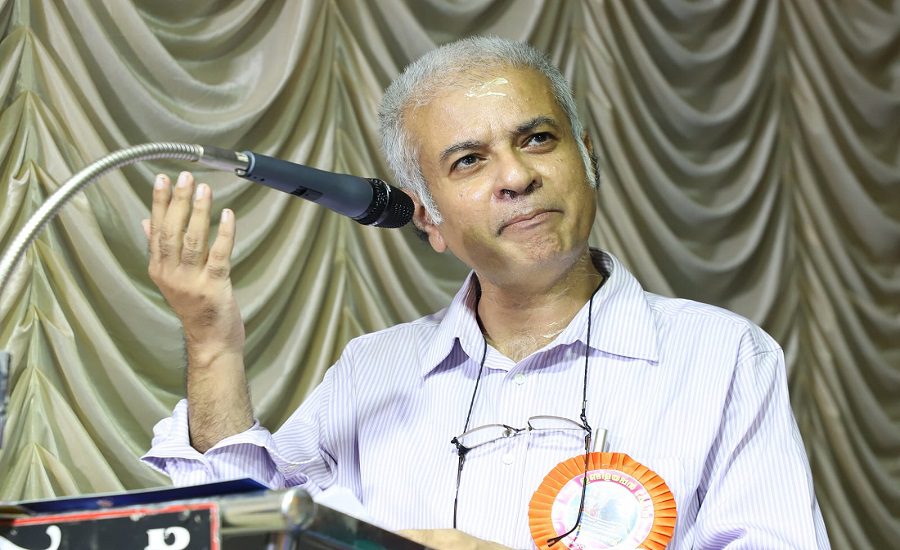
Hyderabad: IAS Raju Narayana Swamy, Principal Secretary to the Government of Kerala and widely known as Kerala’s anti-corruption crusader, has described India’s Telemedicine Practice Guidelines as the “heart and soul of e-health,” underlining their transformative role in defining legal, ethical and professional standards for digital healthcare delivery.
He made these remarks while addressing a group of doctors on Health Law and Ethics at Administrative Staff College of India in Hyderabad on March 20, 2026.
First Consultation Need Not Be In-Person, Says Dr Swamy
During his lecture, Dr Swamy clarified that under India’s telemedicine framework, the first consultation between a doctor and a patient does not necessarily need to happen face-to-face.
According to him, doctors in India are legally permitted to provide the first consultation remotely to patients located in any state through teleconsultation, provided professional judgment supports that mode of care.
He explained that this has fundamentally changed the delivery of healthcare by removing geographical barriers between doctors and patients.
Read also: IAS Kranthi Kumar Pati Appointed Deputy Director at LBSNAA; DoPT Clears Four-Year Central Posting
Telemedicine Guidelines Allow Prescription, Counselling and Health Education
Dr Swamy noted that the Telemedicine Practice Guidelines explicitly permit doctors to –
- prescribe medicines
- provide counselling
- impart health education
- continue follow-up consultations remotely
He said the framework has brought clarity to medical practitioners who earlier operated in a grey area while offering tele-consultation services.
Legal Framework Brought Accountability to Tele-consultation
Before the guidelines came into force, there were few defined standards governing tele-consultation in India.
Dr Swamy pointed out that patients earlier had concerns such as –
- Whether the person on the other end was actually a qualified doctor
- Whether private health information was secure
- How responsibility would be fixed in case of medical negligence
He said the legal framework now gives Indian patients a clear avenue to hold doctors accountable.
Complaints Can Be Filed Before State Medical Councils
He emphasised that violation of telemedicine norms can amount to professional misconduct.
Patients, he said, now have the right to approach the relevant State Medical Council if a doctor violates telemedicine standards during digital consultation.
This legal backing has made teleconsultation more credible and safer for both patients and practitioners.
Five Major Features of Telemedicine Guidelines Explained
Dr Swamy detailed the major operational principles embedded in the guidelines.
1. Doctor Can Choose the Consultation Medium
A doctor may decide the communication platform to be used before proceeding with teleconsultation.
This may include –
- Phone
- Video
- Digital platform
- Messaging application
However, the doctor must first decide whether teleconsultation is medically appropriate.
2. Same Standard of Care as Physical Consultation
He stressed that doctors are legally required to maintain the same standard of professional care during teleconsultation as during in-person treatment.
Digital consultation does not dilute clinical responsibility.
3. Patient Responsible for Accuracy of Information
Patients must provide accurate symptoms, history and health details.
Dr Swamy noted that telemedicine effectiveness depends significantly on truthful and complete disclosure by patients.
4. Caregiver Can Act for Minors or Incapacitated Patients
In cases involving minors or medically incapacitated persons, a caregiver is considered legally authorised to communicate on behalf of the patient.
This provision helps ensure access to remote medical advice for vulnerable groups.
5. No Fixed Prescription Format
He clarified that there is no rigid prescription format mandated for teleconsultation.
Doctors may issue prescriptions digitally, provided they meet legal and professional standards.
Telemedicine Has Strengthened India’s E-Health Ecosystem
Calling telemedicine a critical pillar of modern healthcare, Dr Swamy said the framework has helped integrate legal safeguards into digital medicine.
He said telemedicine is no longer merely a convenience but a regulated component of India’s health system.
ASCI Dean Dr Subod Kanthamuthan Presided Over Session
The session at ASCI was presided over by Subod Kanthamuthan, Dean of the institution.
The programme focused on legal awareness among doctors and emerging challenges in digital health governance.
Who Is Dr Raju Narayana Swamy?
Dr Swamy is one of India’s most widely recognised civil servants, known for integrity-driven administration and anti-corruption interventions.
AIR 1 in Civil Services Examination
- He secured All India Rank 1 in the 1991 Civil Services Examination.
- He belongs to the 1991 Kerala cadre of the IAS.
IIT Madras Graduate in Computer Science
He studied Computer Science at Indian Institute of Technology Madras and graduated with an outstanding 9.41 CGPA.
Known for Anti-Corruption Action
His administrative career is marked by several bold anti-corruption actions, most notably demolition of illegal resorts in Munnar while serving as district collector.
More Than 30 Transfers in Career
Because of his uncompromising administrative style, he has reportedly faced more than 30 transfers during service.
Served in Five Districts as Collector
He has served as District Collector in five districts and held major positions including –
- Director of Fisheries
- Principal Secretary
Recipient of Satyendra K Dubey Memorial Award
He was honoured with the Satyendra K. Dubey Memorial Award for integrity in public service.
Author and Literary Contributor
Apart from administration, Dr Swamy is also a prolific author with more than 30 books to his credit.
He has also received recognition from Kerala Sahitya Akademi.