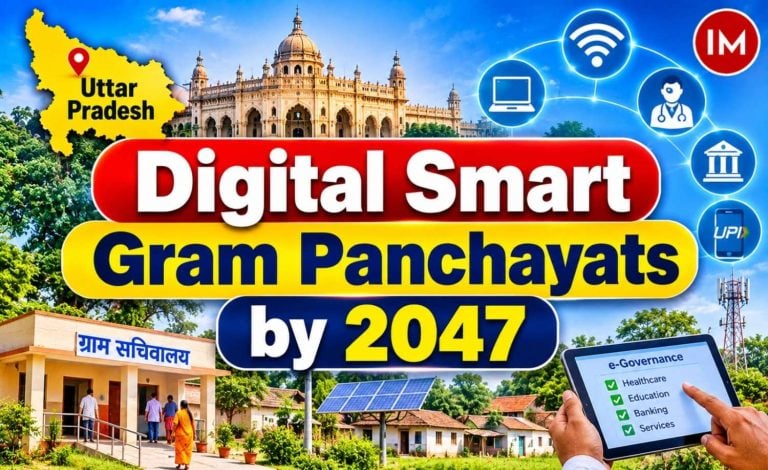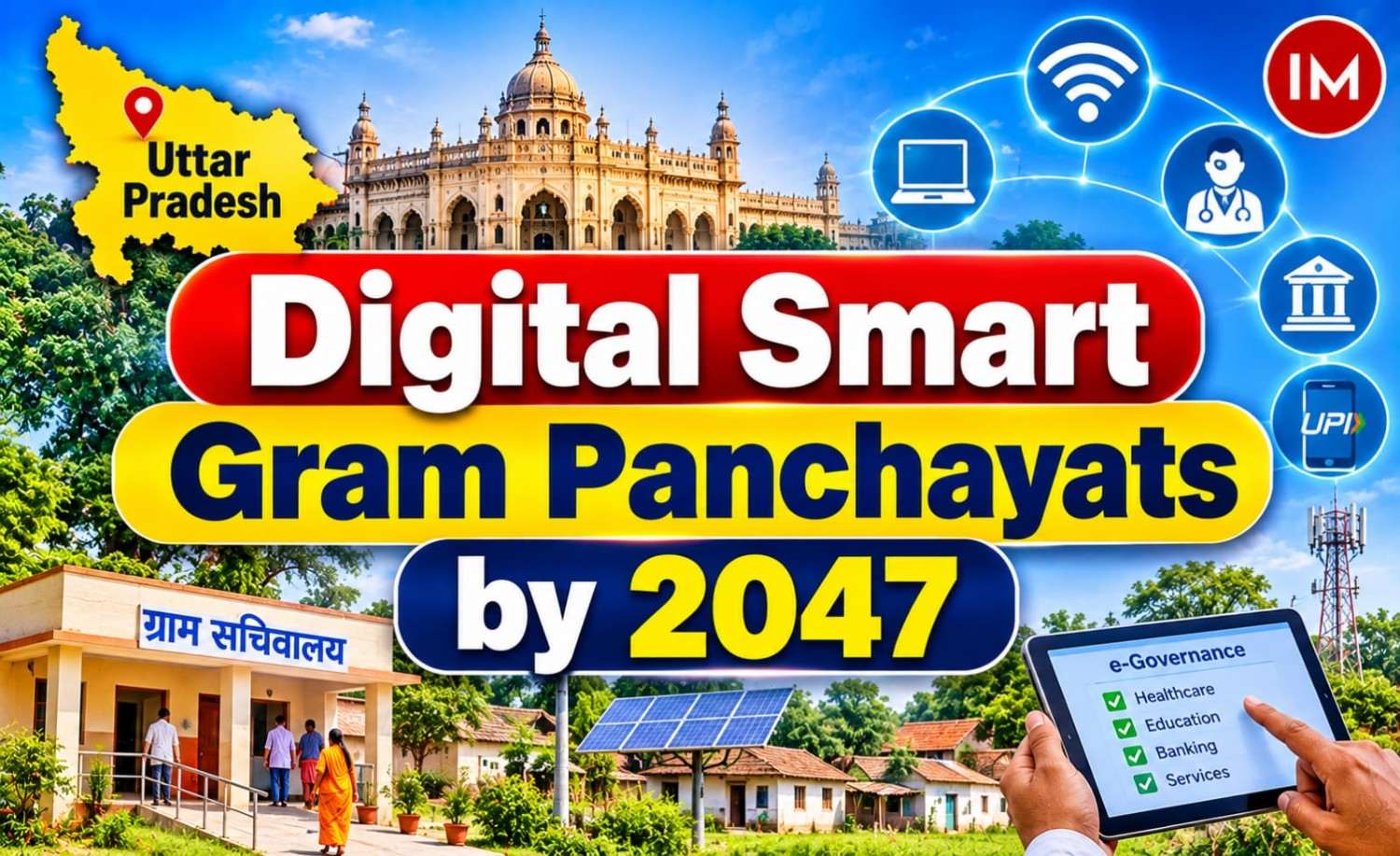
Lucknow: The Uttar Pradesh government has drawn up an ambitious rural development roadmap under its vision of becoming a fully developed state by 2047, with a focus on transforming all gram panchayats into digitally connected smart units and providing urban-like facilities in rural areas.
The roadmap, outlined in the state’s Vision Document for Developed Uttar Pradesh, focuses on modernising rural infrastructure, developing human capabilities, diversifying the rural economy and promoting environmental conservation.
Through the proposed Smart Village Mission, the government aims to develop gram panchayats as digitally connected, energy-secure and service-ready administrative units with improved access to governance, education, skills development and livelihood opportunities.
Broadband, Wi-Fi and Satellite Internet Connectivity Planned
The plan envisages strengthening digital connectivity across gram panchayats through multiple infrastructure initiatives.
Key proposals include:
- Ensuring Optical Fibre Cable (OFC) connectivity across gram panchayats.
- Using Optical Ground Wire (OPGW) technology in the power sector.
- Establishing public Wi-Fi hotspots under the PM-WANI scheme to expand broadband access.
- Providing satellite internet services to remote villages.
- Promoting solar energy to strengthen rural infrastructure.
These measures are intended to improve digital access and support the delivery of online services in rural areas.
Gram Sachivalayas to Become Single-Window Service Centres
Under the proposed plan, gram sachivalayas will function as single-window administrative offices in every gram panchayat, providing citizens access to various government services online.
The initiative aims to reduce the need for residents to travel to block, tehsil and district headquarters for administrative work.
The government also plans to introduce an integrated grievance redressal system at the panchayat level through mobile applications and kiosks. The system is intended to facilitate the submission of complaints and their time-bound resolution.
Digital Banking and Public Services at Panchayat Level
The roadmap also proposes setting up digital service centres equipped with Aadhaar authentication facilities, Unified Payments Interface (UPI) and micro-ATMs.
These centres are expected to provide services such as:
- Cash withdrawals and money transfers.
- Direct Benefit Transfer (DBT) services.
- Digital savings and banking facilities.
- Access to other financial services.
Additionally, digitally enabled centres will offer telehealth services, online education, skill development programmes, library facilities and examination centres.
The proposed digital examination facilities will allow young people in rural areas to appear for competitive examinations at their respective panchayats.
Rural Development Corridors to Connect Villages with Markets
The state government also plans to identify high-potential rural development corridors based on local capabilities and employment opportunities.
These corridors will be connected to markets through improved transportation and logistics infrastructure.
The proposed infrastructure along these corridors will include:
- Warehouses and storage facilities.
- Cold chain infrastructure.
- Agricultural collection centres.
- Processing units.
The initiative is intended to improve market connectivity and support economic activities in identified rural areas.
Focus on Urban-Like Facilities and Curbing Migration
The broader objective of the 2047 roadmap is to improve the quality of life in rural Uttar Pradesh by strengthening basic infrastructure, expanding access to public services and creating opportunities closer to people’s homes.
The government aims to make villages more attractive places to live by improving access to administrative services, education, healthcare, digital banking and employment opportunities.
Through the proposed transformation of all gram panchayats into digital smart units, Uttar Pradesh seeks to advance its long-term rural development agenda as part of the vision of a developed state by 2047.