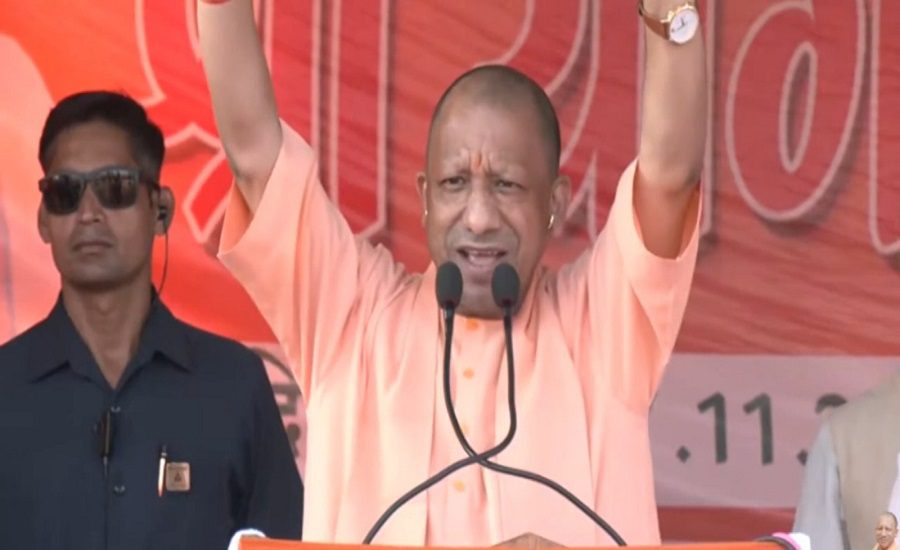
Lucknow: Poverty eradication in Uttar Pradesh has transitioned from policy intent to measurable on-ground action under the leadership of Chief Minister Yogi Adityanath. The state’s ambitious Zero Poverty Mission has emerged as a results-oriented governance model, combining administrative commitment, technology-enabled delivery systems, and rigorous field-level verification to ensure that no eligible family is left out of government welfare schemes.
Two-Phase Strategy Focused on Inclusion and Transparency
The Zero Poverty Mission is being implemented in two phases, reflecting the government’s emphasis on transparency, eligibility verification, and outcome-based governance rather than mere numerical targets. The initiative aims to systematically identify deprived households and connect them with a wide range of social security and welfare schemes.
Residents of Gosaiyaganj in Lucknow—Ramsagar, Urmila and Ramu—illustrate the mission’s impact. These families, once deprived of basic amenities, have now been provided housing, drinking water, electricity, roads, ration facilities and other essential services under various government schemes.
Read also: UP Government Targets 100% Wastewater Reuse by 2035 Under CM Yogi Adityanath’s Vision
Phase One Achieves Significant Coverage
In the first phase, the state targeted 100 percent Direct Benefit Transfer (DBT) coverage of eligible families under eight major welfare schemes. District-level reports indicate strong progress, with ration scheme coverage reaching 97 percent of eligible households, significantly strengthening food security across the state.
Coverage under the Destitute Women Pension Scheme has reached 87 percent, while 62 percent of eligible beneficiaries have been covered under the Disability Pension Scheme. Additionally, 63 percent of eligible families have been provided health protection under the PM and CM Jan Arogya Schemes.
Parallel efforts are underway to verify eligibility, remove duplicate entries and cleanse data related to Old Age Pension, BOCW Labour Cards, PM Kisan Samman Nidhi, and PM and CM Housing Schemes.
Door-to-Door Verification in Phase Two
The second phase of the Zero Poverty Mission, launched on October 15, 2025, focuses on door-to-door verification across 16 welfare schemes and is scheduled to conclude by January 15, 2026. This phase prioritizes inclusion under critical services such as PM Ujjwala Yojana, sanitation assistance, Jal Jeevan Mission, and electricity connections.
Based on survey findings, a large number of women are being prepared for linkage with Self-Help Groups under the State Livelihood Mission to promote sustainable income generation. In the education sector, efforts are underway to re-enrol nearly 11,000 children into the formal schooling system.
Grievance Redressal and Feedback Through CM Helpline
The Chief Minister Helpline 1076 has been established as a key monitoring and feedback mechanism. Analysis of grievances, suggestions, and feedback received through the helpline is being used to fine-tune policy implementation and address gaps at the grassroots level.
Officials emphasize that the Zero Poverty Mission is not limited to financial assistance but represents a comprehensive social security framework encompassing food, health, housing, education, water, energy, and livelihood opportunities.
A Model for Inclusive Development
With its data-driven, transparent, and people-centric approach, the Zero Poverty Mission is being positioned as a model of inclusive development. The Yogi government has reiterated its commitment to ensuring that every deserving family receives the benefits of welfare schemes, reinforcing Uttar Pradesh’s march toward social equity and zero poverty.
Read also: GPS-Enabled Vehicles Bring Transparency to Foodgrain Distribution System in Uttar Pradesh