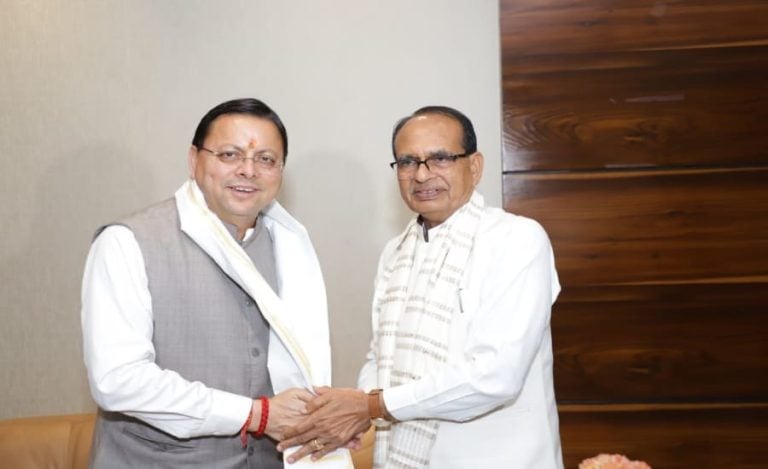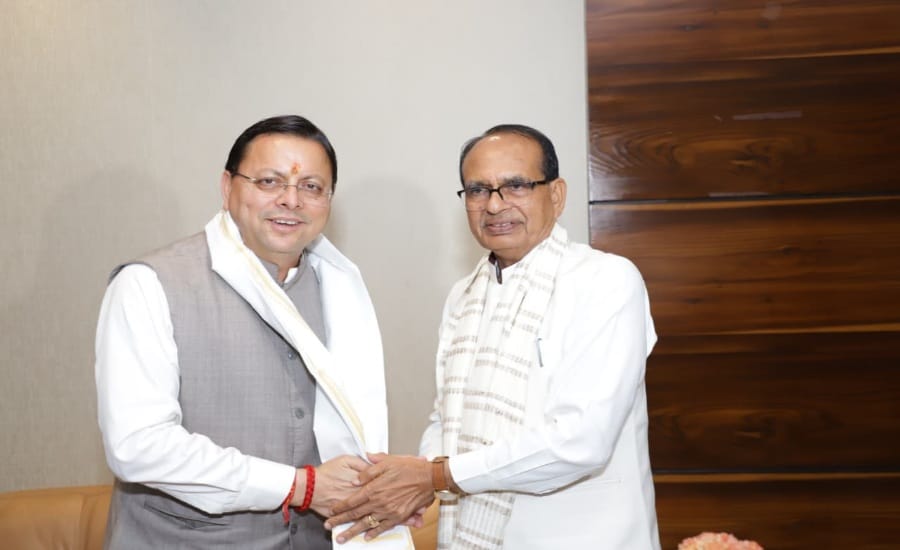
Dehradun: Uttarakhand Chief Minister Pushkar Singh Dhami has sought faster approval for rural road and bridge projects worth ₹2,708 crore during a meeting with Union Rural Development Minister Shivraj Singh Chouhan in New Delhi. The proposals aim to improve road connectivity in remote and hilly areas, making essential services and livelihood opportunities more accessible to rural communities.
Under the fourth phase of the Pradhan Mantri Gram Sadak Yojana (PMGSY-IV), the state has submitted proposals for 315 roads spanning 1,777 kilometres at an estimated cost of ₹2,526 crore. It has also proposed ₹182 crore for the construction of 32 bridges.
According to the state government’s account of the meeting, the Union Minister assured Dhami that steps would be taken to expedite approval of these proposals. The projects are still at the proposal and approval stage; their construction should not be treated as having commenced.
₹2,708 Crore Proposed for Roads and Bridges
The proposed investment includes two major components: rural road construction and bridge development. Together, these projects are intended to strengthen the transport network in areas where difficult terrain often makes travel and access to essential services challenging.
The state has submitted the following proposals under PMGSY-IV:
- 315 rural roads: Covering 1,777 kilometres at an estimated cost of ₹2,526 crore.
- 32 bridges: Proposed at a cost of ₹182 crore.
- Total proposed investment: ₹2,708 crore.
The state government has emphasised the need to improve connectivity in mountainous and remote regions, where geographical conditions can increase travel time and make infrastructure development more difficult.
However, the proposed expenditure will translate into construction only after the required approvals and subsequent implementation steps.
Read Also: Uttarakhand CM Dhami Approves ₹81 Crore for Development Projects, ₹61.42 Crore for Kumbh 2027
610 Habitations Targeted for Better Connectivity
The proposed road projects aim to connect 610 habitations with road infrastructure. Better connectivity could make a practical difference to residents who depend on limited transport options to reach schools, hospitals, markets and government services.
For students, improved roads can make daily journeys to educational institutions easier. Patients and their families may benefit from better access to healthcare facilities, particularly during emergencies. Reliable road links can also help residents travel for work and access public services.
Connectivity is equally important for rural livelihoods. Farmers may find it easier to transport agricultural produce to markets, while local producers and small businesses could gain better access to buyers and supply chains.
The proposals also have potential benefits for tourism-dependent communities. Better roads can improve access to destinations in Uttarakhand’s hills, creating opportunities for local transport operators, homestays, guides and other small businesses. These benefits, however, will depend on the projects receiving approval and being completed effectively.
213 Additional Road Proposals Also Discussed
Dhami also raised the need to expand rural connectivity through an additional set of 213 road proposals covering 1,360 kilometres.
During the meeting, Chouhan assured the Chief Minister that these proposals would also be considered for early approval. The assurance indicates that the state is seeking to expand its rural road network beyond the initial package of 315 roads.
The additional proposals are separate from the ₹2,708 crore package described above. The information provided does not specify their estimated cost or confirm their approval.
If cleared and implemented, the additional roads could further extend connectivity to villages that continue to face transportation challenges because of Uttarakhand’s mountainous geography.
Why Rural Roads Matter in Uttarakhand
Road connectivity is particularly important in Uttarakhand, where steep terrain and scattered settlements can make access to basic services difficult. In some remote areas, the availability and condition of roads influence how quickly residents can reach healthcare facilities, educational institutions and local markets.
Improved transport links can also support the movement of essential supplies and strengthen access to government welfare services. During emergencies, reliable roads can help facilitate the movement of patients, relief teams and essential commodities.
For rural households, better connectivity can reduce travel difficulties and support economic activity. It can help farmers reach markets, enable young people to pursue education and employment, and give small enterprises access to wider commercial networks.
The impact will depend not only on the approval of the proposals but also on construction quality, timely completion and the long-term maintenance of the roads and bridges.
Dhami Thanks Centre for Support
Following the meeting, Dhami expressed gratitude to Chouhan for his response to the state’s proposals and his assurance that the approval process would be expedited. He also thanked Prime Minister Narendra Modi for the Centre’s support in Uttarakhand’s infrastructure development.
The Chief Minister said coordinated efforts between the Central and state governments were important for expanding infrastructure in mountainous and remote regions. He reiterated the state government’s commitment to improving connectivity so that geographical challenges do not prevent rural communities from accessing essential facilities and development opportunities.
The meeting marks a step in Uttarakhand’s efforts to secure approval for additional rural infrastructure under PMGSY-IV. The next significant milestone will be the formal approval of the proposals, followed by the tendering and construction processes.
If approved and implemented, the road and bridge projects could strengthen rural connectivity, improve access to essential services and support economic activity across Uttarakhand’s remote and hilly areas.