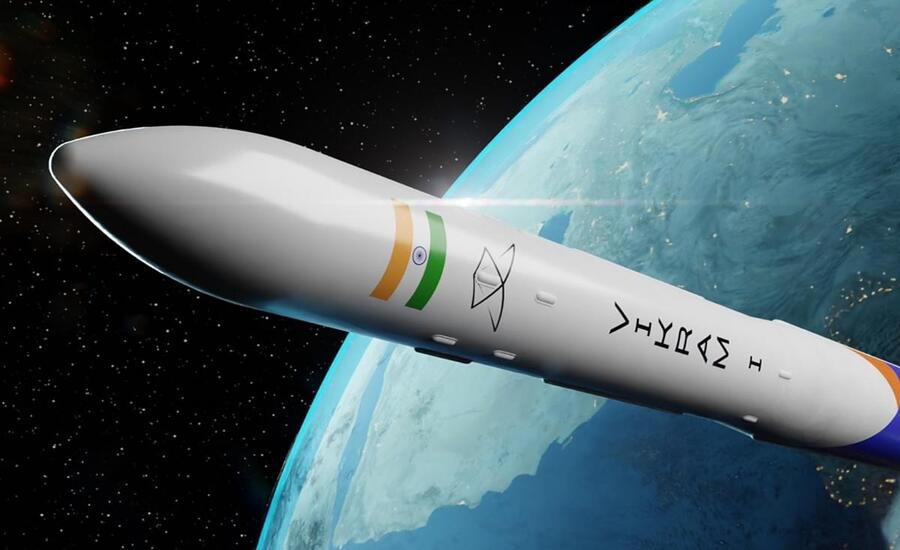
New Delhi: In a defining moment for India’s space sector, the VIKRAM-I rocket — the country’s first fully private orbital-class launch vehicle — is slated for a maiden lift-off in 2026 from the Satish Dhawan Space Centre (SHAR), Sriharikota.
Developed by Hyderabad-based startup Skyroot Aerospace, this mission is poised to revolutionize the Indian space industry by marking the first time a private company is responsible for putting a satellite into orbit — a feat previously achieved only by national space agencies such as ISRO.
This ambitious step is part of India’s broader strategy to open its space sector to private players following major reforms announced in 2020. It further positions India as a competitive player in the global small satellite launch market.
Background of VIKRAM-I Rocket
For decades, the Indian Space Research Organisation (ISRO) maintained near-exclusive control over space launch capabilities in India. However, a landmark policy shift in 2020 ushered in a new era by enabling private companies to design, develop and launch space vehicles — breaking the state monopoly that had defined India’s space landscape since its inception.
Under this transformation, startups like Skyroot Aerospace have emerged as pioneers, combining Indian innovation with global ambition.
Founded in 2018 by former ISRO scientists and entrepreneurs, Skyroot has already made history by successfully launching Vikram-S, the nation’s first privately developed suborbital rocket, in November 2022.
The success of Vikram-S laid the groundwork for the next leap: the development of the VIKRAM-I orbital rocket which aims to carry satellites into low Earth orbit (LEO).
About VIKRAM-I Rocket : India’s First Private Orbital Rocket
Named in honour of Dr. Vikram Sarabhai, the founder of India’s space programme, VIKRAM-I represents a landmark achievement for India’s indigenous space ambitions and private sector capabilities.
Key features of VIKRAM-I Rocket
Payload Capacity: Designed to carry satellites weighing up to approximately 350 kg to Low Earth Orbit (LEO) — a crucial segment for Earth observation, communications and scientific missions.
Advanced Materials: The rocket is constructed using lightweight carbon composite materials, making it both resilient and efficient.
State-of-the-Art Engines: It employs 3D-printed hypergolic engines, which enhance performance and reliability.
Market Focus: Built to service small satellite operators, both domestic and international, with affordable and responsive launch options.
With its orbital-class design, VIKRAM-I will allow satellite operators to bypass dependency on rideshare slots on larger rockets and gain direct access to orbit. This capability is important for catering to the burgeoning small satellite industry.
The 2026 Launch Plan and SHAR Spaceport
The maiden launch of VIKRAM-I is expected in early 2026 from ISRO’s SHAR Space Centre in Sriharikota, Andhra Pradesh — the nation’s primary orbital launch facility.
- ISRO’s spaceport at Sriharikota is historically renowned as the launch site for India’s major orbital missions, underscoring the symbolic importance of this private mission taking-off from the same complex.
- Initial flights will focus on low Earth orbits (LEO), ideal for the majority of commercial and scientific satellite missions. However, future plans include operations from the upcoming Kulasekarapattinam spaceport in Tamil Nadu, which is being developed by ISRO and projected to be operational by late 2026. This second launch complex will further expand India’s capacity for polar and sun-synchronous orbital missions.
Read also: Gaganyaan Parachute Test: ISRO Takes a Giant Leap Towards India’s First Human Spaceflight