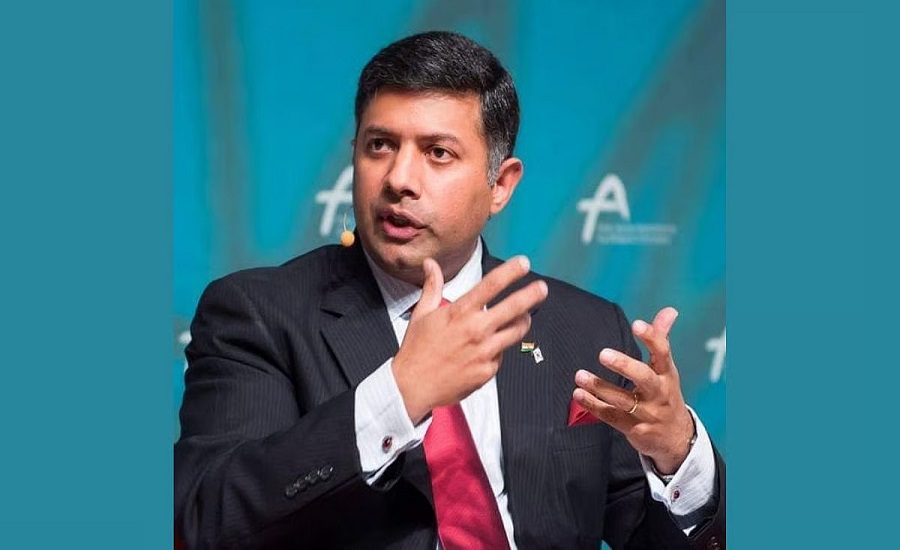
New Delhi: In a major diplomatic appointment announced on Thursday, the Government of India has appointed Vikram K Doraiswami as the next Ambassador of India to China.
Currently serving as India’s High Commissioner to United Kingdom, Doraiswami will now take charge in one of India’s most strategically sensitive foreign postings, bringing with him more than three decades of diplomatic experience, deep familiarity with Asian affairs and rare fluency in the Chinese language.
His appointment comes at a crucial time in India-China relations, where diplomatic engagement remains closely linked to border stability, strategic dialogue, trade concerns and broader Indo-Pacific developments.
A Strategic Appointment at a Critical Diplomatic Moment
The appointment of Vikram K Doraiswami is being viewed as a carefully calibrated decision by Ministry of External Affairs, given his prior experience in China, linguistic capability and long exposure to key strategic theatres.
As India’s next envoy to Beijing, he is expected to play a central role in managing one of New Delhi’s most complex bilateral relationships.
His familiarity with Chinese political and diplomatic systems is seen as a major advantage, especially as both countries continue efforts to stabilize relations after years of military and diplomatic friction.
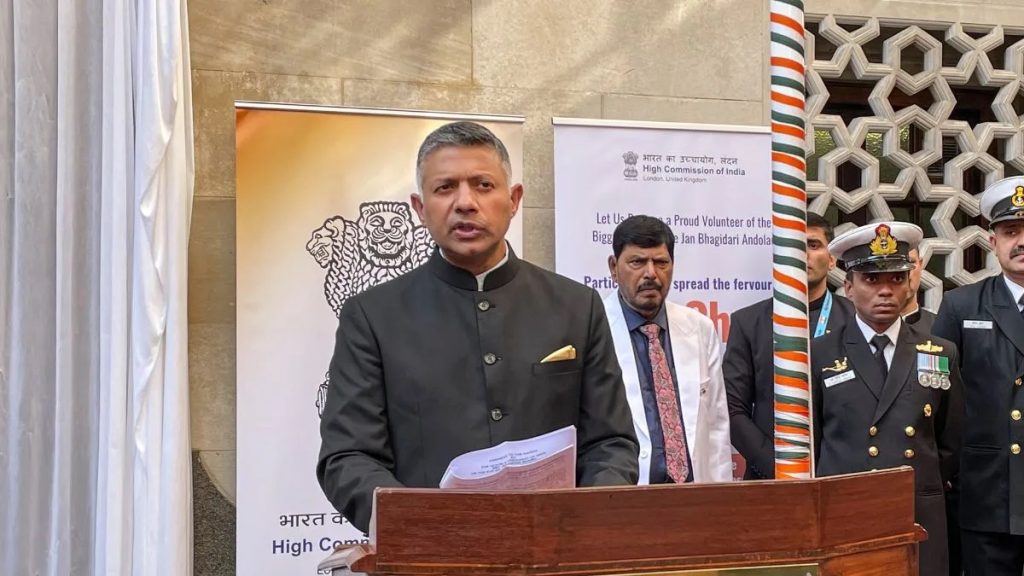
Currently India’s High Commissioner to the United Kingdom
Before this appointment, Doraiswami had been serving as High Commissioner of India to the United Kingdom, one of India’s most important diplomatic missions globally.
During his tenure in London, he played a prominent role in strengthening bilateral economic and political engagement.
He was notably associated with key diplomatic efforts surrounding the India-UK Free Trade Agreement process and became the first Indian envoy to formally present credentials to King Charles III after his accession to the throne.
A Career Diplomat with Early China Exposure
Vikram K Doraiswami joined the Indian Foreign Service in 1992 after briefly working as a journalist.
Before entering government service, he worked for one year at Business Today.
Following his induction into the Foreign Service, he underwent in-service training in New Delhi between 1992 and 1993 before his first major overseas assignment.
In May 1994, he was posted to Hong Kong as Third Secretary in the Commission of India.
It was during this posting that he began formal Chinese language training, studying at the New Asia Yale-in-Asia language school under Chinese University of Hong Kong.
First Beijing Posting Built His China Expertise
In September 1996, Doraiswami moved to Beijing, where he served at the Embassy of India for nearly four years.
This early Beijing tenure established him as one of the few Indian diplomats with direct language-based and field-level understanding of China’s administrative and diplomatic culture.
His ability to read, write and speak Chinese fluently has remained one of his strongest diplomatic assets.
Academic Background in History
Doraiswami’s academic journey reflects strong grounding in humanities and international thinking.
He studied History at St. Stephen’s College and later completed his postgraduate degree in History from University of Delhi.
His academic training has often been reflected in his nuanced diplomatic style and long-form public commentary on foreign affairs.
Service in Prime Minister’s Office Gave Him Strategic Exposure
After returning to New Delhi in 2000, Doraiswami was appointed Deputy Chief of Protocol (Ceremonials) in the Ministry of External Affairs.
Two years later, he was seconded to the Prime Minister’s Office.
He subsequently served as Private Secretary to former Prime Ministers including Atal Bihari Vajpayee and Manmohan Singh.
This PMO experience gave him unusual exposure to top-level foreign policy decision-making and inter-governmental coordination.
UN and South Africa Assignments Strengthened Multilateral Credentials
In 2006, he was posted to India’s Permanent Mission to the United Nations in New York City as Political Counsellor.
There, he handled multilateral political affairs and represented India in international diplomatic negotiations.
In October 2009, he moved to Johannesburg as India’s Consul General, further broadening his diplomatic exposure.
Key Leadership Roles at MEA Headquarters
Returning to New Delhi in 2011, Doraiswami headed the SAARC Division in the Ministry of External Affairs.
During this period, he also served as Coordinator for the fourth BRICS Summit held in New Delhi in 2012.
From 2012 to 2014, he was Joint Secretary handling the Americas Division, where he managed India’s relations with the United States and other countries across North and South America.
In 2019, he was entrusted with establishing and leading India’s Indo-Pacific Division, reflecting the growing strategic importance of the region in India’s foreign policy.
He was later elevated as Additional Secretary handling International Organizations and major summits.
Ambassadorial Roles Across Asia
Doraiswami’s ambassadorial assignments have covered several strategically important Asian capitals.
He served as Ambassador to Uzbekistan before moving to South Korea as India’s Ambassador.
In Seoul, he led India’s diplomatic mission during a period of expanding economic and strategic cooperation.
His Asian assignments are considered one of the strongest aspects of his diplomatic profile.
High Commissioner to Bangladesh During Sensitive Bilateral Phase
Before London, Doraiswami served as India’s High Commissioner to Bangladesh.
His tenure there was marked by active engagement on sensitive bilateral issues.
One of the most notable outcomes during this period was progress on the Kushiyara River water-sharing agreement, considered the first major water-sharing arrangement between India and Bangladesh since 1996.
Why His China Posting Matters
The China assignment is widely regarded as one of India’s most critical diplomatic positions.
Given his prior Beijing experience, language ability and strategic assignments across Asia, Doraiswami is considered one of the most prepared diplomats for the role.
His return to Beijing comes at a time when India seeks stable diplomatic engagement while carefully managing strategic competition.
Personal Life and Interests
Born into a Tamil military family, Doraiswami’s father served in the Indian Air Force and participated during the 1971 Bangladesh Liberation War.
Outside diplomacy, Doraiswami is known for wide intellectual interests.
He enjoys reading, travel, jazz music and sports including squash and hiking.
He also speaks limited French and Urdu in addition to Chinese.
His wife, Sangeeta, is a trained primary school teacher with a Master’s degree in Psychology from Bangalore University.
The couple has one son.
One of India’s Most Experienced China-Capable Diplomats
Within diplomatic circles, Doraiswami is regarded as one of India’s most articulate and strategically experienced career diplomats.
His return to Beijing signals New Delhi’s preference for an experienced hand capable of combining strategic caution with direct diplomatic engagement.