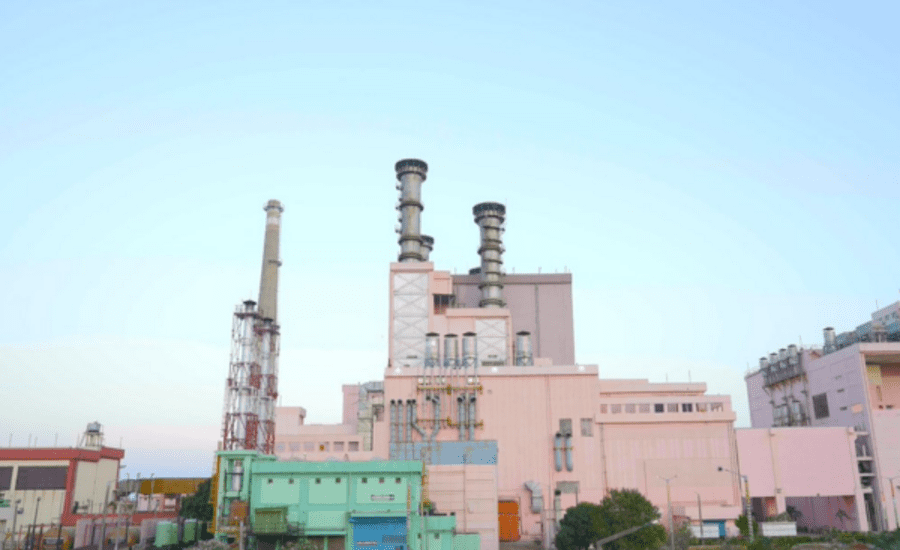
New Delhi: India has marked a major technological milestone in its civil nuclear programme with the successful achievement of criticality at the indigenously built Prototype Fast Breeder Reactor (PFBR) located at Kalpakkam Nuclear Power Plant in Tamil Nadu. The development is being viewed as a decisive step in strengthening India’s long-term nuclear energy ambitions and advancing the second stage of its three-stage nuclear power programme.
Prime Minister Narendra Modi announced that the 500 MWe reactor, designed and constructed entirely in India, has successfully attained criticality—a stage at which a nuclear reactor sustains a controlled chain reaction for power generation.
The achievement has drawn international appreciation from scientific and strategic communities. At the same time, it has triggered visible concern in Pakistan, where strategic commentators and nuclear policy analysts have described the development as a significant shift in regional deterrence capability.
What Criticality Means for India’s Nuclear Programme
Criticality marks the point at which a reactor begins maintaining a self-sustaining nuclear chain reaction.
For India, this is especially important because the PFBR represents the second stage of a long-planned nuclear roadmap originally designed to eventually utilize India’s large thorium reserves.
Unlike conventional reactors, a fast breeder reactor produces more fissile material than it consumes by converting uranium-238 into plutonium during operation.
This capability is considered strategically important because it improves long-term fuel sustainability and reduces dependence on imported uranium.
The reactor has been developed by Bharatiya Nabhikiya Vidyut Nigam Limited with core design support from Indira Gandhi Centre for Atomic Research.
Why the PFBR Is Considered a Major Scientific Milestone
The PFBR places India among a small group of countries that have successfully developed advanced fast breeder reactor technology.
Only a limited number of nations have operational experience with this complex reactor class because breeder reactors involve:
- High-temperature sodium cooling
- Advanced fuel handling systems
- Highly complex safety mechanisms
- Long-term fissile breeding capability
The reactor’s success is therefore being viewed as a demonstration of India’s indigenous scientific and engineering capability.
Pakistan’s Immediate Reaction to the Development
Soon after India announced the achievement, strategic concerns emerged in Pakistan.
According to some media reports, Zahir Kazmi, associated with strategic policy discussions in Islamabad, argued that India’s expanding unsafeguarded nuclear capability could significantly increase plutonium production.
He claimed that India’s PFBR, combined with existing nuclear infrastructure, could sharply enhance fissile material availability.
According to him, India’s reactor capability could allow large future expansion in plutonium output, which he linked to possible warhead manufacturing potential.
The ‘300 Nuclear Weapons Annually’ Claim Explained
One of the strongest claims made in Pakistani strategic commentary was that India could theoretically produce enough plutonium for 300 nuclear weapons annually in the future.
This estimate was echoed by Pakistani analyst Mansoor Ahmed, who argued that annual weapon-grade plutonium production could rise sharply after PFBR commissioning and further increase if additional breeder reactors become operational.
However, nuclear experts globally note that such figures remain theoretical strategic estimates rather than officially verified production projections.
Several factors make direct conversion difficult:
- Reactor-grade plutonium and weapons-grade plutonium differ technically
- Extraction requires separate reprocessing pathways
- Civilian reactor operation does not automatically imply military diversion
- Operational safeguards and fuel cycles matter significantly
Thus, while fissile capability rises, direct bomb-number projections remain highly contested.
Pakistan Attempts to Link PFBR with Global Strategic Risk
Pakistani commentary also attempted to present India’s nuclear capability as a broader international concern.
Kazmi argued that India’s missile capability, particularly systems such as:
- Agni-V
- Proposed Agni-VI
combined with expanding plutonium potential, alters long-range strategic calculations.
He referred to the 2008 civil nuclear waiver and argued that it had accelerated India’s nuclear technological advancement.
Naval Nuclear Capability Seen as Pakistan’s Larger Concern
A key element of Pakistani concern appears linked to India’s sea-based deterrent.
Kazmi specifically highlighted India’s expanding ballistic missile submarine capability, including:
- INS Arihant
- INS Arighat
He noted that submarine-launched missiles such as:
- K-4 missile
provide India with secure second-strike capability extending well beyond the Indian Ocean region.
For strategic planners in Pakistan, this sea-based nuclear leg is considered especially important because it strengthens survivable deterrence.
Why India Views PFBR Primarily as an Energy Project
India officially presents PFBR as a civil nuclear energy project central to long-term energy security.
The breeder reactor is essential because it helps India move toward eventual thorium utilization—an area where India has large natural reserves.
The long-term benefits include:
- Reduced uranium dependence
- Stronger energy self-reliance
- Low-carbon electricity generation
- Expansion of base-load clean energy
For India’s energy planners, PFBR is therefore both an energy technology breakthrough and a strategic scientific achievement.
Global Scientific Recognition
International nuclear communities have largely viewed the PFBR success as an engineering milestone rather than an immediate military development.
Fast breeder reactor technology remains one of the most technically demanding fields in nuclear science.
Its successful commissioning signals that India has crossed an important threshold in reactor design, fuel cycle mastery, and advanced nuclear engineering.
Strategic Significance for South Asia
Even though the reactor is civilian in declared use, the geopolitical symbolism is strong.
In South Asia, where strategic signalling often accompanies major nuclear milestones, the PFBR achievement inevitably enters regional deterrence discussions.
For India, however, the central message remains technological sovereignty and long-term clean energy capability.