Raipur: Chhattisgarh Chief Minister Vishnu Deo Sai has outlined the state’s roadmap for ‘Viksit Chhattisgarh 2047’, focusing on economic diversification, industrial investment, technology, tourism and greater participation of women and tribal communities in the economy.
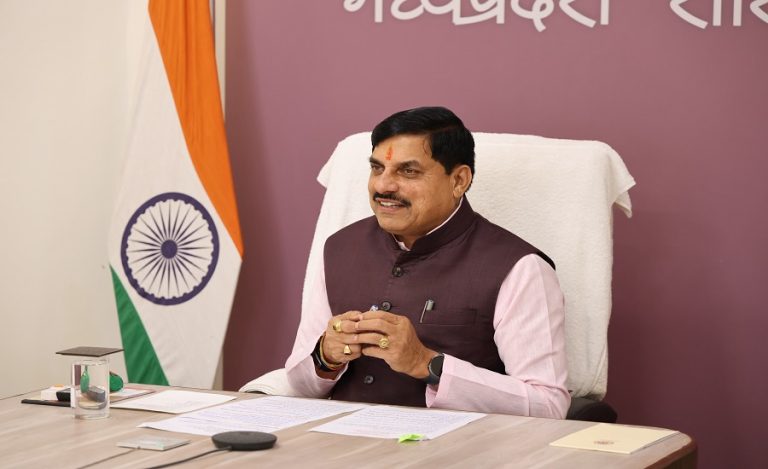
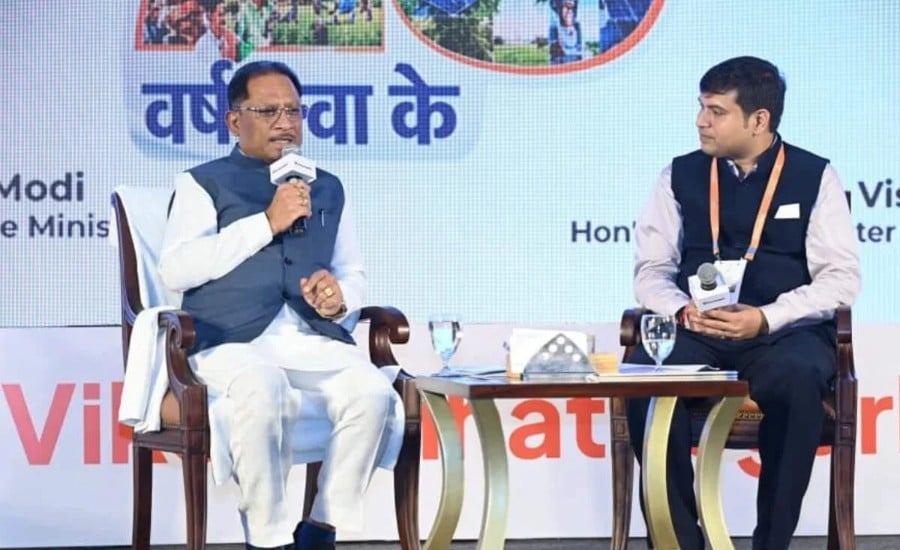
Sai presented the roadmap during the Viksit Chhattisgarh Conclave 2026 in Nava Raipur, where he said the state’s development strategy would align with the broader national goal of Viksit Bharat 2047.
₹8 Lakh Crore Investment Proposals Under New Industrial Policy
A major component of the state’s economic strategy is the implementation of its Industrial Policy 2024-30.
Read Also: 33 Districts, ₹500 Crore Push: Chhattisgarh Steps Up Startup and Innovation Drive
According to Sai, Chhattisgarh has received investment proposals worth more than ₹8 lakh crore since the policy came into effect. The proposals span traditional industries as well as newer sectors such as:
- Pharmaceuticals
- Textiles
- Food processing
- Electronics
- Information technology
- Data centres
- Green energy
- Electric mobility
The Indian Express reported that the proposals cover 290 projects and have an estimated employment potential of around 1.9 lakh jobs. It also reported that 175 projects, involving approximately ₹2.95 lakh crore, had reached stages including land acquisition, clearances, construction or operations.
The state has also strengthened its One Click Single Window System to streamline approvals. Under the Ease of Doing Business Act, 2026, reforms include risk-based regulation, self-certification and fewer unnecessary inspections.
Shift From Resource Extraction to Value Addition
Sai said mining, steel and cement would continue to be important to Chhattisgarh’s economy, but the state wants to increase value addition within the state rather than rely primarily on extraction of natural resources.
The government is seeking investment in manufacturing and processing while also focusing on agricultural and minor forest produce.
The strategy includes:
- Processing and branding of forest produce
- Food processing and modern supply chains
- Technology-driven manufacturing
- Development of IT and data-centre infrastructure
- Expansion of green-energy sectors
The state has already attracted proposals in areas such as data centres, semiconductors, solar equipment, textiles and pharmaceuticals. A June investor meet in Hyderabad alone brought proposals worth ₹9,580 crore, with an estimated 7,800 direct jobs.
Bastar Development Linked to Tourism and Local Economy
Bastar is another major component of the state’s 2047 roadmap.
Sai said the government wants Bastar’s development to encompass education, healthcare, infrastructure, employment and tourism, alongside improvements in public services and connectivity.
The government has cited initiatives such as Bastar Munne and the strengthened Niyad Nellanar programme for extending development and public services to remote areas.
The Chief Minister also highlighted the region’s potential in:
- Tribal and cultural tourism
- Eco-tourism
- Handicrafts
- Minor forest produce
- Local food products
- Homestays and other community-linked tourism activities
Focus on Tribal Entrepreneurship and Forest Produce
The state’s proposed development model places emphasis on increasing the economic value generated from local resources.
Sai said tribal communities should have greater opportunities to participate in processing, branding, packaging, e-commerce, tourism and other higher-value activities instead of being limited to selling raw agricultural or forest products.
The approach also includes incentives for Scheduled Tribe and Scheduled Caste entrepreneurs under the Industrial Policy 2024-30.
Women’s Economic Participation
Women’s economic empowerment has also been included in the state’s development agenda.
Sai said around 68 lakh women are receiving ₹1,000 per month under the Mahtari Vandan Yojana, while 13.85 lakh women have become Lakhpati Didis.
The Chief Minister said the next focus is to increase women’s participation as entrepreneurs, producers and employment creators, with greater access to skills, finance, technology and markets.
Technology and Digital Governance
The 2047 roadmap also places technology at the centre of governance and economic development.
The government has been expanding the use of digital systems, including e-Office, the Government e-Marketplace (GeM) and the Atal Monitoring Portal.
Sai said these systems are intended to improve monitoring, procurement transparency and the delivery of government schemes.
Building a Diversified Economy by 2047
Sai said the state’s immediate priorities include improving infrastructure, implementing investment proposals, strengthening ease of doing business, generating employment and expanding public services.
Over the medium term, the government plans to build a more diversified economy encompassing manufacturing, food processing, technology, tourism, renewable energy and services, alongside agriculture and traditional industries.
The Chief Minister said the long-term objective is to create a Chhattisgarh where development reaches different regions and communities, with opportunities for youth, farmers, women and tribal communities within the state.
Read Also: Chhattisgarh’s Sports Revolution: Nava Raipur Eyes India’s Next Golfing Hotspot