Kolkata: The West Bengal government’s Department of Science and Technology and Biotechnology (DSTBT) is focusing on expanding research infrastructure, promoting innovation and converting scientific research into technologies and enterprises that can contribute to economic growth and societal development.
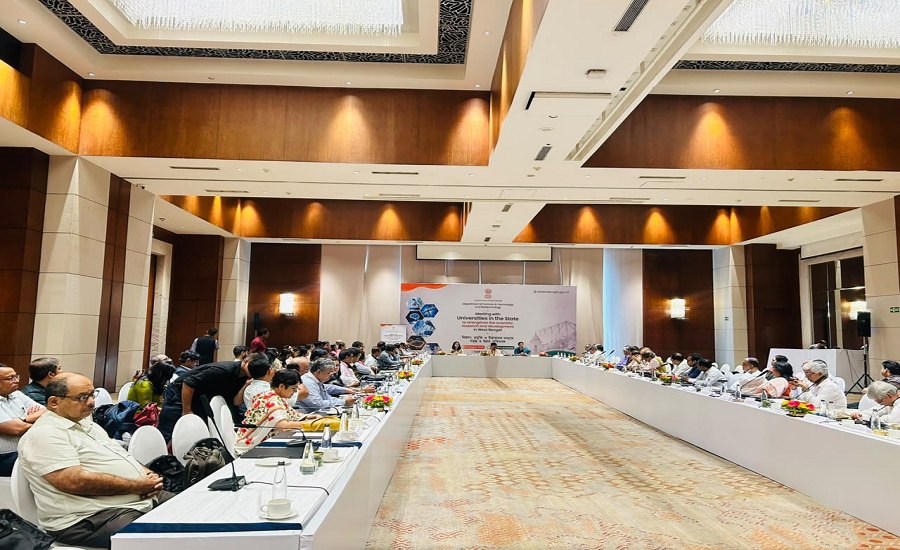
The department reiterated its priorities during a high-level consultative meeting with vice-chancellors and representatives of nearly 50 universities. The meeting was aimed at preparing a roadmap to strengthen West Bengal’s science, technology and biotechnology ecosystem.
The consultation was held ahead of the West Bengal State Science & Technology Congress 2026, scheduled for September 16 and 17.
Meeting Focuses on Research, Innovation and Biotechnology Roadmap
The consultation was attended by Minister-in-Charge Kalyan Chakraborti, Minister of State Moumita Biswas Misra and Additional Chief Secretary Nandini Chakravorty.
The discussions focused on preparing a comprehensive vision statement and roadmap for research, innovation and biotechnology in the state.
Key areas included:
- Expanding research infrastructure
- Promoting scientific innovation
- Generating intellectual property
- Translating research into technologies
- Encouraging technology-based enterprises
- Strengthening industry-academia collaboration
- Expanding the biotechnology ecosystem
The meeting followed a similar consultation with heads of national research and development institutions held on July 28.
Read also: West Bengal CM Suvendu Adhikari Announces UPSC-Style Recruitment System, SSC to Lead Reform
Recommendations to Shape Science & Technology Congress 2026
The recommendations emerging from the two consultations will form the basis of the West Bengal State Science & Technology Congress 2026, the state’s flagship annual science and technology event.
Minister Kalyan Chakraborti said universities have also been asked to circulate guidelines for submitting abstracts among faculty members, researchers and scholars working in STEM disciplines.
Selected research papers will be presented during technical sessions at the Congress. The department also plans to publish an official abstract volume and monograph featuring the selected research work.
Kolkata Accounts for 12.5% of India’s High-Quality Research Output
Officials highlighted West Bengal’s existing strengths in scientific research and innovation during the meeting.
According to the Nature Index, the Kolkata metropolitan area contributes around 12.5% of India’s high-quality research output. Officials said this places Kolkata ahead of other major research hubs, including Bengaluru, Mumbai and Delhi NCR.
The state also has a strong pool of recognised researchers, with more than 250 scientists from institutions across West Bengal featuring in the latest Stanford University–Elsevier Top 2% Scientists list.
Over 500 Research Projects Sponsored Across the State
The Science and Technology Department has also highlighted its support for research and development projects across universities and research institutions.
According to officials:
- More than 500 R&D projects have been sponsored by the state.
- Over 400 projects are currently underway.
- The initiatives cover research and development activities across universities and research institutions.
The government aims to use this research base to generate more intellectual property and accelerate the conversion of scientific discoveries into practical technologies and commercial applications.
Patent and Geographical Indication Ecosystem Gets Boost
West Bengal has also made progress in supporting intellectual property creation through its Patent Information Centre.
Officials said the centre has facilitated:
- Filing of more than 450 patents
- Securing of over 150 patent grants
- Registration of 59 Geographical Indications (GIs)
With 59 registered GIs, West Bengal ranks third in the country, according to officials.
The government is seeking to build on this foundation by encouraging researchers and institutions to focus more strongly on innovation, intellectual property and technology commercialisation.
West Bengal Plans to Expand Biotechnology Infrastructure
The state is also working to strengthen its biotechnology ecosystem through new infrastructure and greater collaboration between research institutions and industry.
One of the proposed initiatives is a satellite Biotech Park at Kalimpong, which is aimed at expanding biotechnology infrastructure beyond the state’s major urban research centres.
The government is also looking to deepen industry-academia partnerships so that research generated by universities and institutions can be translated into technologies, enterprises and solutions with wider economic and social benefits.